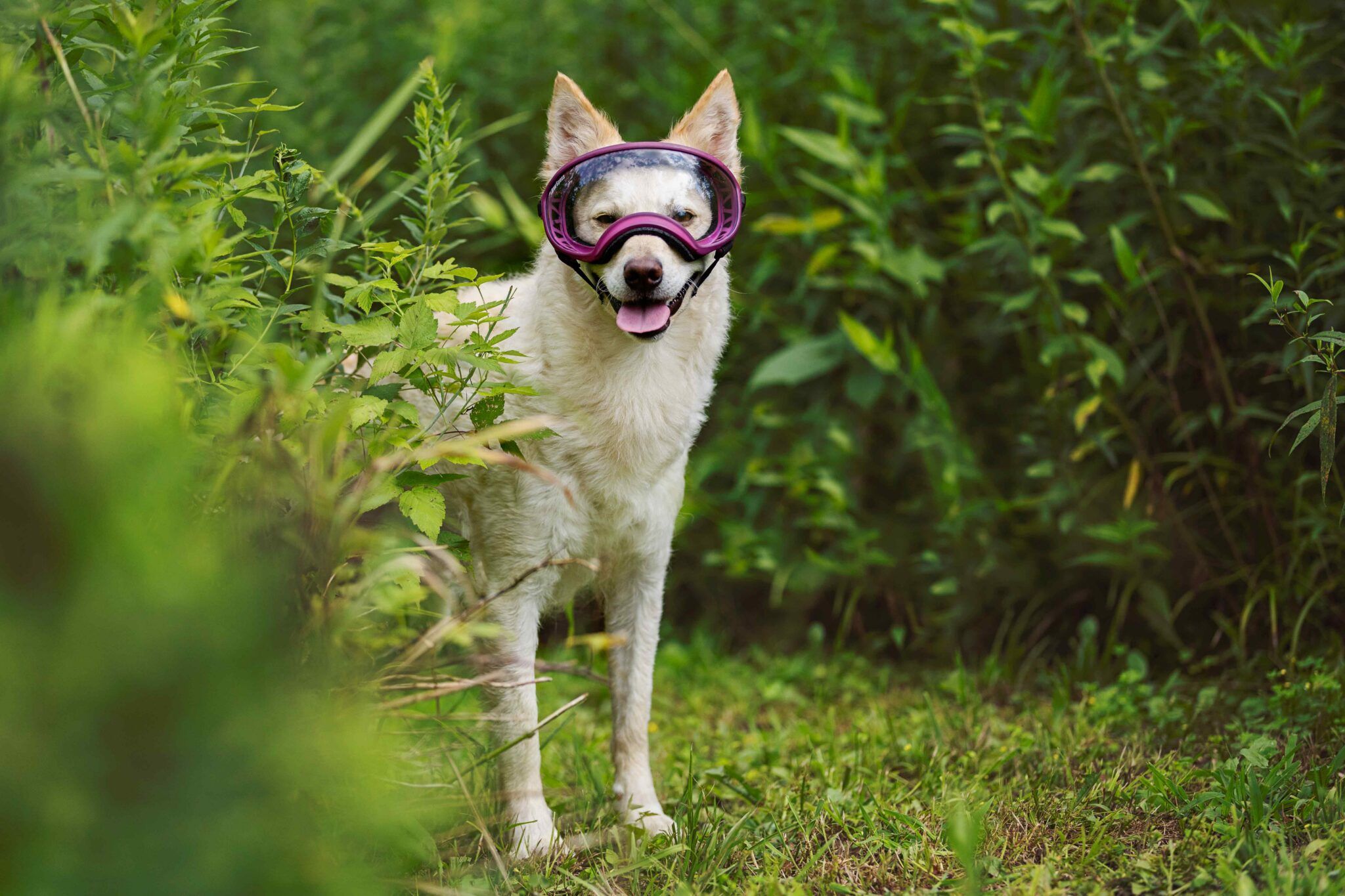
Dog goggles are available for everything from safety to style. Military dogs in harsh environments, water-loving dogs, and dogs with eye injuries are just a few of those who benefit from wearing dog eye protection.
Why Consider Dog Goggles?
This strap-on eyewear is designed to fit canine faces and offers UV protection and impact-resistant lenses for dogs who enjoy active lives and activities such as:
- Hiking
- Riding in motorcycle sidecars or bike baskets
- Running alongside bicycles
- Catching balls or flying discs
- Playing on the beach or in the water
- Boating, paddleboarding, or surfing
- Participating in search and rescue efforts
When Protective Eyewear for Dogs Can Help
Those are just a few of the activities where goggles for dogs can come in handy. Others include eye protection during laser treatments or lolling in a wading pool on a hot day. Dogs diagnosed with pannus (aka chronic superficial keratitis), a UV-light-induced disease most commonly seen in German Shepherds, may benefit from tinted eyewear that reduces UV light exposure. It might help prevent the disease from worsening, especially in dogs who spend a lot of time outdoors.
Protective eyewear is also useful for dogs recovering from surgery or an eye injury, such as a scratched or ulcerated cornea. I wish I’d thought to get a pair for Sparkles a few months ago for just that reason. She hates wearing an e-collar and she was always running into furniture and walls with it. Goggles might have been less troublesome for her, as well as preventing her from scratching at or rubbing her eyes while they healed.
While dogs with normal, healthy dog eyes don’t run too much risk of damage from bright sunlight, protective eyewear reduces glare, adding to canine comfort. It can prevent injury from foxtails, protruding brush, plants with thorns, and blowing debris, dirt, and sand.
Pets can also benefit from dog glasses if they have large, protruding eyes that may be easily injured. Think Boston Terriers, Cavaliers, English Toy Spaniels, French Bulldogs, and Pugs. Dog trainer Mikkel Becker put protective eyewear on her flat-faced dogs Indiana Bones and Otis when introducing them to foster cat Mylo, who was prone to scratching when afraid. The eyewear protected their eyes from the risk of cat claw damage.
Specs For Senior Dogs
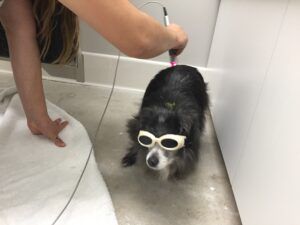
It’s not only aging humans who may need to get glasses. While canine corrective lenses aren’t a thing, dogs who are getting on in years can have more difficulty regulating the amount of bright light entering their eyes.
“Dogs with conditions that cause persistently dilated pupils, such as iris atrophy due to aging, can be light-sensitive. These dogs can benefit from tinted goggles that block out some of the light from entering the eye, especially when out in bright light,” says veterinary ophthalmologist Cindy Mar.
That’s because the iris, the colored part of the eye that surrounds the pupil, is a muscle. Like any muscle, it can weaken over time, becoming less able to control dilation and constriction of the pupil to manage light filtration. If you notice your senior dog squinting on a sunny day, tinted eyewear might help.
Other Uses for Canine Eyewear
Sometimes, when a dog is easily frightened by crowds or visual stimuli, tinted eyewear may help them to remain calm and reduce anxiety caused by bright or flashing lights, in much the same way as blinders do for horses. With positive conditioning, certain types of protective eyewear can potentially help reduce reactivity to things that might frighten dogs.
Finally, canine eyewear can just be a fun fashion statement for dogs and their people. After all who doesn’t look better in a chic pair of sunnies? For dogs who enjoy strutting their stuff and interacting with people, wearing cool shades can bring them the attention they crave.
Popular Brands for Dog Goggles
Probably the best-known brand of canine eyewear is Doggles, the name, of course, being a mashup of “dog” and “goggles.” It’s closely followed by Rex Specs but there are quite a few other brands, many of which get good reviews. Here’s where to find out more:
Popular Dog Goggle Brands
| Product | Price | Sizes | Notes |
|---|---|---|---|
| Doggles Originalz | $21 | Extra Small, Small, Medium, Large | Adjustable elastic head and chin straps, UV protection, anti-fog, shatterproof. Best for dogs with recessed eyes. |
| NAMSAN Dog Sunglasses | $14-$24 | Medium, Large | TPE frame, 2 adjustable elastic straps, UV-resistant, anti-glare, wide design. Designed for medium- and large-sized dogs. |
| Ownpets Dog Goggles | $14 | Small/Medium | Silicone frame with vents, 2 adjustable straps, UV-resistant, shatter resistant. Designed for small- and medium-sized dogs. |
| PetLeso Dog Goggles | $10-$25 | Extra Small, Small, Medium, Large | TPU frame with vents, 2 adjustable straps, UV protection. |
| Protective Pet Solutions OptiVizor | $48-$68 | Mini, Toy, Small, Small/Medium, Medium, Large, Extra Large | Adjustable Velcro collar and chin strap, trimmable visor, UV protection. Designed for medical and recreational use. |
| RexSpecs V2 | $93 | Extra Small, Small, Medium, Large, Extra Large | Flexible, vented frame, single lens, adjustable straps, UVA/UVB protection, impact resistant lenses. |
How To Choose the Right Dog Goggles for Your Dog
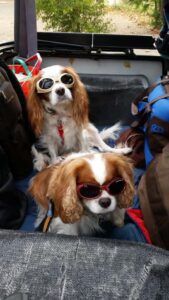
When picking goggles for your dog, the key point is making sure they fit well. No matter who makes them, they come in a variety of styles and sizes and different dogs have different needs when it comes to fit for canine eyewear. It’s always a good idea to check with the company for advice on fitting them to your dog’s size and head shape.
At a store, ask if your dog can try on the goggles before you buy them. If purchasing online, Dr. Mar recommends looking at the photo gallery to find a dog with a similar head size and shape to help determine the size to purchase.
Look for such features as comfortable padding, complete UV protection, a flexible frame for ease of adjusting fit, shatterproof lenses, vents for good airflow and water drainage, and adjustable straps.
You’ll also want to pay attention to the depth of the eye cup. Dogs with protuberant eyes need a deeper eye cup for best protection and fit. Antifog lenses can be important for dogs working in inclement weather. Choose goggles with clear lenses for dogs who like to swim, especially if they go underwater to fetch sunken toys. Some goggles may not stay on well if dogs have long hair or a lot of facial hair. Before buying, ask about the return, repair, or replacement policy if the goggles don’t fit or the lenses get scratched.
How dogs see depends on a number of factors, including visual field, acuity, depth perception, and color perception (yes, dogs can see some color—just not to the same extent as humans). In general, the visual acuity of dogs averages 20/75, but some breeds, such as Labradors, have closer to 20/20 vision.
Differences in canine eyesight are related to the shape of the head and position of the eyes, which affect visual field and depth perception. For instance, dogs with smushed, or brachycephalic, faces have eyes that are placed more to the side of the head, increasing what they can see with each eye, but decreasing their depth perception.
Other factors can also play a role. Sighthounds have long heads and the position of their eyes is ideal for chasing prey. Some studies show that they may also have higher levels of specialized retinal cells that provide them with improved ability to detect motion.
Although canine eyewear has a lot of benefits, don’t count on it to improve a dog’s sight, which may decrease with age or injury. While it would be great if a pair of specs could help, dogs who are experiencing vision loss don’t usually benefit from corrective eyewear. It might help dogs who have been left farsighted after certain types of cataract surgery, but most dogs adjust well without artificial aids. They might have reduced focus when they’re chasing a ball or angling for a treat, but overall there’s no reason to seek out prescription lenses.
Dog Eyewear Styles
Goggles for dogs can have separate eye cups, like the goggles you may wear in the swimming pool, or they can be wraparound, or spherical, styles like those you might have seen on Olympic athletes. Spherical goggles can offer better peripheral vision, while dual-lens styles may fit more snugly around the eyes. Because of their wider field of view, the one-piece or single lens type of goggles may be more appropriate for some activities.
“The style and fit of the goggles are important,” Dr. Mar says. “Select those that can truly protect the eyes—the ones that look like goggles for swimming or those for snowboarding—versus the ones made for fashion that look like glasses or are made for people. Special care is needed when selecting goggles for brachycephalic dogs because their ‘buggy’ eyes and short noses make them more difficult to find the perfect fit.”
Lens color affects the amount of light that reaches your dog’s eyes. Lighter colored lenses such as yellow or amber are good if you and your dog live in an area where you experience lots of cloudy days. Darker tints such as black or red are best for frequent sunny days. Choose smoke lenses if you and your dog spend a lot of time on the water on fiercely sunny days. For dogs with a multisport lifestyle, look for goggles with interchangeable lenses that are easy to swap out.
“You don’t want the lenses to be too dark or block out too much light for indoor activities or activities at night,” Dr. Mar says. “I also worry about the lenses that look like mirrors because they prevent you from seeing inside the goggles so you can’t tell if the goggles are fitting well and the lenses are not touching the eyes.”
Tips for Helping Your Dog Adjust to Wearing Goggles
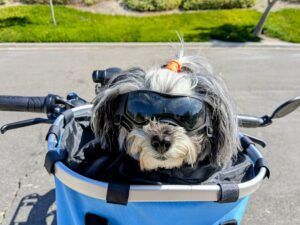
There’s one potential drawback to canine eyewear: getting dogs to wear it. Some dogs take to it right away. Paisley, a cockapoo, wears goggles when she rides in her basket on Keith Comer’s e-bike.
“She needed zero training,” says Daleen Comer. “I just put them on her, and she wore them like a champ.”
Other dogs may be more reluctant. For them, go slowly and associate the goggles with good things. Positive conditioning is important. The company that makes Rex Specs has an excellent series of videos on its website showing how to introduce the dog to wearing them.