
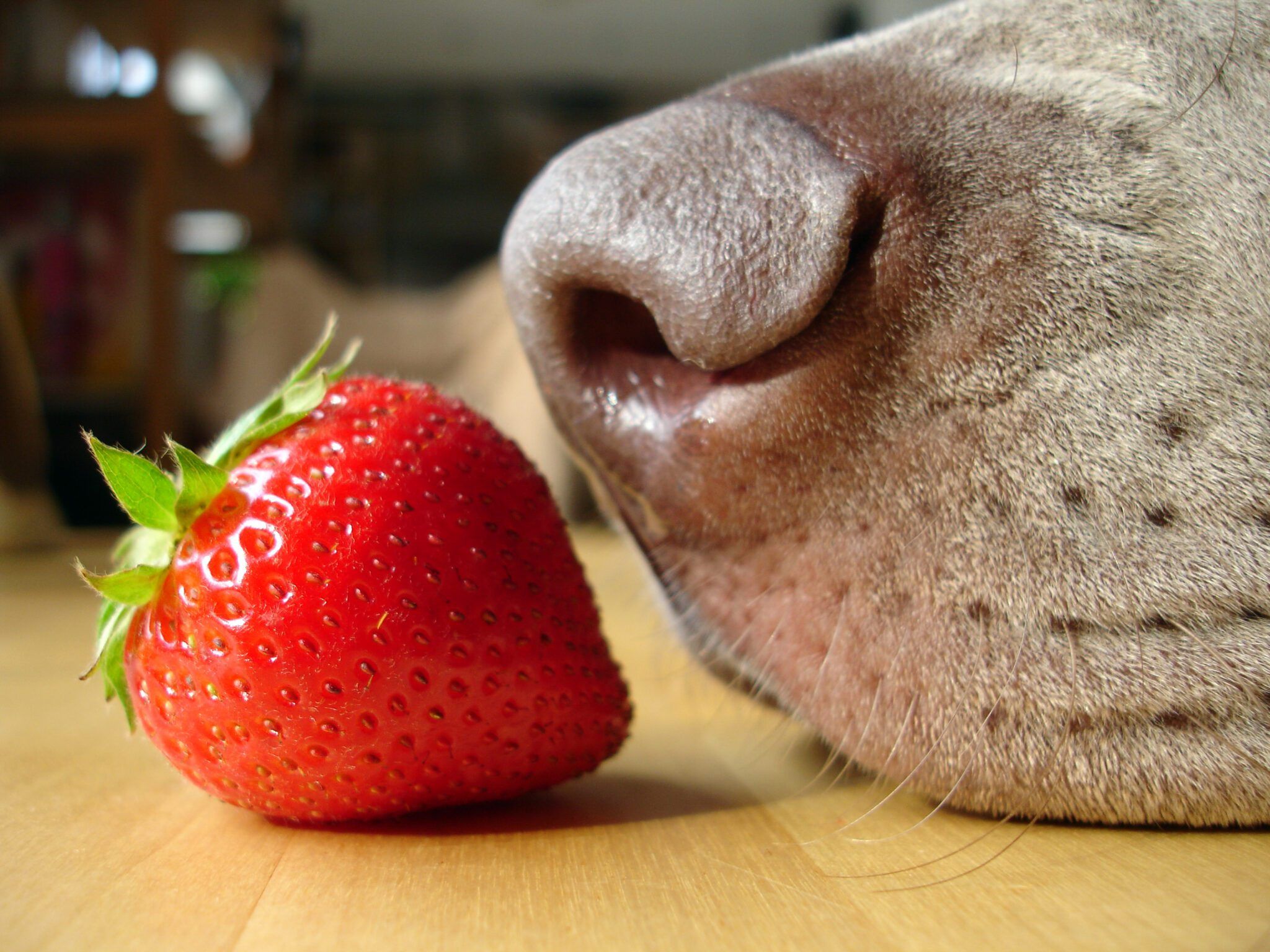
Strawberries might be one of your favorite snacks, but can you share them with your dog? Fortunately, the answer is yes! Most dogs can eat plain strawberries in moderation. They’re not toxic to dogs and can be shared as an occasional treat. However, proper preparation and portion control matter to avoid stomach upset.
Here’s what you should know about the benefits, potential risks, and safest ways to feed strawberries to your dog.
Are Strawberries Good for Dogs?
Strawberries can be a healthy, low-calorie treat for dogs when served in appropriate portions. Many dogs very much enjoy the taste—I can’t open a package of strawberries anywhere in the house without my dogs showing up to request their share. In that sense, strawberries can be good for our dogs. Whether or not they can do much to contribute to a dog’s overall health is another question.
Strawberries do provide fiber, which can help support normal digestion. However, a dog would need something like one cup of fresh strawberries to get around 3 grams of fiber. That’s too many strawberries for most dogs and there are better options out there for increasing a dog’s fiber intake without risking stomach upset. There’s nothing wrong with getting a little extra from the occasional strawberry, but they shouldn’t be relied on as fiber source.
Similarly, strawberries have a high water content but, for the most part, a dog shouldn’t be eating enough of them for it to count as a source of hydration. More on how many strawberries are too many in a minute.
Strawberries also contain antioxidants, which help protect cells from damage caused by free radicals. Although antioxidants play a role in normal biological processes, research into their specific benefits in dogs is ongoing. At the moment, there isn’t conclusive evidence that feeding your dog strawberries will help prevent disease or improve their immune system.
On the subject of immune systems, I’ve seen Vitamin C mentioned as one of the health benefits of feeding dogs fruit. It’s worth noting that healthy dogs don’t have the same dietary requirements for Vitamin C as humans do. Unlike us, dogs’ livers produce vitamin C by synthesizing glucose, so they don’t typically need extra from outside sources. So, while the Vitamin C in strawberries is highly unlikely to hurt a dog, it isn’t really doing anything to help them out, either.
Overall, this leaves strawberries in the same category as many healthy dog treats—they are perfectly fine for most dogs to eat but, when given in appropriate amounts, they don’t generally add much nutritionally—good or bad.
How Many Strawberries Can Dogs Eat?
The appropriate number of strawberries depends on your dog’s size, daily calorie requirements, activity level, and what other treats they eat.
In general, treats should account for no more than 10% of a dog’s daily calorie intake. A note for those of us who like to share with our dogs: that 10% covers all treats, table scraps, and any other foods outside of our dog’s regular diet.
Avoid assuming that one whole strawberry is an appropriate serving for every dog. A small dog needs a much smaller portion than a large breed. In general, a good portion size for a 10-pound dog would be one small slice of a strawberry while a 60-pound dog could have 3 or 4 berries. If you’re not sure, ask your veterinarian for individualized portion recommendations, particularly if your dog is overweight or has dietary restrictions.
As always with new treats, start by offering a small piece and see how your dog responds. If they tolerate it well, you can offer a little more overtime, provided their overall treat intake remains appropriate.
How To Prepare Strawberries for Your Dog
Before sharing strawberries with your dog, take a few simple precautions:
- Wash thoroughly: Rinse fresh strawberries under running water to remove dirt and potential surface residues.
- Remove leaves and stems: These aren’t considered toxic, but they’re coarse and can be difficult to digest. If your dog accidentally eats a little strawberry leaf, there’s no reason to panic. However, eating larger amounts of the leaves or stems may cause digestive upset. Monitor your dog and contact your veterinarian if concerning symptoms develop.
- Cut into small pieces: Whole strawberries can pose a choking risk, especially for small dogs or dogs who tend to gulp their food. Cut pieces according to your dog’s mouth and swallowing ability. Smaller dogs need smaller pieces.
- Mash or puree if necessary: This can make strawberries easier to eat for dogs that struggle with chewing. It can also be a great addition to lick mats or other food-based enrichment toys.
Can Dogs Eat Canned or Strawberry-Flavored Foods?
It’s best to stick with fresh, plain strawberries rather than canned varieties packed in syrup. These products often contain added sweeteners, artificial flavorings, and other ingredients that aren’t appropriate for dogs. The same caution applies to strawberry shortcake, jam, ice cream, yogurt, or other strawberry-flavored treats.
Pay particular attention to xylitol, a sugar substitute sometimes found in sugar-free foods and desserts. Xylitol is highly toxic to dogs—if ingested, even in small amounts, it can be life threatening. If your dog eats a product containing xylitol, contact your veterinarian or an emergency animal hospital immediately.
Can Dogs Eat Frozen Strawberries?
Yes! Plain, unsweetened frozen strawberries can make a refreshing treat, particularly during warmer weather. My dogs go absolutely nuts for frozen strawberries. I can’t open the freezer without being confronted by hopeful puppy faces.
That said, frozen berries can be harder than fresh ones, increasing the risk of choking, difficulty chewing, or chipped teeth. To mitigate those risks, follow these preparation steps:
- Get fresh strawberries without added sugar or sweeteners.
- Remove the leaves and stems.
- Cut the berries into small pieces before freezing. Avoid giving small dogs large frozen strawberries.
- Thaw frozen strawberries slightly before serving. Letting the fruit soften a little can make it easier and safer to swallow—and avoids potential tooth breakages. If that sounds silly, just know that I’ve had a dog fracture a tooth on an ice cube before and a fully-frozen whole strawberry isn’t that different. Learn from my mistakes.
Can Dogs Eat Dried Strawberries?
Dogs can eat dried strawberries with the same caveat that they shouldn’t contain added sugar, sweeteners, or other ingredients unsuitable for dogs.
Also, drying removes much of the fruit’s water content, concentrating its natural sugars and calories into a smaller portion. This means it can be easier to overfeed dried strawberries and it may cause digestive upset if your dog eats too many.
If you do give your dog dried strawberries, use a smaller portion than you would with fresh fruit.
Risks and When to Call Your Veterinarian
Although most dogs tolerate strawberries, eating too many can cause digestive problems. Signs may include vomiting, diarrhea, gas, or abdominal discomfort.
Some dogs may also experience an adverse reaction to strawberries. Possible allergy symptoms include itching, redness, swelling, and gastrointestinal problems.
True food allergies are relatively uncommon in dogs. The Merck Veterinary Manual reports that approximately 1–2% of dogs receiving veterinary care have some form of food allergy. However, there isn’t reliable evidence establishing how frequently dogs react to strawberries.
An important distinction is that digestive upset after eating strawberry leaves or too much fruit doesn’t necessarily indicate an allergy. Allergic reactions involve an immune response whereas digestive irritation can occur simply because a dog has eaten something their stomach doesn’t tolerate well.
Stop feeding strawberries and contact your veterinarian if you notice unusual symptoms. Seek urgent veterinary attention if your dog develops facial swelling, difficulty breathing, collapse, or other signs of a potentially severe reaction.
Dogs with diabetes, excess weight, or sensitive stomachs should also have their veterinarian’s approval before strawberries are added to their diet.
Frequently Asked Questions
Can Puppies Eat Strawberries?
Puppies can eat small amounts of properly prepared strawberries but it’s a good idea to check with your veterinarian before introducing new treats. Puppies have smaller mouths, developing chewing abilities (and digestive systems), and different nutritional requirements than adult dogs.
Can Dogs Eat Strawberry Leaves and Stems?
Strawberry leaves and stems aren’t considered poisonous to dogs but they’re fibrous and can be difficult to digest. They may cause stomach upset, so remove them before serving strawberries. Contact your veterinarian if your dog eats a large quantity or develops symptoms.
What Other Berries Can Dogs Eat?
Blueberries and blackberries are generally safe for dogs in moderation. Wash them before serving and offer appropriately sized portions. NEVER give grapes and raisins, which can cause serious kidney injury in dogs. Always check whether a particular fruit is safe before sharing it.
Do Dogs Need Strawberries and Other Berries?
No. Strawberries and other berries are optional treats, not essential components of a dog’s diet. A complete and balanced dog food provides the nutrients your pup needs. You should be especially skeptical of any claims that particular fruits or superfoods can prevent disease or replace proper veterinary care for dogs.
The bottom line: Most dogs can enjoy strawberries occasionally, provided they’re plain, washed, properly prepared, and served in moderation. Start with a small piece, watch for any adverse reactions, and consult your veterinarian if you’re unsure whether strawberries are appropriate for your dog.