



Canine Swimming Lessons: The Perfect Exercise For Your Dog
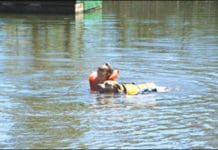
For those of us who regularly swim for fitness, we know why swimming is often referred to as “the perfect exercise.” In addition to the physical benefits shared with other forms of aerobic exercise, swimming offers some unique benefits. It eliminates the effects of weight-bearing on the joints, exercises the entire body – upper and lower – at the same time, and, in most cases, is something we can do for our entire lives, even if age precludes us from taking part in other forms of exercise. The physical benefits of swimming are the same for your canine companion as they are for you – that is, if you have a dog who will swim. Even though they actually have a stroke named after them, the notion that all dogs are “natural swimmers” is an erroneous one. Some breeds were developed to work in water and are more physically adapted for swimming than others. The problem here is not getting these dogs into the water, but keeping them on terra firma when we want them to stay clean and dry. However, occasionally, even a water breed shows disdain for water – yes, there are some Labrador Retrievers who hate swimming. Conversely, there are dogs you’d never imagine taking kindly to the water who become devoted and skilled swimmers. Although not blessed with the physical advantages of a water breed, and despite sinking rear ends or heavy, wet coats, these Boston Terriers, Rhodesian Ridgebacks, and Siberian Huskies have learned to enjoy swimming. They don’t know or care that they have to work a little harder than a Poodle, Cocker Spaniel, or a Newfoundland – they just want to have fun!

Dog Training With Hand Signals
as long as you are consistent.üThis is the gesture I use for cuing "Down!" It's a large signal that can be seen by a dog who is far away.üThis is the gesture I use for cuing "Sit!"I start with my arms at my sides
Teaching a Reliable Recall
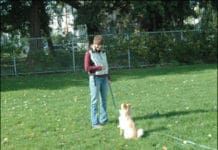
The recall response seems to come naturally to some dogs. For others, it’s a hard-won behavior. The Miller pack has some of both.

If Your Dog Goes Missing
For some reason the blinking red light on my phone that signals “message waiting” always seems ominous to me. Last Thursday, my wariness was reinforced: my friend Cindy had left a frantic message. Her dog was lost. “Hattie’s missing!” I could hear the panic in her voice. “I was walking her at Antietam Battlefield last night, the leash came off her collar, and she took off after a deer!” Bad news. In many parts of the country, dogs who chase wildlife or livestock can be shot. There was more bad news as Cindy’s message continued. “I have to leave town today for a work-related retreat. I have people looking for her, but if there’s anything you can do?” I called Cindy back immediately. She had already placed a “lost dog” ad in the paper for her 18-month-old, wheaten-colored, Irish Wolfhound-mix. She had put up posters in the area where Hattie was lost, as well as on the five-mile route between the park and her house in Sharpsburg. She had notified the only shelter in the county that handles stray dogs. She left one of her sweatshirts in the spot where Hattie went missing. And she had people who knew Hattie well - staff from the doggie daycare facility she visited regularly - looking for her. There wasn’t much more I could do. I gave her contact information for a person in Maryland who has a dog trained to find missing pets, and suggested setting a humane dog trap. And praying.

Dog Trainers Use of Generalizing a Behavior
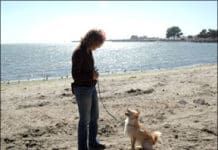
But he does it at home!” Usually uttered in a plaintive wail, this common dog owner complaint is often heard in dog training classes, among other places. When one of my students says this, I reassure them that I believe their dog probably does perform the behavior in question with a high degree of reliability in the comfort of his own home. The fact that he won’t do it in class is usually a generalization issue; the owner has only practiced the behavior with her dog at home. He doesn’t know he’s supposed to do it other places. According to authors Mary Burch, PhD, and Jon Bailey, PhD, in their excellent book, How Dogs Learn, “Generalization occurs when behaviors are seen in contexts other than those in which they were originally trained.” Simply stated, this means practicing with your dog in different places, at different times of the day, under different conditions, in the presence of different people, dogs, and a variety of other distractions.
Nocturnal Dogs
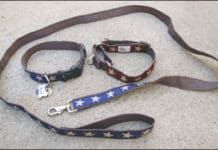
and matching leash all get softer with time and laundering. I like the extra large D-ring for snapping the leash onto.

Tug O’ War is a Fun Game to Play With Your Dog
Contrary to conventional wisdom in some dog training circles, tug is a great game to play with most dogs - as long as you and your canine pal play by the rules. Lots of my clients have dogs with aggressive, reactive, and other stress-related behaviors. One of the best ways to help reduce stress is to increase exercise. Tug is great exercise. I'm constantly encouraging my clients to play tug with their dogs. Inevitably when I suggest it I get a puzzled look and a tentative protest that "some trainer" told them playing tug would make their dog dominant and aggressive. I sure wish I could meet that pervasive "some trainer" some day and convince him/her otherwise. It just isn't so. Tug has a lot going for it besides just being good exercise. Most dogs love to tug. Of course, the caveat is that you play tug properly - with rules, which I'll discuss in a minute. Here are some of the many other reasons this game ranks high on my list of approved activities.
Teaching Your Dog to “Leave It” On Cue
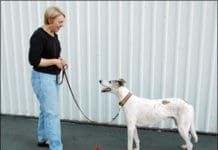
mark the desired behavior with the click of a clicker (or the word "Yes!") and feed him a different treat.üPractice "Leave it!" with everything your dog likes in real life: food

Training Your Dog with Rewarding Treats and Praise
Why should training be fun for the dog? Briefest possible answer? “It’s the law.” How animals learn is the most-studied phenomenon in the history of psychology and is up there with gravity in terms of its lawfulness. One of the big ticket principles is that anything one tries to teach a new learner (such as a beginner dog) will get stronger in direct proportion to how many times it is rewarded. And (of perhaps even greater interest) every time the new learner does the behavior and is not rewarded (as in, say, “drilling” the same behavior over and over again) the behavior gets weaker. (Not just “doesn’t get stronger” – gets weaker.) In other words, it’s better to do nothing at all than to drill without rewards.

Keeping Dog Training Fun and Playful
Dogs are one of the rare species of animals who play throughout their lifetimes; perhaps it's one of the reasons we have such strong bonds with dogs, because we too play as grown ups. Humans and canines appear to be what scientists call neotenous": as adults
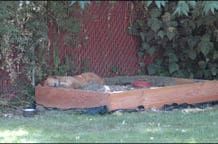
Solutions for a Dog Who Digs the Yard
The perfect storm, canine edition: Combine one dog who is accustomed to and prefers spending time outdoors; a spate of hot, dry weather; a lush, productive garden full of herbs and tomato plants growing in raised boxes full of expensive, loamy soil and moistened three times daily by an automatic drip system. What do you get? Holes dug in the garden and an irate husband! Our new dog, Otto, nearly made himself quite unwelcome on his second day in our home. Every time I turned around, I'd find him digging in any place we'd recently watered, including the lawn, a flowerbed in front of the house, underneath a gorgeous hydrangea bush that's already hard-pressed to survive our hot summers, and, most seriously, the vegetable beds in back. Can't you train this dog not to dig?" my husband implored. But this wasn't a training issue; I've been trained enough by Pat Miller and our other contributing trainer/writers to recognize a management situation when I see it!"