




Answers From Experts 03/99
Megaesophagus truly is a horrible condition, both for the dog, who really suffers, and for the dog’s owner, who can’t do very much to help. However, there are a couple of holistic healing methods that I’ve seen help dogs with megaesophagus. I use a lot of homeopathy in my practice, so of course, my first suggestion is to use homeopathy, which is entirely dependent on the body’s ability to respond. Homeopathy is “energy medicine;” the purpose is to present the energy picture of a specific problem to the body so the body will raise a defense, a response to that trigger at both the physical and the energy level.
How to Help Car Anxiety in Dogs: Road Scholar
Car rides. Some dogs love them. Some dogs hate them. Helping car anxiety in dogs, and getting a calm passenger is a step-by-step process.
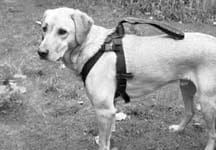
Safest Canine Seat Belts
Your kids always buckle up, and you usually do. It's time to take the next step, and get that dog a seat belt. We'll tell you which one is a winner.
Rottie “Racism”?
People fear Rottweilers for a variety of reasons, and only a few of those reasons are due to the media. Some Rottie owners deliberately foster the intimidating look, fastening huge Gothic collars on their dogs and encouraging their dogs to be aggressive. Many Rottweilers are used for guard and protection work, a task they were bred for and excel at. And, face it, whether you want to blame nature or nurture (poor breeding or wrong-headed training), there are a certain number of aggressive, unpredictable, dangerous Rottweilers in the world.
Best Nail Clippers For Your Dog
It’s really a safe and simple procedure; one that most dog owners can easily learn to perform on their dogs. I have done it to my own dogs since I was a little kid. So it never ceases to amaze me when I ask my training classes how many owners clip their own dogs’ toenails and an average of only one out of eight raise their hands. That means the other seven either neglect this important procedure, or spend hundreds of dollars over a dog’s lifetime to pay someone else to do it.

Dog Injury Solutions: Calendula and St. John’s Wort
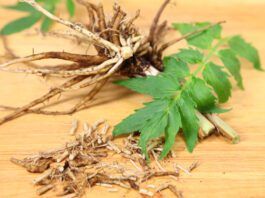
Calendula Officinalis (also known as the Marigold plant, but usually called calendula) and hypericum (also known as Saint John's Wort), are very safe, yet incredibly effective at cleaning the site of an injury and encouraging the body to heal. Homeopathic and herbal preparations of calendula and hypericum have proved invaluable in modern-day holistic dog care. In fact, it's difficult to find an herbal wound preparation that does not contain some form of one or both of these potent plants.
Tethering Your Dog for Training
For many years, I have been a vigorous and vocal opponent of keeping dogs tied or chained as a primary means of confinement. The hazards of tying a dog are well-documented, and include increased aggression, vulerability to human and non-human intruders, and the risk of hanging or choking. It may come as a surprise, therefore, to know that I regard the tether as an invaluable piece of training equipment. The difference and it's a big one is in the application.
A Holistic Dog Behavior Consultant’s Opinion on Dog Door Aggression
As a holistic behavior consultant, I believe that most problems people experience with their dogs are not really dog problems but rather communication problems. Dogs don't have problems being dogs; they have problems being dogs who live with humans. Most humans don't even know how to communicate with each other! Every interaction you have with a dog teaches the dog something about living with a human.
Using Homeopathic Remedies to Help Your Dog
Last month, we looked at how homeopathy works to help a patient’s body heal itself. In this article, we’ll explore how you can use homeopathic remedies to help your dog – and suggest when your dog would be better off in the care of a veterinary homeopath. In the hands of a skilled practitioner, homeopathy can bring amazing cures of deep-seated illness. But it can also be used by the layperson to treat minor acute problems. What kinds of ailments can you tackle at home? “You can always treat injuries,” says veterinary homeopath and author Richard Pitcairn, DVM. The best candidates for at-home treatment include bite and puncture wounds, insect bites and bee stings, minor burns, and digestive upsets.
Holistic Veterinarians Take on The Annual Vaccination Schedule
Holistic veterinarians have long decried the annual vaccination schedule recommended by many conventionally trained veterinarians for all dogs. Many holistic veterinarians suspect that many of the complex ailments that plague our modern dogs – from allergies to digestive problems to aggressive behavior and so on – have their roots in immune system problems brought on by excessive and unnecessary vaccination. However, many of us are convinced by our veterinarians that our dogs won’t be safe unless they receive these boosters every year. Fortunately, a recent study indicates that most dogs retain humoral antibody protection from past vaccinations for longer than previously thought.
Proper Use of Head Halters for Leash Training
Ten years ago, a new dog training tool hit the market. Known generically as the head halter (or head collar), it is a device similar to the halter commonly used on horses. It provides a greatly increased degree of control over the dog who is dedicated to pulling on the collar and leash, without the punishment or pain factors associated with choke chains and prong collars. The head halter has a strap that goes around the dog’s nose, and another that clasps around his neck, just behind the ears. The leash attaches to a ring below the dog’s chin. Just like with halters on horses, bulls and other large animals, it works on the principle that where the nose goes, the body must follow.
How To Massage a Dog
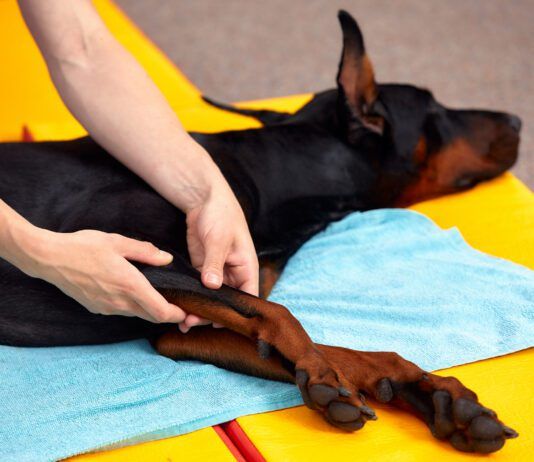
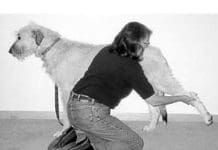
Several readers have contacted me with reports of their growing massage skills. Learning and practicing each new massage technique is a thrill, and now that you have accomplished several techniques it is time to put them all together into a massage routine for your dog. The following routine is just a guideline to help get you started. Once you have tried it a time or two, you will naturally sequence the massage moves into a routine to suit you and your dog. Soon each massage will be different and will meet your changing needs and moods.