
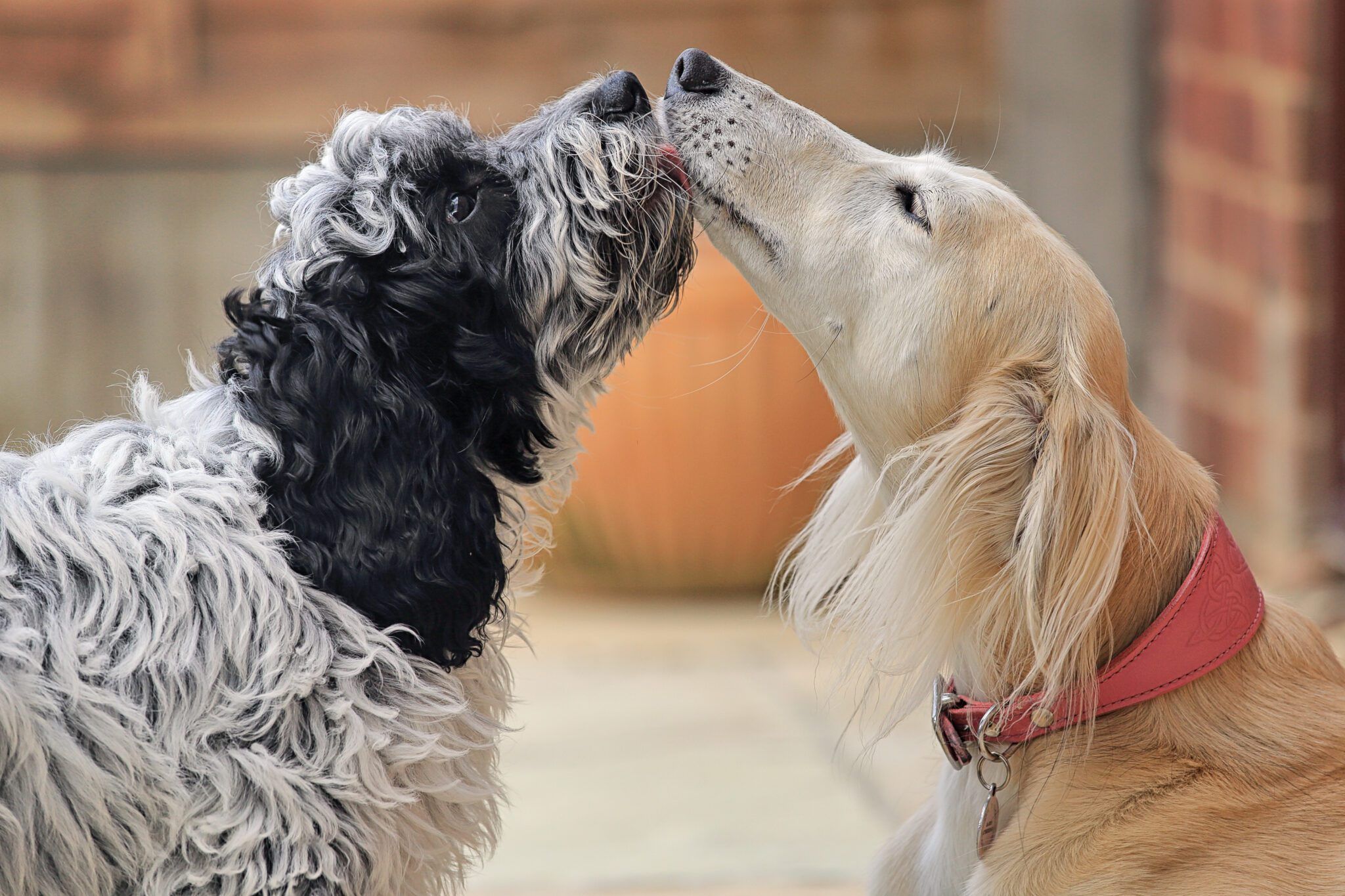
You’ve done your research, visited the shelter, fallen in love, and now you’re bringing home a second dog. Or your friend is coming to stay with their new dog for the weekend. Or your neighbor wants to go on a dog walk together for the first time. However you’ve arrived at this moment, there’s one thing that will determine how this goes more than anything else: the first few minutes!
Dog introductions can go wrong for lots or different reasons and it doesn’t mean the dogs are inherently incompatible. Usually, the conditions just weren’t right: too much pressure, not enough space, the wrong location, or leashes not handled correctly. All these things can turn a dog introduction into a nightmare. The good news is that with the right knowledge and a step-by-step approach, you can set the dogs up for a successful introduction and friendship that lasts.
Why Dog Introductions Should Be Done Carefully
Dogs form associations very quickly A first meeting that goes pear-shaped—one that involves fear, anxiety, or conflict—can establish a negative emotional response that influences future interactions between the two dogs. Building a positive relationship from a neutral or good first impression is much easier than trying to repair one that stated badly.
This is why it’s so important not to rush the process; one of the most common (and costly) mistakes owners make. The goal of an introduction is not to get the dogs playing within 5 minutes. The goal is to ensure you end the first meeting on a positive note—both dogs calm, happy, and ideally a little curious about one another. Not traumatized. Everything else can be gradually built from there.
How To Prepare Before the First Meeting: Set Everyone Up for Success
A good introduction begins well before the dogs are anywhere near each other. Follow these steps to increase the likelihood of a successful introduction:
- Choose neutral territory. An introduction taking place in one of the dogs’ homes or yards may trigger territorial behavior. Instead, choose a neutral location such as a local park or quiet street neither dog frequents. This will remove the territorial variable.
- Exercise both dogs beforehand. High arousal is detrimental to a calm introduction. Exercising the dogs before they meet can help take the edge off, reducing potential arousal and making the dogs more likely to respond to their handlers.
- Remove high value resources. Ensure any high value resources such as food, treats, and toys are removed from the area where the meeting is occurring. Research by Feltes et al., (2020) has shown that resource guarding is a common cause of fights in multi-dog households.
- Make sure to have one calm and confident handler per dog. Dogs pick up on our emotions and an anxious handler who has a tense grip on the lead or is stressed can exacerbate the situation.
Step-by-Step: How To Introduce Dogs
Step One: The Parallel Walk
One of the most common mistakes people make when introducing dogs for the first time is a face-to-face introduction which can escalate quickly. Instead, opt for a more gradual approach: the parallel walk.
With both dogs on loose, standard-length leashes and both handlers walking in the same direction, walk the dogs with enough distance between them so that they see each other but they’re not reacting. A distance of 10 meters (30 feet) or more is a good starting point. Walk for several minutes, gradually reducing the distance between the dogs as they demonstrate calm and relaxed body language. This allows the dogs to become comfortable with each other without the social pressure of direct interaction.
Avoid tightening the leash if possible as this can increase tension and the dog’s ability to communicate normally. If you need to use the leash to manage your dog, increase the distance first.
Step Two: Read Behavior and Body Language
This step is very important and one worth taking your time for.
Signs the introduction is going well include:
- Loose, wiggly body posture
- Soft, blinking eyes
- A low, sweeping tail wag (not high and rigid)
- Brief, mutual sniffing followed by disengagement
- Play bows
- Both dogs able to look away and check in with their handler
Signs you need to increase distance or stop the interaction include:
- Stiff, rigid posture with weight leaning forward
- A hard, sustained stare
- Raised hackles
- Tail help high and stiff, wagging fast
- Lip curling or growling
- One dog standing over the other or pinning them down
- Inability to disengage where one or both dogs are unable to look away
Research on calming signals in dogs has shown that behaviors like head turning, nose licking, freezing, and crouching are de-escalation signals that dogs use to communicate non-threatening intent (Mariti et al., 2017). When you see these signals, they suggest a dog is feeling social pressure and trying to manage it without conflict. Take note and increase the distance, slow things down and give both dogs some breathing room.
Step Three: Allowing Closer Contact
When both dogs have spent several minutes parallel walking with relaxed, loose body language, you can allow them to approach each other for a brief sniff; three to five seconds then call the dogs back to their handler and reward them. Repeat this several times.
This interrupt and reward pattern does two things: First, it prevents the interaction from building in intensity to the point where arousal tips into conflict. Second, it begins building positive associations with being near the other dog. Allow the dogs to approach each other at an arc rather than head on. This is much less intense and can help the dogs feel more relaxed.
What To Do if Introducing Dogs Goes Wrong
If either dog shows stress, anxiety, reactivity, or aggression, separate them calmly and increase the distance between them. Try moving through the steps above again if both dogs remain calm. If one or both dogs remain heightened, it’s best to end the session, let both dogs decompress, and try again another day with a larger distance between them and shorter close interactions. Repeated, calm exposure under threshold (where neither dog shows stress, anxiety, etc.) is far more productive than a single long exposure that ends badly.
When To Ask a Trainer or Behaviorist for Help
If things go badly and the dogs end up in a fight, separate them immediately and seek expert help before attempting another meeting. It’s also a good idea to contact a trainer or behaviorist if one or both dogs are still showing signs of being uncomfortable after several attempted introductions.
What To Do After the Dogs Have Met: Managing the Early Days at Home
A successful first meeting is not a green light to leave two dogs unsupervised together. The home environment introduces new variables that weren’t present in the neutral meeting space (e.g. the resident dog’s territory, sleeping places, toys, etc.). You’ll need to:
- Manage resources carefully. Feed the dogs in separate areas and pick up the bowls as soon as they’ve finished. Remove any high value bones or treats which could cause conflict.
- Give both dogs space to decompress. Each should have their own place they can retreat to if they need a break from one another.
- Supervise the dogs when they’re together. Until you can see a well-established pattern of calm, relaxed co-existence, don’t leave the dogs alone together. This can take weeks, sometimes months. Then start with short amounts of unsupervised time which can be gradually increased if the dogs continue to do well.
- Watch for tension. Two dogs who tolerate one another early on may develop friction as the novelty wears off and the social dynamics change. Keep watching their body language and interactions to ensure they remain calm and relaxed in each other’s presence.
Introducing a new dog isn’t an event, it’s a process. With a slow and steady introduction, starting on neutral territory, and gradually moving through the steps outlined above, most dogs will be amicable within a few sessions. Others can take a while longer. What matters is that the relationship is built on a foundation of calm and positive associations rather than pressure, conflict, or fear.
References
Feltes, E. S., Stull, J. W., Herron, M. E., & Haug, L. I. (2020). Characteristics of intrahousehold interdog aggression and dog and pair factors associated with a poor outcome. Journal of the American Veterinary Medical Association, 256(3), 349-361.
Mariti, C., Falaschi, C., Zilocchi, M., Fatjó, J., Sighieri, C., Ogi, A., & Gazzano, A. (2017). Analysis of the intraspecific visual communication in the domestic dog (Canis familiaris): A pilot study on the case of calming signals. Journal of Veterinary Behavior, 18, 49-55.