
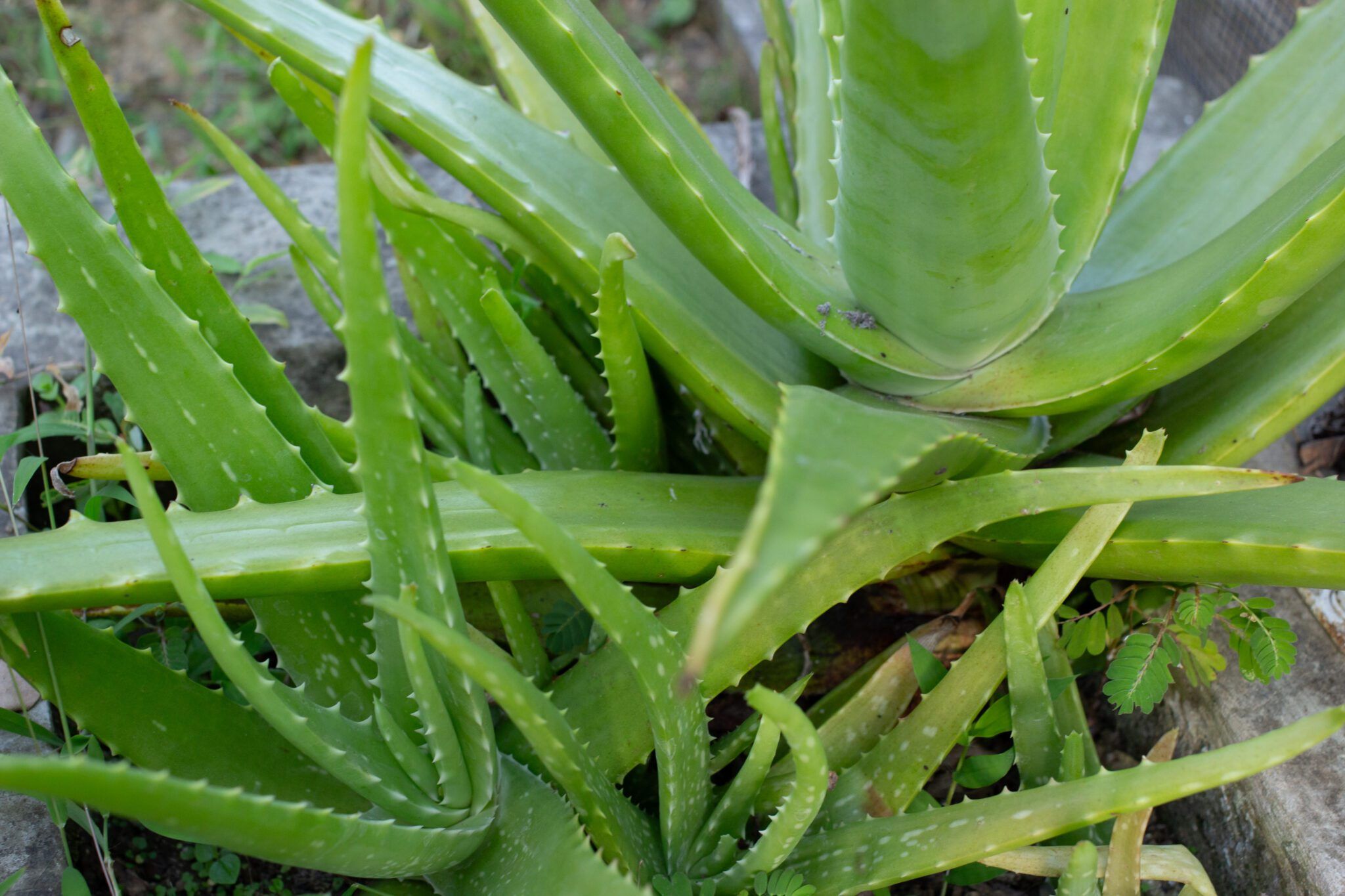
Thanks to its popularity as a soothing, healing herb—aloe vera’s annual sales are estimated at over $1 billion per year—it’s easy to recognize this succulent plant by its thick, fleshy, spikey leaves. You may have already used it to treat a sunburn or rash, and you might even have some plants of your own. Did you know that aloe vera can help your dog as well as you and your family?
What is Aloe Vera?
There are several hundred species of aloe, but the most widely used is Aloe barbadensis, which is commonly known as aloe vera.
Native to the Arabian Peninsula, this aloe species is grown around the world. Its leaves contain a clear gel encased in a yellow latex film, both of which have medicinal properties. Aloe’s active ingredients include enzymes, amino acids, polysaccharides, vitamins, and minerals. Its inner gel has medicinal and cosmetic applications, while the outer latex layer contains aloin, a bitter compound with laxative effects.
Is Aloe Vera Safe for Dogs?
Some parts of the aloe vera plant are considered safe for dogs and some are not.
As mentioned above, the yellow latex layer that grows between the aloe plant’s leaves and internal gel contains aloin, which irritates the colon lining and triggers intestinal cramping. Those parts are not safe for dogs. If your dog consumes part of a whole leaf, symptoms to watch for include:
- Vomiting
- Diarrhea
- Stomach pain
- Loss of appetite
- Lethargy
- Drooling
- Significant gastrointestinal upset
Luckily, dogs are not usually attracted to aloe. However, curious puppies might chew on or swallow part of a leaf and adult dogs might lick freshly cut aloe vera containing the yellow latex layer that causes problems. If your dog does consume aloe leaves, call your veterinarian or contact the ASPCA Animal Poison Control Center at (888) 426-4435 or the Pet Poison Helpline at (855) 764-7661 for veterinary advice. A consultation fee may apply to the ASPCA call and a fee of $89 applies to the Pet Poison Hotline.
In contrast, the clear inner gel of the aloe vera plant is generally considered safe for use on dogs. Very few medicinal herbs have been clinically tested on dogs, but aloe vera is one that has. For example, studies published in Veterinary World, Microbial Pathogenesis, and Research in Veterinary Science have documented aloe vera’s effects on canine pyoderma (a bacterial skin infection), leishmaniasis (a parasitic disease that causes skin ulcers and other tissue damage), and skin wounds. The Veterinary World study concluded, “Aloe vera 40% ointment may be a suitable alternative to antibiotics for the treatment of staphylococcal pyoderma in dogs,” and the Research in Veterinary Science study concluded “Aloe vera was more effective than silver sulfadiazine in accelerating wound shrinkage, reducing healing time and decreasing the severity of the associated injuries.”
How Does Aloe Vera Work?
Enzymes in aloe vera gel have an anti-inflammatory effect, reducing inflammation in rashes, hot spots, and other skin irritations. Bradykinase, a key enzyme in aloe, helps break down inflammatory swelling or redness and itching, such as from insect bites.
Its amino acids are the building blocks of proteins that maintain skin and coat health. Aloe vera’s saponins, which have cleansing and antiseptic properties, help speed wound healing. Minerals such as calcium and potassium are important to muscle contractions and nerve signaling.
Aloe vera can treat or speed the healing of:
- Scrapes and abrasions
- Insect bites
- Poison ivy exposure
- Minor burns
- Rashes
- Hot spots
- Mild allergic skin reactions
- Skin irritation from sutures after surgery
- Dry, itchy, or flaky skin
What Is the Best Way to Apply Aloe Vera?
If you have an aloe vera plant, simply cut or break off a leaf and slice it open. Avoid the yellow latex film that’s just inside the leaf’s skin and use a spoon to remove the clear gel in the leaf’s center. Hold it securely (it’s slippery) and gently glide the gel over your dog’s skin. Apply enough aloe vera gel or juice to cover the affected area and let it dry, repeating as needed.
Aloe Vera Products for Pets
Several aloe vera gel products are labeled specifically for pets including:
- Buddycare Aloe Vera Gel
- Aloe Plus DermoGel
- Bugalug’s Aloe Soothing Gel for Pets
- Raslok Aloe Vera Gel for Dogs
In addition, many products labeled for pet use combine aloe vera gel with other ingredients, such as:
- Nature’s Specialties Aloe Concentrated Pet Shampoo
- Amazonia Pet Care Aloe Vera Shampoo
- EarthBath Oatmeal & Aloe Conditioner
If you are considering aloe vera gels intended for human use, make sure they don’t contain any additional ingredients that might be toxic to dogs.
Can Aloe Vera Be Used Internally?
Aloe vera’s clear gel or juice contains polysaccharides that soothe and coat mucous membranes, which is why aloe vera is said to improve gut health, the immune system, and nutrient absorption. Human studies support claims that aloe vera juice helps metabolize sugars, fats, and starches while reducing inflammation, promoting a healthy gut microbiome, and improving muscle and joint function. It is associated in humans with a reduction of acid reflux and more balanced pH levels that reduce heartburn symptoms. In dogs, small amounts of aloe vera juice added to food may help improve overall digestion, enhance skin health, act as a prebiotic that improves the gut microbiome, boost immunity, and support joint health.
Some whole-leaf aloe supplements are labeled “aloin-free,” “decolorized,” “decolorized whole leaf,” or “purified,” indicating that any traces of the plant’s yellow latex have been removed by charcoal filtering or a similar process. Inner leaf or inner fillet aloe juice contains very little aloin because the plant’s latex layer is removed before processing. Whole leaf aloe juice should state that it has been decolorized or purified.
Aloe Vera Juice for Pets
Aloe vera juice that is labeled for human consumption without the addition of other ingredients such as sweeteners and flavoring agents can be added in small amounts to your dog’s food or treats. One safe option is Lily of the Valley’s Preservative-free Aloe Vera Inner Fillet Juice, a mild tasting, organically grown, IASC-certified aloe beverage that supports digestive wellness. (The International Aloe Science Council, or IASC, audits manufacturers and certifies aloe vera products for quality.)
Aloe vera has a distinctive flavor and it isn’t one that tends to attract dogs, which is why adding small amounts to food rather than drinking water is recommended. Start with small amounts and increase them gradually for best results, beginning with 1/4 teaspoon per 20 pounds of your dog’s weight per day. After two or three weeks, with your dog responding well, continue that amount or slowly increase and eventually double the dose.
When Not to Use Aloe Vera for Dogs
Aloe vera is versatile, but it isn’t a magical cure for all problems. Contact your veterinarian or choose another remedy to treat:
- Deep cuts
- Puncture wounds
- Seriously infected skin
- Surgical incisions unless recommended by your veterinarian
- Large burns
- Skin with heavy drainage
Alternatives to Aloe Vera for Dog Skin Care
If you aren’t able to use aloe vera or would like an effective substitute for its topical or oral applications, click on these links to consider:
- Coconut oil, which can soothe dry, irritated skin and, when added to food, help improve the skin and coat.
- Calendula, a versatile, skin-friendly flower that is easy to brew as a tea rinse.
- Chamomile, another skin-calming herb with easy pet applications.
- Oatmeal, which is famous for skin-soothing baths.
- Apple Cider Vinegar, which has dozens of topical and oral pet uses.