

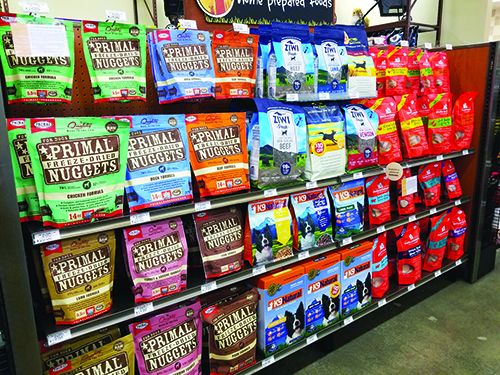
Freeze-dried or dehydrated dog foods have certain benefits when compared to traditional wet (canned) or dry (kibble) dog foods. Before incorporating these foods into your dog’s diet, it’s important for you to learn more about those benefits, as well as the process for making these foods, including safety measures.
BENEFITS OF FREEZE-DRYING OR DEHYDRATING
The methods used to radically lower the moisture content of rehydrated or freeze-dried foods have the following advantages over baking or extruding the foods at high temperatures:
- These methods preserve the food (nearly stopping the biological activity that causes a food to decay) with less damage to the ingredients’ natural enzymes or vitamins than cooking temperatures cause.
- This means the meats and other ingredients are, by strict definition, raw. For those who believe in the benefits of raw diets, this is huge. (We’ll discuss those who consider raw foods to be dangerous in a minute.)
- When rehydrated, these foods are highly palatable to most dogs. It may be due to the concentration of flavor in freeze-dried food ingredients or their minimal processing. Dogs with poor appetites (like very senior or chronically ill dogs) may accept these foods when nothing else appeals.
- As a generalization, the makers of these products are targeting the top end of the market and have an extraordinary commitment to sourcing top-quality ingredients
SUBSCRIBERS ONLY: Click here to see Whole Dog Journal’s list of approved freeze-dried and dehydrated dog foods
DIFFERENCES BETWEEN FREEZE-DRYING AND OTHER DRYING METHODS
Freeze-dryers expose foods to low temperatures, freezing them relatively quickly, and then to high air pressure. When the pressure inside the freeze-drying chamber is high enough, small heating units are turned on, heating the trays that the food sits on, and causing the frozen water (a solid at that point) in the foods to transform into a gas (water vapor). Pumps pull the vapor out of the chamber while keeping the internal air pressure high.
Like freeze-drying, air-drying can be accomplished at low temperatures, but it takes longer and leaves meats and fats vulnerable to oxidation (spoilage); most foods are dried with temperatures of 140ºF to 180ºF. At these temperatures, the food is actually lightly cooked; the cellular structure (and thus the aroma and taste) of meats, fruits, and vegetables actually changes and the taste and appearance. In contrast, proper freeze-drying doesn’t affect the appearance or taste of foods as much.
The freeze-drying process sounds extreme, but the process actually leaves most foods less damaged than dehydration, which toughens meats and other ingredients.
RAW SAFETY
The Food Safety Modernization Act (FSMA) of 2011 contains zero-tolerance policies for pet foods that test positive for pathogenic bacteria. For this reason, some of the manufacturers of freeze-dried raw foods subject their products to a “kill step” known as high-pressure processing (also known as high-pressure pasteurization, and in either case abbreviated as HPP); they don’t want to risk increased surveillance or recalls from food control officials.
The owners of some other companies, however, believe so strongly in the benefits of raw foods that they refuse to use a kill step. Instead, they rely on the quality of their ingredients and their own food “hazard analysis and critical control points”(HACCP) plans to prevent selling contaminated products. They understand that the FSMA policies are present to protect dogs and their owners, and that today’s human food supply does sometimes contain pathogens – but they also have observed that most healthy dogs can easily digest and benefit from raw foods – even raw foods that may contain some pathogens. (Few healthy dogs have trouble with Salmonella, for example, though Listeria and e. Coli are another story.) And, importantly, they engage and educate their consumers about these facts.
There are food-industry experts who feel strongly that HPP is a very safe technology, and others who worry that it may alter foods on a molecular level. We feel fine about HPP; we’ve been to HPP plants and observed the raw dog food before, during, and after treatment and have confidence that it is not harmed or made unsafe to feed. On the other hand, we respect the right of owners to feed raw foods that have not undergone a kill step – as long as they are informed about the risks to which they are subjecting themselves and their dogs.
Some of the companies utilize a “test and hold” program whereby finished products are tested for pathogens and not released for sale until results indicate the products are uncontaminated. Buying a product from companies that employ a test-and-hold program is a good way to ameliorate fears about a raw and unpasteurized diet.
SUBSCRIBERS ONLY: Click here to see Whole Dog Journal’s list of approved freeze-dried and dehydrated dog foods

I feed Dr Harveys dehydrated food but can find no reviews from Whole Dog Journal or Dog Food Advisor. My dog has chronic Kidney disease so I add the appropriate amount of fresh meat. Is this a correct food for an older dog with kidney problems. He does like it
I give my dog Ultimate Pet Nutrition,
Nutra Complete 100 percent freeze dried raw. Recommended by Dr Richter Veterinarian. She absolutely loves it. I use it as a topper.
Corretion – Freeze drying is a process where a vacuum pump pulls the air out of the chamber. IN the article it says high pressure several times. It should be LOW pressure. That allows sublimation to occur and the food dries out.
I have a question: Can I request an article about dogs having strokes. I don’t remember ever seeing anything about that but mostly i lost my 13 yr old spaniel last November and i believe it was a stroke although we don’t know for sure. If a vet doesn’t have an MRI machine, how would we be able to know??? My dog woke me up at 4 am screaming and then couldn’t stand up…would that be a sign of a stroke???
Ok, I thought, key word here is “thought about” feeding freeze dried instead of Frozen Raw Patties. OMG, the insanity of PRICING going on in the USA today is nothing short of “robbing people” of quality foods for their Pets & humans!!
I have train dogs for 25 plus years, I have always lean to Holistic/Raw if I could afford it. 1.5 years ago I lost my oldest Golden 14.5 years. The guy I have now will never make 12 & maybe not 10? You would never know that from looking at him. I so I do all that I can to keep his health the best. I started feeding completely Raw once I lost the old man. But I’m not sure how long I can keep this up.
I had Polio as a child & at 67 life is much harder.
But, Whole Dog Journal thank you for all you do to give us great information.
Scott
Thank you for the article. I’m questioning one point. My research of freeze drying is that freeze dried is not subjected to high pressure but to vacuum. It’s the vacuum that changes the water to a gaseous state.
I have tried the freeze dried cat and dog food but I always let them rehydrate in broth. Since they are dried I am concerned about my fur babies not getting enough water or moisture and them having lots of trouble. Even with rehydrating them there stool seems to be dryer. I am concerned as 1 of my cats had a problem with blocked intestines so I mix rehydrate and freash. Is this ok?