

I was teaching a “teen dog” class last night, and we were working on the “stay” behavior. In the training center where I teach, we instruct the students on the “four Ds” of stay – distance, duration, distraction, and disappearance (the last one, very advanced, when the handlers can leave the room and their dogs will “hold” the stay). We teach that when you increase the difficulty of one of the “Ds,” you should decrease the others – so, in the high-distraction environment of the training center, with eight dogs in the class, to help your dog succeed, you should reduce the distance and duration of the stay you ask of your dog. So far, so good.
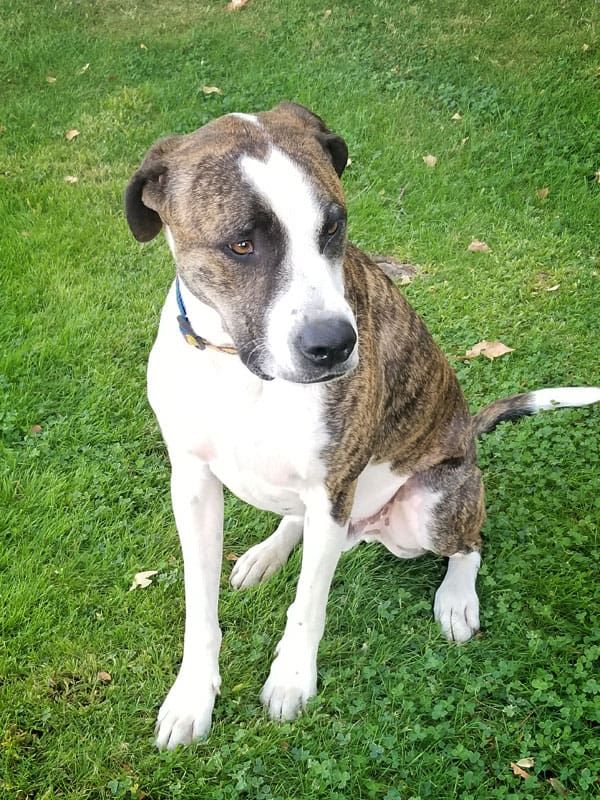
As the handlers and their dogs practiced, I noticed one dog doing exactly what my younger dog, Woody, does when we work on the stay behavior. Every time this dog’s handler gave the hand signal and verbal cue for “stay,” his dog turned her head away, jumped to her feet, and looked around for something else to do. Clearly, there is something about the stay behavior that she found either aversive or perhaps just far less rewarding than the other behaviors we practiced in class.
Woody Doesn’t Like the Stay Cue
In Woody’s case, he loves doing all the “action” sort of behaviors I might ask him for: sit, down, stand, back up, spin, go through my legs. And he enjoys the eye contact that we usually share while we are working on these behaviors. But, just as the dog in class last night, often, when I cue him for “stay,” his head will immediately swivel and he will look away, like, “Did I just hear the doorbell? Maybe I should go check!”
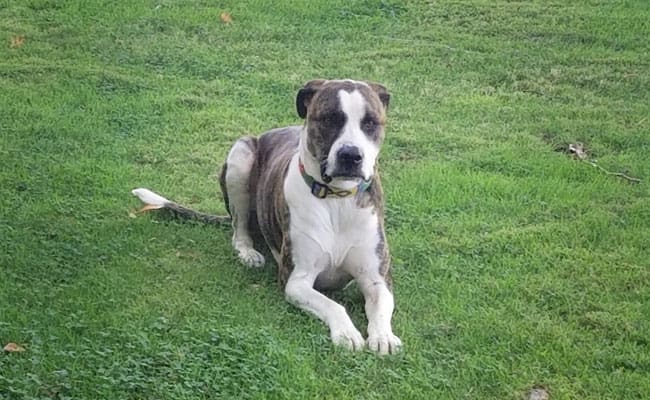
As an active dog, I think Woody finds the stay behavior extremely boring – and what’s more, it’s more difficult for him to do than the far more fun, active, exuberant behaviors. Not difficult physically – difficult mentally. To counter this, and keep solid stays, I really need to increase the quality and quantity of the rewards he gets for good stays, keep the length of the behaviors extremely unpredictable (if they are all long, no reward is good enough to make it worth his while!), and not over-practice. This is one of his behaviors that gets worse with more practice, not better, since he finds it to be extremely not fun.
Resist the Urge to Over-Practice!
It’s human to want to keep practicing the behavior your dog is not very good at – especially when she’s really good at almost every other behavior you ask for! But resist that urge! – unless you can find a way to change how you ask for or practice the behavior, so that your dog actually loves to hear your cue for that particular behavior. Woody loves to come find me when I hide, so I guess I will start cueing him to “stay” before I release him to find me (with a whistle, from my hidden location). I hope that will increase his interest in and desire to “play” the “stay” game.
Are there any behaviors that your dog hates being asked to do? How can you tell he or she doesn’t enjoy it? How have you countered your dog’s unhappy reaction to the cue?


Hi Carmine, you say your dog is a “new rescue”. It takes time to establish relationships, and one dog will progress differently than another. I’ve had dogs who took as long as a year to establish eye contact and many months to achieve other desired behaviors.
Please be patient, especially with the expectation to make eye contact. I realize you probably already know that in a dog’s world prolonged eye contact is interpreted differently. But, again, if we take time with a dog’s learning style and quirks, the patience will pay off.
Thank you. I love the dog and am committed to working with him. I’m sure he has some baggage (he’s from Puerto Rico) so however long it takes.
My new rescue simply will not come. While he will sit, lay, roll over, shake, he doesn’t make much eye contact unless the treat is close to my face. I walk him daily at least twice and he walks pretty good unless distracted and then he pulls and barks. He doesn’t look at me and doesn’t respond if I call his name, treat or no treat, unless he is “engaged” and wants to. He definitely makes his own decisions.
I am working on recall but it’s really not going well. 🙁
I never use the command, “come.” Instead, I have taught my dogs “Touch,” where they run up to touch their nose to my open, flat hand. This command is ALWAYS heavily reinforced and is much more reliable than “come.” AND I always reinforce with yummy treats when I hook the leash to their harness and we leave outdoor playtime.
Get over it.
Why use ‘stay’ or wait’ as a command?
‘Sit/down means ‘Sit/down till I give you another command or release you’
I might return, I might recall, I might just say ‘That’ll do’.
It’s not about giving your dog clues about what’s going to happen next.
Bravo! You get it. 👍
Nah. I don’t like to use anything ‘everyday’ that needs a release signal. Keep that for Trialling.
Gary h
I have an English lab that will not swim or retrieve. I tried everything but no results.
Love this! And, that you are allowing your dog some choice with his stay. My dog came to really not like “come” so I eventually gave up on the cue and retaught him with “here boy” which works and I’m careful not to overuse it.
My German Shepherd, Chip, dislikes “fetch” (or “go get it”). He knows the command, and will give me a look that says, “if you want it so much go get it yourself”. With much prompting he will very sluggishly get up, get the toy, and meander (ever so slowly) back to me and drop it at my feet. Even with treats and lavish praise he seems to feel this request is beneath him, and each request yields the same response. You can practically see him rolling his eyes. We have videoed this and it is very funny. He is fine with other commands (sit, down, wait, come, high five, roll over…). Guess I’ll never be able to get him to bring my slippers…
Having several dogs I had trouble with stay…I introduced a platform…my dogs love it….they really find it fun to run and sit stay when given the cue from any area inthe house….welcome company!!
I learned that my dog didn’t like the stay command. It was my hand moving toward her face from about 6 inches away. I realized I would hate that too! So now I use a sideways swipe of my hand about 6 inches in front of her. This makes her more comfortable!
“STAY” means exactly that: “STAY” where I left you; as I left you; I am coming back for you! DO NOT CALL YOUR DOG TO
COME TO or FIND YOU if you give the “STAY” command!
Exactly Dee! I use a “Wait” command for “come find me”, Recalls, “get it!” etc. anything that will require the dog to move to do another action. “Stay” means stay until I return or release (using the “Free” command) I also always step out with my left foot for “Heel” and my right for “Stay or Wait” they do pick-up on that. I’ve had dogs that I don’t even have to give a command or hand signal to that just know what to do depending on which foot I leave them with.
Yes but even a “stay” command has to have a release (word) otherwise there is no way way for the dog to know when they no longer have to stay.
I also find many people will tell their dog to “Stay” when they are leaving them in the house or in the car.
That is not the right time to use “Stay” which means “Stay exactly on that spot”
Instead i tell my dog to “watch the house” or or watch the “car.”
We do trick training for fun – my dog loves the roar of the crowd and showing off, and we’ve both learned so much. He wasn’t crazy about roll over or play dead as he is not the most confident dog, and so likes to be more aware than is possible in that position. My solution was to break the behavior into multiple parts, add the best treats, work only at home where he feels super safe, ask for them very rarely and during sessions where he gets to do lots of his favorites. The end result is they are no longer tricks he doesn’t like, and are useful behaviors for animal husbandry.
My yellow lab does the same thing when we do the sit stay! I always thought it was so funny how she wouldn’t look at me and turned her head away during the duration of the stay. She, too is very active, and maybe this is why! Thanks for helping me understand this funny look she gets!