

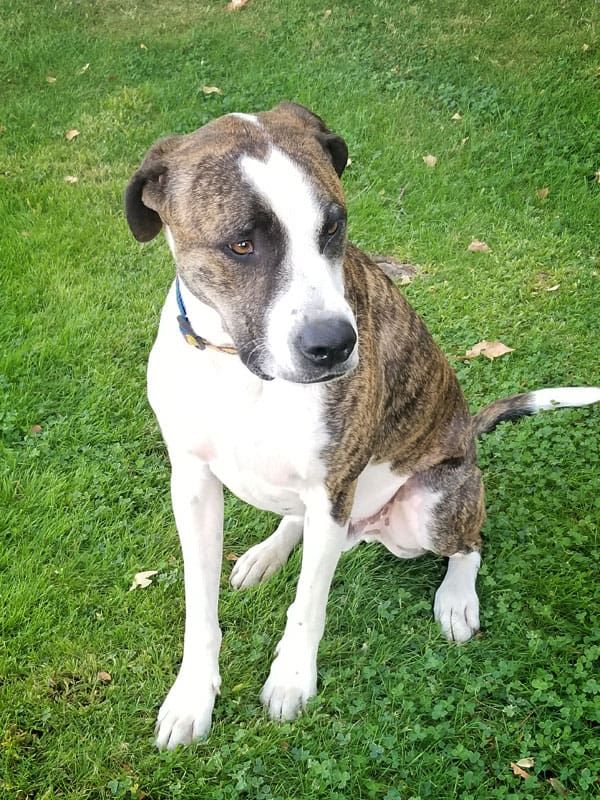
I was teaching a “teen dog” class last night, and we were working on the “stay” behavior. In the training center where I teach, we instruct the students on the “four Ds” of stay – distance, duration, distraction, and disappearance (the last one, very advanced, when the handlers can leave the room and their dogs will “hold” the stay). We teach that when you increase the difficulty of one of the “Ds,” you should decrease the others – so, in the high-distraction environment of the training center, with eight dogs in the class, to help your dog succeed, you should reduce the distance and duration of the stay you ask of your dog. So far, so good.
As the handlers and their dogs practiced, I noticed one dog doing exactly what my younger dog, Woody, does when we work on the stay behavior. Every time this dog’s handler gave the hand signal and verbal cue for “stay,” his dog turned her head away, jumped to her feet, and looked around for something else to do. Clearly, there is something about the stay behavior that she found either aversive or perhaps just far less rewarding than the other behaviors we practiced in class.
Woody Doesn’t Like the Stay Cue
In Woody’s case, he loves doing all the “action” sort of behaviors I might ask him for: sit, down, stand, back up, spin, go through my legs. And he enjoys the eye contact that we usually share while we are working on these behaviors. But, just as the dog in class last night, often, when I cue him for “stay,” his head will immediately swivel and he will look away, like, “Did I just hear the doorbell? Maybe I should go check!”
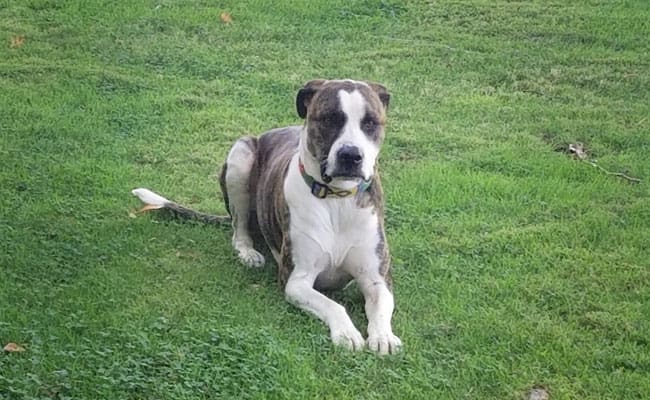
As an active dog, I think Woody finds the stay behavior extremely boring – and what’s more, it’s more difficult for him to do than the far more fun, active, exuberant behaviors. Not difficult physically – difficult mentally. To counter this, and keep solid stays, I really need to increase the quality and quantity of the rewards he gets for good stays, keep the length of the behaviors extremely unpredictable (if they are all long, no reward is good enough to make it worth his while!), and not over-practice. This is one of his behaviors that gets worse with more practice, not better, since he finds it to be extremely not fun.
Resist the Urge to Over-Practice!
It’s human to want to keep practicing the behavior your dog is not very good at – especially when she’s really good at almost every other behavior you ask for! But resist that urge! – unless you can find a way to change how you ask for or practice the behavior, so that your dog actually loves to hear your cue for that particular behavior. Woody loves to come find me when I hide, so I guess I will start cueing him to “stay” before I release him to find me (with a whistle, from my hidden location). I hope that will increase his interest in and desire to “play” the “stay” game.
Are there any behaviors that your dog hates being asked to do? How can you tell he or she doesn’t enjoy it? How have you countered your dog’s unhappy reaction to the cue?


We had a New Zealand Huntaway for almost 16 years but had to put him down on Veterans day weekend. It broke our hears because he was such a great dog. He was easily trained but he still tugged on the leash some, which we were not able to break him of that.
We got a rescue dog (Shepard mix) from our local shelter that is about 16 months old and he is very energetic with a lot of bad habits. We are having difficulty trying to break him of five bad behaviors. Jumping up on me and other people, defiant barking, putting his mouth on our arms (which draws blood from His Sharp teeth) and nibbling using his front teeth, which I have been told that that is his affection, but it pinches little blood blisters which bruises, but he just can’t be walked on a leash. He pulls like a tractor and almost pulls us down. It may be that we should have gotten an older dog but positive reward training does not see to work with him. He does sit, is house broken, Shake hands, lie down all using treats. I don’t know how to break him from pulling on the leash. We have tried shock collar and the spray collar for the barking control, neither worked. At our age I’m afraid that he will knock one of us down and we will break something.
My guy is a rescue greyhound. Due to their body structure it’s extremely uncomfortable for them to sit. I have never seen him sit during the year he has been with us. Along with that, his legs and neck are so long, have been unable to lure him into a down……in spite of this he is, so far, about 60% adept at a “standing stay” and will usually come when called………if I have his attention!
My three are usually good about commands, but my GSD hates, hates, hates the “Kiss” command. I’ll ask him, “Angus, gimme a kiss,” and he’ll be all growly, show his teeth, but wagging his tail the whole time. Then he’ll give a big huge slobbery kiss.
He was a street rescue and was fully trained, and I mean TOTALLY. Housebroken, come, sit, stay, lay, shake (both paws), down, up, leave it…and when you bathe him, he’s very docile. Lifts his legs, moves around…and his favorite game is “find it”. We did try to find his owners, and scanned him for a chip…but ended up with him. So part of his training may have been “no licking/kissing” so he’s struggling with his training to do as I ask. It’s getting way better…when I found him in 2017, he wouldn’t lick at all. Now, he licks without issue 90% of the time, and when he does get all growly it’s in the morning. He is NOT a morning dog, LOL.
I would respectfully disagree with folks who don’t require dogs to learn “Stay.” Both “Stay” and “Wait” are self control exercises. They seem deceptively simple, but differ greatly from nearly everything else we teach our dogs to do, in that they absolutely *require no movement or position changes,* plus self control. Canine cognition studies have shown dogs literally do not have the brain structure from which self control originates. In addition, self control behavior is not a positive adaptive behavior. Stay is just plain hard. And even if you don’t plan for a competitive career in any dog sport, Stay is one of the few commands that can actually save your dog’s life!
My dogs learn from puppyhood, that Stay requires no fidgeting, no sniffing, no changing position, no perusing the environs, no movement at all….until I return and can release with a joyous OK! Wait is also trained, as “hang on a moment, I am going to call you to come really soon, just don’t move til I say so.” It is black and white, and I work extremely hard to be consistent in my cues, and fair with rewards. Unfortunately, owners who don’t train for dog sports, often see little value in Stay or Wait, and it is their dogs that get into the faces of my well trained competitive teammates. I can train and be responsible for my own dogs and their behavior, and accurately predict and anticipate what they will do nearly always. But I can do nothing about the behavior of other people’s dogs. This is largely why AKC competitive Obedience vastly changed their Novice Group Stays to having all dogs on 6ft. Leashes, and removed the Open Out of Sight Group Stays completely. It doesn’t mean Stays are less important…it does however reduce the chance for injuries to occur on these exercises.
Unless you are training for Obedience competition, you do NOT need a stay.
I teach a ‘wait’ for normal everyday life, dog can be standing sitting or lying down whichever it prefers. in public these are only ever ‘on lead’
U do try to get a ‘stand still’ for grooming purposes 🙂
Because dogs are present minded, I want to reinforce the Stay, not the “Get up from Stay” so I wander by and treat/praise him for holding the stay and I don’t treat on release. I want him to Stay with relaxed muscles, not as a coiled spring waiting to pop up. A Newf, so he likes to stay anyway, best to give him a new command at the end or he may just keep on “Staying!”
‘Come’ is another trialling behaviour /cue.
For everyday behaviour yo can be MUCH more flexible.
For mine, just their name means YOU come to whate I can see you, “DOGS!” means the lot of you come to where I can see you. Others are more like talking to my children.
Obedience cues are similar to marching commands
!
Is there a posibility that maybe sitting could hurt, and therefore does not feel too good to stay sitting , maybe if you ask him to lay down and a stay…. who knows
My 18 mo. old yellow Lab refuses to go down. I probably don’t ask her to do it often enough but she really balks. My sister suggested having her spin in a circle with a treat and then kind of pushing the treat into her but so far it hasn’t worked. She’s too strong to just push down. Ideas?
Try “capturing” the down–mark and treat every time you see the dog lying down, especially if you catch her still in process. After she understands what behavior is earning the reward, she will likely try it voluntarily at some point, and you can reward heavily.