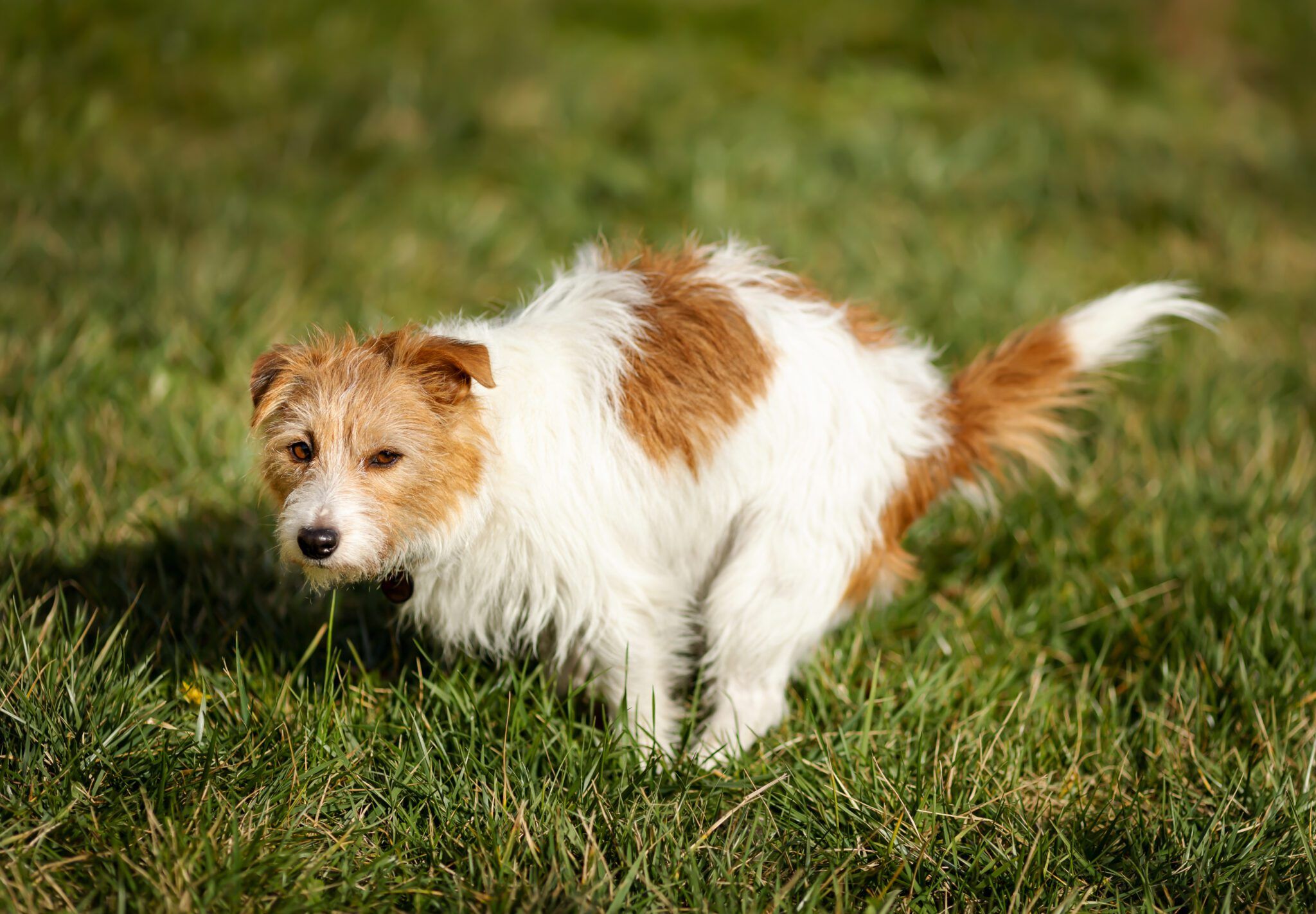
Constipation is uncomfortable for anyone and dogs are no exception. If your dog is straining to poop, a laxative may provide the relief he needs—but only when used correctly. To help identify any potential problems early, monitor your dog’s defecation routine to ensure that everything that goes in is indeed coming back out easily and without drama. If something seems slightly amiss, there are things you can do to help your dog at home.
Does My Dog Need a Laxative?
Most dogs defecate once or twice a day but skipping once in a while is nothing to worry about. If your dog goes longer than 48 hours without pooping—or has additional symptoms—it’s time to start paying attention.
Signs of dog constipation include:
- Small, hard stools
- Straining when defecating
- Only small amounts of liquid or mucus coming out
- Not producing any stool for 48-72 hours
- Fresh blood on poop
- Crying out when defecating
- Pacing, panting, and other signs of anxiety when trying to poop
- Distended abdomen
- Vomiting
- Poor appetite
- Lethargy
- Painful abdomen
If your dog has a straightforward case of constipation, a laxative will help. But if a different issue is causing his elimination troubles, giving a laxative could cause harm. Because of this, it is important to always discuss your dog’s symptoms with your veterinarian before giving a laxative.
Common Laxatives for Dogs
One of the most common laxatives used for dogs is polyethylene glycol 3350, known by the brand name MiraLAX. This product is readily available over the counter and is usually easy to give to dogs mixed into their food. It works by drawing water into the colon, stimulating defecation. Your veterinarian can give you a safe dose for your dog based on his weight.
For dogs with chronic constipation, you may end up giving MiraLAX on a regular basis and adjust the dose over time to achieve ideal stool consistency.
Another laxative sometimes used in dogs is dioctyl sodium sulfosuccinate (DSS). DSS is a stool softener that comes in a variety of forms. It can be given by mouth to soften your dog’s poop, or it may be given as an enema by your veterinarian (do not try this at home!).
When it comes to natural laxatives for dogs, plain canned pumpkin is one of the best. It is safe, easy to find, and most dogs like it. Adding a small amount of plain canned pumpkin to your dog’s meals may help relieve mild constipation and can help prevent future episodes. Generally, it is best to start low and increase the dose gradually—for example, start with ½ teaspoon per meal for small dogs and build up to 1 teaspoon. Large dogs may be able to take 1 tablespoon per meal.
How To Treat Dog Constipation at Home
You can try to treat your dog’s constipation at home if he has a mild case—straining when defecating and producing small, hard poops. If your dog does not respond to home therapy, other symptoms develop, or he fails to poop normally for 48-72 hours, it is time to call your vet and get help.
Here are some things you can do:
- Increase hydration. Dehydration is a prime cause of constipation and increasing your dog’s water intake may soften his stools enough to get him back on schedule. Have fresh clean water available throughout your house and in your yard. Add water to his meals or feed canned food to increase the moisture in his diet.
- Promote exercise. A good brisk walk can stimulate defecation. Overweight dogs are more prone to constipation, so developing good exercise habits will help to keep your dog fit and prevent future episodes.
- Increase fiber. Fiber sources you can add to your dog’s food include plain canned pumpkin, psyllium powder, broccoli, kale, and spinach. Start with small amounts and increase gradually, as giving too much fiber too fast can make constipation worse.
- Add a probiotic formulated for dogs. While a probiotic is unlikely to resolve constipation by itself, it does promote a healthy GI tract which will benefit your dog in the long run.
As mentioned above, do not give your dog a laxative for constipation unless you’ve talked with your veterinarian. While overall safe, giving a laxative to a dog with a more complicated health issue at play can be dangerous.
Many things can cause constipation in dogs. Often it happens because the dog ate something that irritated his GI tract or was hard to digest, such as plant matters, bones, or a bunch of hair. Certain medications can also cause constipation due to slowing of the digestive process, and it is common for dogs to not poop for a day or two after being under anesthesia.
More dangerous causes of constipation include:
- Dehydration
- Foreign object stuck in the GI tract
- Severe pain preventing normal elimination
- Pelvic injuries
- Perianal injuries
- Diseases of the colon such as infection, megacolon, nerve damage, or cancer
- Hormonal disorders such as hypothyroidism
- Prostate disorders such as benign prostatic hyperplasia in intact male dogs
- Neurological diseases
- Tumors in the GI tract or affecting nerves that control digestion
Treating Dog Constipation at the Vet
If you need to take your dog in for treatment, your veterinarian will examine your dog and potentially run some diagnostic tests to determine why your dog is constipated. X-rays will reveal how much stool is stuck in your dog’s GI tract and are also helpful to identify foreign body obstructions and tumors. Bloodwork can pick up metabolic diseases and signs of infection. Fecal exams will identify intestinal parasites that may be causing trouble.
If an underlying cause for the constipation is found, your vet will start treatment for that problem as well as working to relieve the constipation directly.
Things your vet may do include:
- Giving subcutaneous (under the skin) or IV fluids to hydrate your dog.
- Giving one or more enemas to loosen the stool and make it easier for your dog to expel. This may require sedation for highly anxious dogs or dogs who are in pain.
- Manual deobstipation to physically remove the firm stools from the colon. This is usually done under sedation or full anesthesia because it is not comfortable.
Your dog will probably be sent home with a laxative to ensure that his newly cleared GI tract continues functioning normally. Keep track of his defecation over the next several days to be sure that he is pooping normally and update your veterinarian with any changes.