

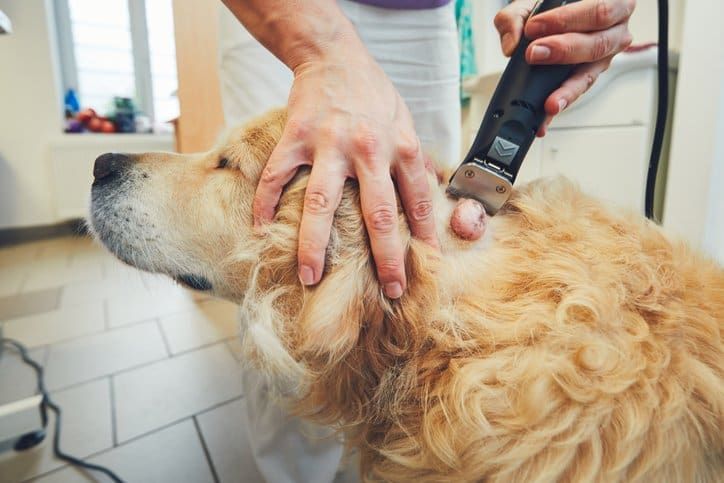
Cancer is a word that strikes fear in the hearts of dog owners. As human cancer deaths rise in the United States, you may wonder if a similar phenomenon is happening in our canine companions. According to veterinary oncologist Dr. Stacy Binstock, estimates show that 25%-33% of dogs will have cancer at some point in their lives. It is the number one cause of death in older dogs. Those are sobering statistics. The good news is that you can help with early cancer detection and early treatment of your dog.
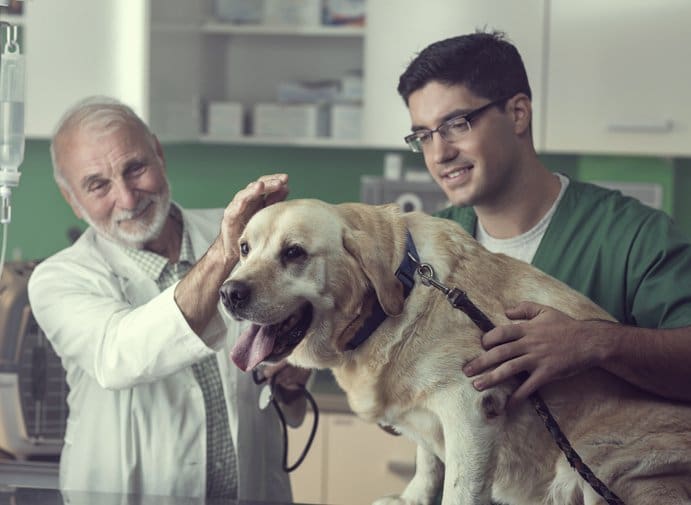
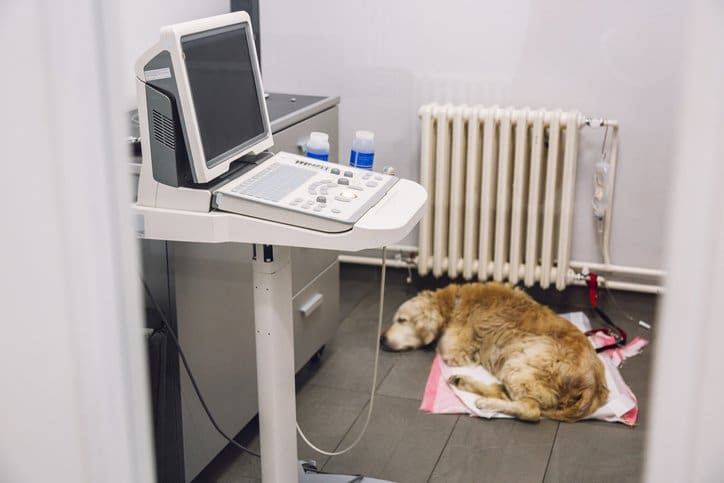
The first step is semi-annual or annual examinations with your veterinarian. These are not just vaccine appointments. A visit is needed for a thorough physical examination. Your veterinarian will check your dog’s weight, vitals, lymph nodes, heart and lungs, palpate the abdomen, and perform a rectal exam. These are all essential to early detection of illness. Weight loss may be the first sign and can be easy to miss at home. Secondly, as your dog ages, your veterinarian will likely recommend bloodwork, urinalysis, and other diagnostics. These can detect changes in organ function, possibly indicating cancer.
Types of cancer in dogs are varied and include skin, orthopedic, blood, and bone malignancies. As a result, the symptoms differ wildly and depend on which system is affected. The four most common cancers and their clinical signs are listed below.
Lymphoma. This is a frequently diagnosed cancer in dogs. It can originate in the lymph nodes, bone marrow, or organs like the spleen. The first signs may be very vague and often include large knots that are palpable under the jaw, behind the elbows, and behind the knees. These are all locations of lymph nodes that can enlarge with cancer. Other symptoms may include lethargy, weight loss, and increased drinking and urinating.
Osteosarcoma. This is a type of bone cancer seen often in large breeds such as Great Danes and Wolfhounds, although it can occur in any breed. Osteosarcoma typically grows silently at the end of a bone (called the diaphysis) until the bone is severely weakened. Early symptoms may include swelling and tenderness. Often, there are no symptoms until the tumor destroys the bone enough to cause a fracture. When this happens, your dog may suddenly be unable to walk on the affected leg and demonstrate signs of severe pain.
Hemangiosarcoma. Another type of cancer that often has no obvious clinical signs is hemangiosarcoma. These tumors can grow anywhere—on the skin or in the spleen, liver, or other internal organs. In dogs, it is most frequently encountered in the spleen, liver, or heart. Usually, no signs are noted until the tumor grows very large and ruptures. This sudden, catastrophic rupture leads to internal bleeding, weakness, and collapse.
Mast cell tumor. Boxers are especially prone to these skin malignancies. Mast cells are normally found in the skin and react when an allergen is introduced. They are filled with histamine and other substances that are released in an allergic reaction, leading to the formation of hives. Unfortunately, cancer can arise from these cells. The hallmark of an MCT is a growth on the skin that waxes and wanes in size and character. They can be small and “quiet,” or they can become large, inflamed, and weep fluid.
Always observe your dog carefully for any changes. Any skin masses or lumps that you palpate should be checked out by your veterinarian sooner rather than later! Remember, early detection is critical in catching and treating cancer.

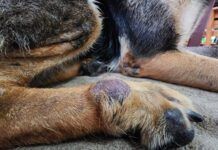

Has anyone had a dog been diagnosed with Hemangiopericytoma? my vet removed a plum-sized mass from Sawyer’s left leg at the knee, When the pathology came back it was classed as Stage one. How fast does this type of cancer progress?
Also, when my first dog died of hemangiosarcoma, the vet did blood work on my other flat-coat at my request, and the results were normal. Three weeks later he collapsed and died.
I have had three flat-coated retrievers die of hemangiosarcoma, and two of them died just three weeks apart. Typically the tumors attach themselves to blood vessels feeding blood rich organs such as the liver or heart, causing the blood vessels to weaken and rupture. There is no treatment and no early warning signs. My dogs appeared to be perfectly healthy one minute and collapsed the next. It is a devastating form of cancer and a very nasty way to go.
We lost 2 labs, sisters to cancer. They were 13 years old. I had found them thrown away as 4-month old puppies. Bella and Izzy were amazing dogs, always happy, very smart and loving.
Bella had hemangiosarcoma, Izzy has mast cell cancer in her nose, inoperable.
They got chemo and died within a month of each other….
I still miss them. My husband called them the “Babyloves”….
aww poor babies. sounds like you loved them very much!
Try Trupanion insurance for your pets. They have a one time deductible per illness (no annual deductible). If you get the plan as a puppy, you pay puppy rates for the life of the dog (no increases unless they raise the rate of puppy).
We lost our 13yr old Keeshond to stomach cancer. We had trupanion insurance and they were great-so easy to work with and very caring. We will certainly use them again
Try Trupanion insurance for your pets. They have a one time deductible per illness (no annual deductible). IF you get the plan as a puppy, you pay puppy rates for the life of the dog (no increases unless they raise the rate of puppy).
Donna I agree, I use Trupanion since my 3-yr-old was a baby. I’ve heard great things from others who use them as well.
Jane what health insurance did you have?
We lost two dogs to cancer in 2017. The younger dog was 6 y.o. when she was disagnosed with lymphoma. Enlarged lymph glands in her neck appeared suddenly and she had her first chemo treatment within 5 days. She had 4 months of weekly chemo, exhausting all options in our city, our specialist referred up to a US animal cancer clinic for further treatment. Sadly, it was an especially virulent form of lymphoma and she was never able to go into remission. If there was anything positive in this experience, she never knew she was sick. She tolerated the chemo extremely well, had only a slight reduction in her energy, no issue with appetite, and was her happy, outgoing self until 24 hours before she died. The other positive was that our pet insurance covered 90% of the treatments, which averaged about $500/week. Our other dog, a 14 y.o., died nine weeks later of histiocytic sarcoma, and, we think, grief over the loss of his companion. Given the survival rate even with chemo, we opted to put him on prednisone which reduced his pain and he was able to go walking, socializing and be his sweet self until his last couple days. Cancer is a terrible, vicious, heartbreaking disease for animals and humans and we need to support research that will find ways of preventing and treating it.
Had similar experience with my seven and eight-year-old dogs died from malignant lymphoma. That was heartbreaking and will turn your life upside down. How can I not believe something in home environment or perhaps food for both to have same cancer within 1 year of each other ?
Hi Kimberley how did your dogs present with their Lymphoma? See my post above under Diane A
I had a twelve year old Golden who was always healthy. I took her in for her yearly exam and the vet suspected liver cancer. So, she had all the diagnostics and the vet confirmed it was liver cancer. I asked if they were sure because she was still very active and didn’t seem ill to me. But, they told me when it’s time, it will hit fast. So, one day she started peeing blood. I called the vet and she said this was a sign that this was the end. So, not wanting her to suffer we had her put to sleep. I asked for all her records and upon reading them, they stated they were 95% sure they had the right dog. Records may have been mixed up with another dog. Upon reading that, I was so guilt ridden. I trusted my vet, but now I questioned her. For all I know, it could have been a urinary tract infection. I should have gotten a second opinion, but I really trusted this vet. Needless to say, I will always seek out a second opinion and I severed ties with this vet. To this day I still am so sad and feel so guilty that I didn’t get another opinion. We cried for a long time over the loss of our beloved girl.
We almost two weeks ago put our 14 year old GR down at the Vet’s recommendation. He felt with symptoms and how she looked she had cancer. She was weak, had been losing weight and had some vomiting a while back and once on first visit. That visit did not diagnose cancer but next visit was 11 days later with more decline, weakness, poor appetite and incontinence and inability or too weak to try to get up to go potty. This was when he diagnosed cancer but no xrays or scans. Now she is gone and I have regret, pain and loss and am not sure it was cancer or not. Diane
I had a 14 1/2 year old pup that died from metastatic carcinoma of the liver, pancreas and lungs! The only reason I took her to the vet, was she stopped eating one day. The vet said, just put her down. I left with my pup, and I gave her the best 9 days of unconditional love, including setting up a tent in the living room. That was one of her favorite things to do, sleep in the tent. And needless to say, I have never gone back to that heartless vet!