

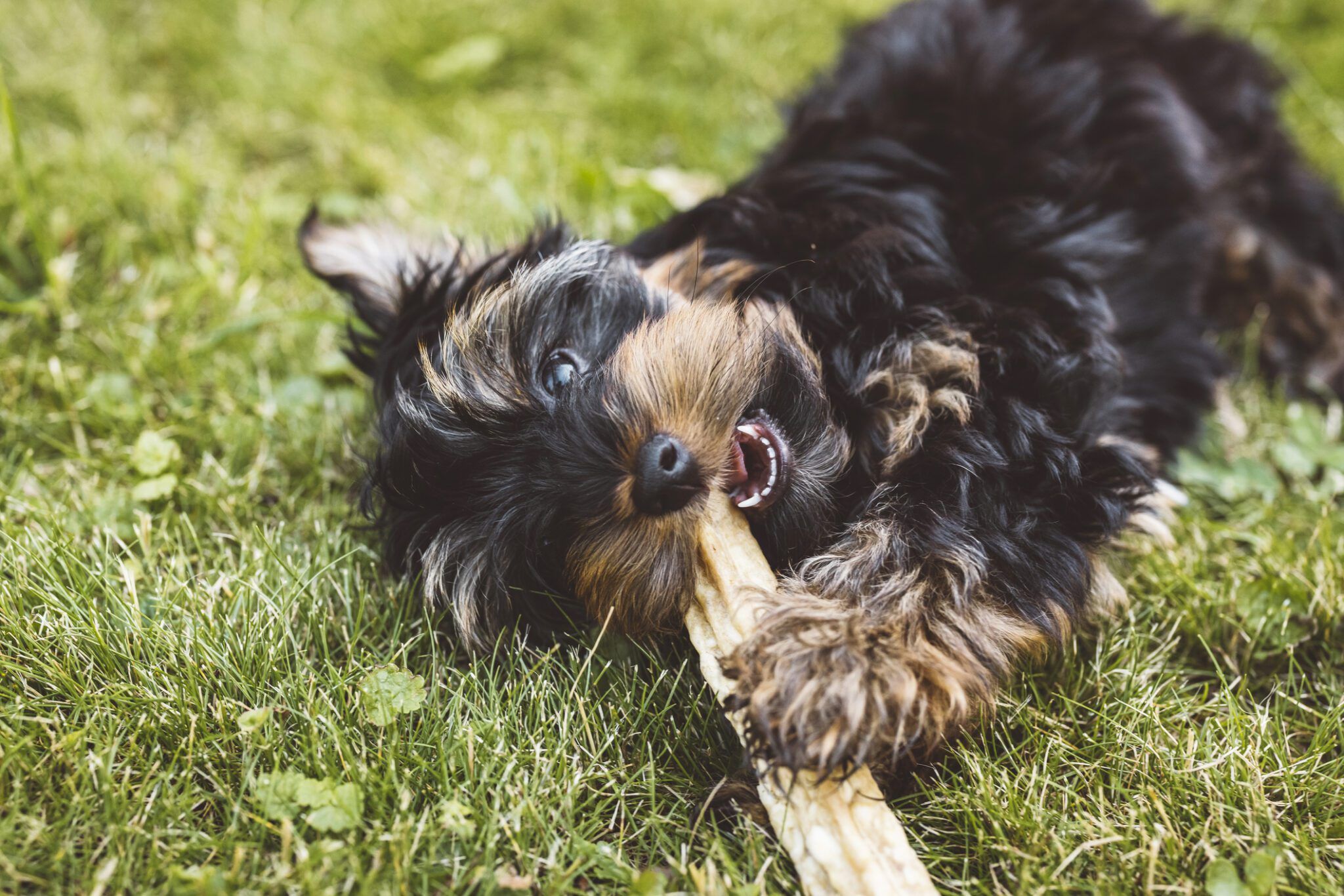
Yak cheese chews have become a popular, natural treat for dogs, loved for their durable qualities and minimal ingredient list. Originating from a traditional preservation method in the Himalayan regions of Nepal and Tibet, the hardened cheese was initially developed as a way for people to preserve milk for human consumption. Today, this same recipe, made from a simple blend of yak’s milk, cow’s milk, salt, and lime juice, has been adapted into a dog-friendly version that has captured the attention of many pet owners. Once formed, the cheese mixture is compressed, dried, and aged, creating a hardened, long-lasting chew that dogs love.
Even though these treats are made of milk, yak cheese chews have extremely low levels of lactose, a milk sugar that adult dogs are unable to digest. During the cheese-making process, most of the lactose is removed, making the finished product easy to digest for most dogs. Because of this, they are very unlikely to cause any gastrointestinal upset, such as gas, bloating, or diarrhea. However, if your dog has a sensitivity or known allergy to dairy products, it would be best to avoid feeding these chews.
Yak Cheese Chews Benefits for Dogs
One of the main benefits of yak cheese chews is their exceptional durability. Unlike soft treats or biscuits that are consumed in seconds, yak chews can keep dogs busy for hours. Providing both mental and physical stimulation. Chewing is a natural, soothing behavior for dogs and helps release pent-up energy, reduces boredom, and can even help alleviate mild anxiety. The firm, abrasive texture also helps promote dental health by helping to mechanically scrape away plaque and tartar buildup from the teeth as dogs gnaw.
Nutritionally, yak chews are high in protein and relatively low in fat, with no artificial preservatives or additives, making them a wholesome alternative to many dog dental treats available on the market that are heavily processed and carb heavy. They are free of artificial preservatives, colors, and flavorings and provide a naturally rich source of calcium and other nutrients.
Dog Yak Cheese Chews Risks
However, as with any hard chew, yak cheese chews do come with some risks. Because they are hard and dense, there is a very real potential for tooth fractures, especially in aggressive chewers. Because of this, you should always supervise your dog during chewing sessions and choose appropriate size chews to reduce the risk of injury. Another risk arises when the chew becomes small enough to become a choking hazard. Dogs may try to swallow the remaining nub, which can lead to not only choking, but gastrointestinal obstruction as well.
Yak Cheese Puffs for Dogs
Fortunately, there is a clever and safe way to repurpose any leftover pieces of yak chews: Turn them into yak cheese puffs! When the chew becomes too small to safely gnaw, you can take the remaining piece, soak it in warm water for 5 to 10 minutes, place it on a microwave safe plate, and microwave it for roughly 30 to 90 seconds, depending on its size. The piece will puff up into a light, crunchy treat, like the texture of a cheese-puff snack. It will be extremely hot, so do not handle it until it cools. Once it cools completely, it can be given to your dog as a safe, tasty, and easily digestible treat.



It’s very hard to find good chewables for heavy chewers. I won’t use Nylabone any more. My Weimaraner once broke a tooth and a friend’s retriever needed to have sharp pieces removed from his stomach. I gave yak chews a try. My vizsla quickly chewed it into chunks and swallowed. The chunks were vomited up at 3AM. We stick with the occasional bully stick now which will be consumed fairly quickly but gradually. I use a BowWow Labs bully stick holder for safety. Earth Animal No-Hide chews are safe but consumed quickly.
Thank you! I was too pointed and vocal in two replies yesterday so The Whole Dog Journal chose to restrict them from posting! My take is this article is pretty irresponsible as most larger breeds bite strength approaches that of antlers which they discourage. Now they advocate an extremely hard chew capable of fracturing teeth and destroying tooth enamel. As a guess they would rather benefit from potential advertiserincome streams versus TRUE dog health and safety! You may want to do UNBIASED research on collagen chews which are digestible and have multiple health benefits. It has GREATLY noticeably reduced our companions shedding too!
After reading your comment, I looked into collagen chews. It seems they also have a risk for breaking teeth and choking, so I don’t see any benefit over yak milk chews in that regard. My dogs love yak milk chews, but I always supervise them and take them up when they get too small.
Recommendations would be nice.
Yak Chews are available just about every where dog supplies are sold. Many even have the suggested weight of the dog on the package. They are also available on Amazon and Chewy.
Patsy and JJ love Yak Cheese sticks. They last forever and do a good job of cleaning their teeth. The only problem we have is they are very brittle. From time to time they fall off the bed and break into 2 pieces when they hit the tile floor. If 1 piece is too small I must grab it quick, I don’t want them swallowing it.
Yes, I’d like the same answer. It is interesting that you tout this item but give no information on where to buy it safely. Please do. Thank you!
My dog is just 11 pounds and is 10 years old. Are these too hard and big for her? I was considering the Yak ones sold as the “original Yak dog chews” on Chewy.
I have a 6-pound and 13-pound dog who both love yak milk chews. I buy the ones for small dogs (through Amazon). As with anything, I supervise them and replace the chew with a new one before it gets small enough to swallow. I thought the information on making yak puffs with the leftover piece was intriguing and will try it.
Can you recommend a yak chew that is highly rated and made in the USA?
Thank you.