

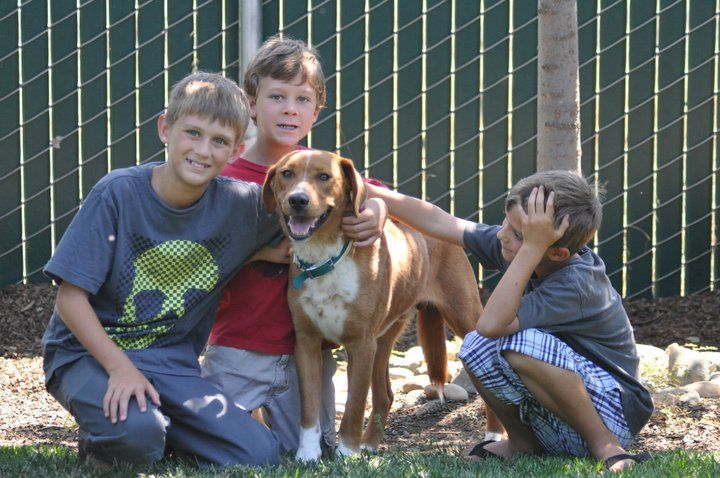
In last week’s post, I shared the information that I was on the hunt for a dog – searching on behalf of a couple I know. Both husband and wife are athletes who run for fitness and would love to have a dog who could accompany them on runs. But they are also both nurses who have long work shifts, so a dog who lives with them will have to be able to endure a certain amount of time alone at home (nursing not being a work-from-home sort of job!).
The couple lives in an urban area, so when they are at work, their dog will spend most of his or her time in their house, though they have a dog-sitter lined up (their neighbor downstairs, who has a dog I found for him!) and a dog-walker. Both the sitter and the walker will be available to take the dog out for midday breaks, but nevertheless, I know that it’s important to find a dog for them who will be content and comfortable spending time home alone. Of course, any dog can experience an onset of isolation distress – or, worse, separation anxiety – upon rehoming. But my goal is to find a dog with a mellow, “happy to accept my fate” bent to his nature.
Then I saw a social media posting for a local dog who needed a new home. He had been surrendered by a family who were having some sort of housing crisis, and had been living on a chain in a fenceless backyard for some months. The family’s neighbor, heartbroken over the dog’s plight, had begged the family to be allowed to find the dog a new home, and they agreed it would make their own lives easier to not have a dog as they try to find their next housing situation.
Well, it was a lovely dog, just three years old – but one of a highly active breed. I sent an inquiry to the woman who had possession of the dog, asking about the dog’s personality, and one thing she said made me more than a little interested: She mentioned that, despite the fact that the dog had very little shelter and was living in mud and filth, was never allowed in the house, and got very little attention from his former owners, he never barked! “Ooh!” I thought. That sounded like a good candidate! We made arrangements to meet a day later so I could meet the dog. I told her I’d be happy to foster him so I could get him neutered, tested for heartworm, and get to know him better. After all that, I would know better if he was in fact a good candidate for the couple I had in mind, or, if not, I would commit to finding a more suitable home for him.
She brought the dog to my home the next day, and I was even more interested. He has a lovely temperament, was very neutral with my dogs – neither excited nor threatened by Woody’s rambunctious play overtures or Otto’s grumpy admonitions to “Hold still while I sniff you!” The dog was quite predatory around my chicken pen, but he took my admonishments to leave them alone in stride. The most concerning behavior I saw was how he ran along every inch of my fenceline, multiple times, looking through and over the fence as he loped along, stopping every once in a while to inspect its height or a low spot underneath it. I wouldn’t expect much different from the sort of hunting breed he is, but mentally, I was already warning his new owners to not let him off-leash for months, until they got to know him very well and had a good recall on a long line.
Alas: Neither I nor the couple I was hoping to place him with made the cut. The woman who was rehoming him made the decision to place him with another family she knew, because – and here is the kicker – their home is on five acres of land. She loved seeing him run, and imagined that with five acres, he’d live out his life running around that acreage in perfect happiness.
Factors that go into dog placement decisions
My take on that decision? I was bummed, both for the couple I had in mind and for the dog. I have no way of knowing this, and I’m not going to follow up just to see if I’m right, but I’d bet $100 right now that if the dog did, in fact, go to the five-acre family, within a week’s time he’s either going to be in the wind (lost, ran away) or in a small fenced and covered pen. Not many people I know have five securely fenced acres, and without such a fence, that dog is going to be going, going, gone!
This particular placement decision was up to an individual’s discretion, so it’s not a great example. But this seemed like a good opportunity to talk about placement criteria, which, in every case, seems like it should come down to more than just one factor.
Shelters and rescues sometimes have a formal list of rigid placement rules that they follow when considering prospective adopters; in other cases, shelters or rescues may have internal guidelines as to what constitutes a “qualified home,” but they will make exceptions for the right family/dog combination.
My local shelter gives prospective adopters a questionnaire that is intended to spark a conversation with the adoption counselor and the prospective adopter. There are no hard-and-fast “wrong answers” that people can give in response to these questions that will eliminate their chance of adopting any dog – but some of their answers may call for a discussion about whether it’s appropriate for them to adopt a specific dog.
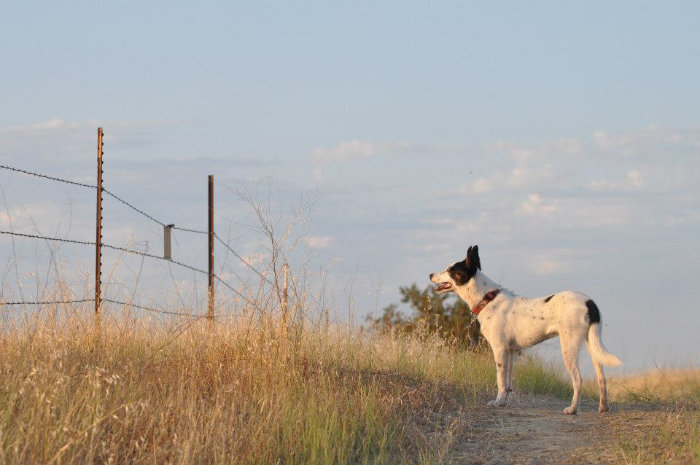
For example, while I’m aware that some shelters require adopters to have a fenced yard – which eliminates many great prospective placements! – my local shelter will weigh their preference for adopters to have a fenced yard against the size, age, breed type, and personality of the dog. If the prospect is a little senior couch potato, for example, a litterbox and/or leashed walks will be just fine!
My local shelter is perhaps most concerned about making appropriate placements to families with babies or toddlers. They worry about tiny dogs in families with toddlers – but will make an exception if they meet the child or children in a “get acquainted” room with the prospective dog, and see that the kids are very gentle, have self-control skills, that the parents are paying close attention and giving alert guidance to the kids, and so on. They won’t place anxious dogs or excitable dogs who have little self-control with a family with small kids – and will decline to adopt any dog to a family whose child seems bent on hurting a dog, or engaging in activities that are sure to make a dog defensive. That said, you won’t find these policies written down anywhere; they just try to have a conversation with parents about what they are observing and try to make it clear that it’s their job to make safe placements for the sake of all parties concerned.
My two cents: Hard-and-fast rules don’t allow for appropriate individualized placements.
In a placement competition, who should get the dog?
Then there are the cases where a shelter or rescue has to decide, to the best of their ability, which of several prospective adopters should get the dog.
Some groups have a first-come, first-served approach, where the first qualified adopter would get the dog. Others may send someone to conduct home inspections, and make their placement decision based on whose home and family really seem to suit the dog best. That’s amazing, but not possible for many rescues.
I have known people who have become frustrated about “losing” in what seemed to be an adoption competition – some, more than once! – and who relieved their frustration by just buying a puppy, either from some Craigslist/backyard breeder or a pet store that’s stocked weekly with new “inventory” from puppy mills. Yuck!
In some cases, the rationale for their rejection was ridiculous. I know someone who was turned down by a shelter to adopt a cat, because they own an intact female dog! This person is a long-time steward of an uncommon breed of dogs, and has been breeding these dogs in an incredibly careful, responsible, and limited manner for over 20 years, but Nope! No cat for you! That’s nuts.
I don’t want to cast aspersions on anyone who is involved in having to make adoption or placement decisions; I assume that anyone involved with rescue has a vested interest in making safe and appropriate placements for the “recycled” dogs in their care. And I don’t want to encourage people to express the incredibly insensitive statement that some shelter is making it harder to adopt a dog than a baby. It shouldn’t be too easy to adopt, and families should have to meet some sort of minimum standards for the dog’s health and happiness. But sometimes, these criteria are too rigid. Where is the middle ground that results in the best placements?
What are some of the rules or standards that shelters or rescues have for prospective adopters that you consider very sound or ridiculous?



Great job to rescue dogs and give a good life.
Move forward with your love ones by shopping for your pets at forward pet store
I have also been frustrated by not being chosen as the adopter by rescue groups. I’ve rescued 4 dogs and I think I’ve given them good lives. But I will say a good word for them, which is that there are probably a lot of people who want their dogs because they are cute, etc. and maybe their rules help people to hold back on their impulses. Sometimes I’ve been really disappointed, but sometimes I think, well, they know the dog best and if they think this wouldn’t work then I have to respect that. I try to re- evaluate my circumstances and see how I could improve what I have to offer. I’ve looked again at my current dog and asked myself what really would work for her. When making the huge commitment, best to have everyone on board.
It would be a huge benefit to rescue groups and homeless dogs if there was a knowledgeable and respected group that put out “Best Practices for Re-homing Dogs.” Rescue groups are well-meaning but without having guidance on best practices some groups are too restrictive and some will place dogs with any home that will take them. Neither serves the dogs who count on humans. Even rescues that are all volunteer with limited resources could work to find ways to meet best practices. Guidance on best practices by a credible organization could also support rescue groups when potential adopters say the group is being too picky. Based on my experience fostering, best practices should include: 1 – having each dog get a vet check before adoption (with advice to adopters there may be unknow medical issues); 2 – learning about each dog (a checklist would be helpful for training volunteers about what to look for, like what does the dog love and hate most, what is the dog afraid of); 3 – taking the rescue dog to a potential adopters home and watching how the rescue dog interacts with all the people and animals and in the physical space (a checklist would be helpful for training volunteers about what to look for); and 4 – written information for each adopter about how to welcome a new dog, including safety, other suggestions, and where to find help and more information.
I would add one more.
DNA testing. Especially of puppies.
The price has come down and especially in the case of puppies, people would like to know what they may be dealing with as some breeds can be prone to medical issues, I.E. deafness, hip dysplasia, degenerative myelopathy. It would also give some hints as to how big a puppy might grow, although not a certainty.
Rescue organizations and county animal shelters/humane societies also get a bulk discount for testing.
I really feel it would allow more dogs to be placed. Even though there is a shortage now, it won’t be forever.
If someone is looking for a lab mix or poodle mix or some other, DNA would open up the opportunities for adoption to more dogs and people would be a bit more confident in what kind of dog they were adopting.
As a confirmed Belgian Shepherd mom of close to 40 years, you’d think I would be a good candidate for a rescue. Nope. My first Belgian was a rescue – no group gauntlet to run because I took her directly from people who weren’t ready for Belgian antics -who lived to the ripe old age of 18 before cancer took her from me. I tried for another and after being approved as having a fenced yard, etc, lost out three times in quick succession because the fosters all decided to keep the dogs. Good for the dogs, bad for me and I went to a breeder. When my beloved 11 yr old passed from a quick acting sinus cancer I initially tried for a puppy because I didn’t want yet more rescue heart break. The breed is pretty rare and none were available, so I tried the rescue route again. And again, drama. One group wanted me to come spend two weeks in their state with the dog to see if we worked, another hedged over whether the gorgeous boy had an uncorrected severe biting issue that would be beyond my ability to resolve (gotta wonder how many returns they got by not being up front about issues) while another didn’t share why they turned me down outright. After several months I wasn’t able to be dogless any more, went back to the breeder list and found puppies. My happy, healthy and very spoiled boy lives a life any rescue would be thrilled to have. And I likely won’t ever try that route again, it’s entirely too heartbreaking and frustrating. Another great home closed because of bizarre or stringent rules.
We have two small dogs, ages 12 and 13. We are in our seventies and they are our babies. If and when they are no longer with us, I know I couldn’t not have a dog companion. The reason we would adopt an older dog is that it wouldn’t be fair to have a puppy that would outlive us. It is so sad that dogs wind up in shelters because their beloved owner passed away. Isn’t that why they are reluctant to adopt them out to seniors? Yes, we have sons with children and pets of their own, but it wouldn’t be fair to expect them to take our pet who was left behind.
That’s what my parents said when they adopted Candy as a puppy, the were both in their late 70s. I was to take her when they passed. She passed at 13 years, 9 months. After three months they couldn’t take the quiet, lonely house any more. They started looking and adopted a puppy from the same rescue I used 6 months after she passed. They were both 89 at the time. It is understood that I will be taking Dolly if she outlives them. Likewise, my nephew will be taking Diana if I die before she does. We keep it all in the family. To me, it’s no different than making provisions for your children should you die before they are adults.