

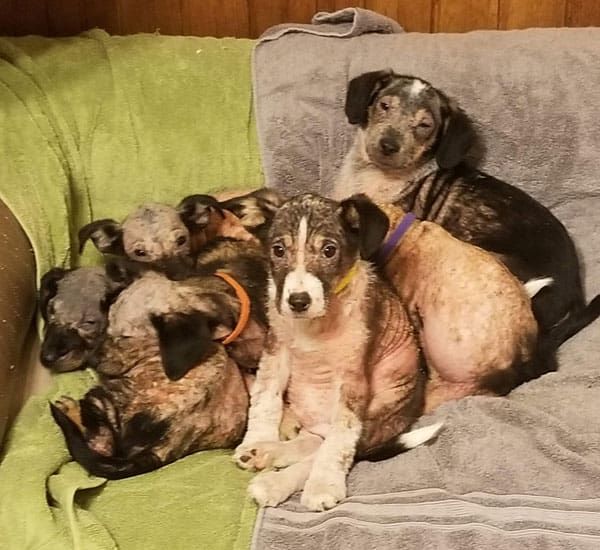
“Why don’t you just keep him?”
Everyone who fosters dogs for a shelter or rescue group has heard some version of this, probably every single time they foster:
“That puppy is so happy with you! And he gets along with your dogs so well! You should keep him!”
“I can’t believe the transformation! He looks so gorgeous now, and is so well behaved! You should keep him!”
And the clincher: “That dog loves you so much! You should keep him!”
Why we can’t just keep them all
Here’s the thing: We who foster know that our foster dogs look better, feel better, are happier and healthier, and are better behaved than they were when we got them; that’s why we foster. And we are acutely aware of how much our fosters seem to love us. We, sometimes quite painfully, love them, too. But for most of us, if we keep our foster dogs, it means we can’t foster any more. So the next time for the next few years that our local shelter or rescue group calls, looking for a foster provider for another very needy but worthy dog or litter of starving puppies, we have to say, “Sorry, I can’t.”
“But what is just one more?” our friends ask. Well, when it comes to just one more mouth to feed, truthfully, it’s not that much. But every dog owner should be aware that the price of feeding a dog is just the tip of the iceberg of a dog’s total costs.
Veterinary and insurance costs add up quickly
Veterinary costs, especially for any emergencies, can completely sink a household budget. I’m a strong believer in pet health insurance, and it has saved me thousands – but there is the matter of the monthly payment and an annual deductible. As an example, I’m currently paying $60.05 a month for 3-year-old Woody’s insurance ($720.60 for the year), and $147.38 a month for 11-year-old Otto’s insurance ($1,768.56 for the year). Both have a $250 annual deductible; I pay the first $250 of veterinary expenses each year, and then the health insurance reimburses me for 90% of the rest of that year’s veterinary bills. So, my cost each year, before I qualify for any reimbursements, is $2,989.16. The cost for one more young dog’s health insurance would be at least the cost of Woody’s: $970 before the insurance would reimburse me a penny.

Does that sound like a fortune? Well, it is. But it’s a monthly bill I can budget for – whereas a $6,000 bill for emergency surgery or a $10,000 bill for cancer treatments would be quite a blow. One can gamble with these things, but it’s just that, a gamble. And I don’t like gambling when my financial stability and emotional health are riding on the outcome.
Don’t forget about boarding or pet sitter costs
Then there is the cost of care if and when I travel. If I needed to board my dogs, the difference between boarding two and three is significant. My local boarding options charge anywhere from $45 a day per dog for a jail-like kennel and no extras, up to about $75 a day per dog for a nice facility that takes the dogs out several times a day. So one more dog would add $315 (for the jail) to $525 for a week of boarding.
Truthfully, I haven’t ever boarded my dogs or used a professional pet sitter (another option). I rely on friends and family for help taking care of my dogs when I travel – and in return, they can count on me to help them when they need it. Providing care for extra dogs can be time-consuming when time is at a premium, but it’s the deal we make with each other to ensure that our dogs are as safe and as secure as possible, with people they know and love, when we need to travel, whether for work or family emergencies or, every once in a blue moon, an actual vacation!
When my husband and I leave town, my senior dog Otto always goes to stay with my sister and her husband; he loves being the big dog in her pack of little dogs, and the plush life they enjoy. (On his first stay with them, he staked out the queen-sized bed in their spare bedroom as his preferred sleeping spot, even though he had access to lovely sofas and heaps of dog beds. No other dog gets that privilege! But his “Aunt” and “Uncle” love him and allow it, and I love them for it, even though he’s not allowed on my beds at home!)
I generally leave Woody at my office/house, and my tenant there feeds him and lets him outside. (I actually provide food and other supplies for his dog, so that’s a favor my tenant owes me.) Another friend, who walks dogs with me a lot and knows all about Woody’s training and proclivities and the trails where it’s safe to go, will stop by and pick up Woody to take on walks with her dog; so I owe Jessie some favors after she helps keep Woody happy when I’m gone.
It takes a village
Since I took on the ask of fostering my current foster pup Odin and his siblings back in November, I have had to call in even more favors for Odin’s care than for my own two dogs. An eye condition meant Odin needed eye medication many times daily for months and months, so when I traveled, the management and logging of all of those eyedrops fell to my friend Leonora – the one person I knew who was comfortable with administering eye medication and able to do it as many times as required.

Ultimately, all of our efforts failed, and Odin’s eye was finally surgically removed, but he still requires more consideration when I leave town than my own dogs do. Odin is still very much in the adolescent “Fail to give me enough stimulation and I will chew anything I please” stage, so, in the past few months when I have traveled, I have had to call in yet more favors to keep him out of trouble. Leonora picks him up from my office/house on her way home from work, and he plays and sleeps with her dogs at night and on the weekend. He has shown that he can’t quite be trusted not to chew up stuff if left at her house during the day, but he’s perfectly happy and mostly nondestructive if he hangs out with Woody at my office, so my friend drops him there on her way to work each morning. That’s a LOT of favors I owe her after each trip.
Like me, Leonora loves and enjoys Odin, too. But she also has two dogs and two pet health insurance bills each month, and her older dog needs costly medication each month. She also pays for a pet-sitter to come to her house each day to let the older dog (especially) have a mid-day potty break. She would love to adopt Odin, but, like me, is concerned about the cost of adding another dog to her household.
Foster-failure trouble
I can usually easily dismiss the “You should keep him!” comments I get from family and friends and the people I am trying to promote my foster dogs to. I know they are well-meaning, and that, sentiment aside, most people understand that the commitment of a pet can’t be taken on that lightly. But a discussion I had last night with an acquaintance who is having a very hard time with two sibling foster-failures made me decide to just put this little tirade out there, anyway.
This woman is retired, and has two elderly dogs with complicated medical needs; both are former foster dogs who needed so much care that she ended up keeping them. Recently she fostered a mama dog and her puppies for a local rescue. The mama dog and the other puppies got adopted, but she just fell in love with the last two puppies, and they seemed to play so well together that she thought, well, they can keep each other company.

But now that they are in adolescence, they are starting to aggravate each other, and are also bothering her older dogs. She has sought out help from a professional trainer, but still feels overwhelmed. My friend is both kicking herself about making the decision to adopt them, and feeling desperate and heartbroken at the idea of re-homing one or both. She is in actual, physical pain at the idea of letting one or both of these pups go – and I totally get it. When I just think about saying goodbye to Odin – when I find the perfect home for him – I start to cry. I think back to what he looked like in November: a scabby, hairless, skeleton. How could I forget our many trips to UC Davis, trying to save his eye, and the many vets and vet students he charmed and delighted there. I am going to miss his habit of burying his head in my chest and leaning in for long, sweet hugs.
Finding a forever home that’s just right
My acquaintance and I both know that these dogs can be happy elsewhere. And I think that we both know that they should live elsewhere. I can’t speak any more for her, but I know that I will be supremely happy when I can find a home for Odin where he will get more individual attention and love than he can get with me. It hasn’t happened in the past few weeks because I am being crazy-picky about who is going to get him. I want to make sure he ends up in a home with people who truly have time and space and a budget for a dog, and who will be just as touched by his cuddling and amused by his zoomies and appreciative of his gentle friendliness toward all humans as I have been.
When that happens, and I am certain he’s in the right place, and my heart recovers – then I can foster again, and try to help another little starving, mangey, and/or frightened dog or puppy get healthy and find a home. When I own just two dogs, I can afford that. But owning three dogs, in terms of time and money, puts me just over the line of what I can afford and take on responsibly. And I would like to keep giving back to more dogs, if I can.
If you’ve read this far, you probably aren’t the kind of person who will tell your friend who fosters, “You should keep him!” But if you are the kind of person who fosters, feel free to share this with your friends, so they can understand a bit more about what likely crosses your mind when they say that.




I decided to foster after losing my beloved dog to aggressive mast cell cancer. My first foster stayed with us for 15 months because she had some behavior issues that needed to be worked through and required a very special adopter to deal with her quirks. Even within the rescue, I kept getting the questions ‘when are you going to adopt that dog?’ But I persevered. I was determined to find her a home to prove to myself that I could give her up. Eventually, she was adopted and I cried and cried when the time came to say goodbye. I’m still in touch with her adopter and see both of them a couple times a year. I’ve since fostered a number of other dogs until they found their ‘furever’ home. Eventually, one of the dogs I fostered ended up staying (he is currently napping on a dog bed next to me as I type) but I continued to foster until some personal health issues of my own forced me to temporarily stop. I hope to start up fostering soon and I’m sure I will get that question from others again. But when I do foster, I think of the dogs the same way I do if I were babysitting kids for someone…they aren’t mine and eventually they will go back to their loving home. In the case of the foster dogs, for the time being I just don’t know yet who will provide that loving home!
Have you considered approaching a local chapter of a national pet therapy group for potential placements? There is a great need for therapy dogs in many settings. Odin sounds like he would make a great therapy dog. I have a Havanese mix who was rescued from a puppy mill after her right front leg was amputated. Maggie’s condition is obvious as Odin’s would be. We found that hospital patients of all ages experience an emotional connection and can instantly relate to a dog who is differently abled. Perhaps contacting a local Therapy Dogs International, Alliance of Therapy Dogs or Pet Partners group would put the word out that a dog with a great temperament is up for adoption. Odin goes to a great home and begins a life where he gets to pay it forward.
I am using Nationwide’s “Whole Pet with Wellness” plan.
I’ve been down that very road for 14 years (~200 fosters) with a number of Rescues and fully understand the dilemma of not keeping the special ones that nestle into our hearts. I keep telling myself that keeping any foster reduces a place in my home for a dog that really needs it. I’m now 76, long-retired and fostering has been my way of “giving back.”
But I must admit that my first Scottie foster (~5 y/o at the time) was an amazing boy who got along with everyone and he never left…until last August, just three months before his 14th birthday. He developed lymphoma and I had to let him cross the Rainbow Bridge.
Fostering is a labor of love and I’ve been lucky enough to foster for a few great Rescues that have allowed me to chat with and meet prospective adopters, choosing the best match for adopters and dogs. In ~200 placements, I’ve only had two returns but those were re-homed permanently. I occasionally get updates from adopters and my heart sings when I learn how happy they’re all doing.
Unfortunately I’ve looked for other Rescues to foster for as one group closed down (owner burned out) and the other purebred group has had very few incoming dogs in the past few years. Some groups have their hearts in the right place but not the skills and knowledge. Others have a person in charge of placement and the foster has no contact with potential adopters. In my experience, no one knows the foster dog better than the foster mom or dad and knows what kind of situation would be best for the dog. There are a few that “warehouse” the dogs (who really is able to evaluate and get to know each dog?) and some import dogs from Asian countries who are semi-feral and/or have no socialization with people – they can be a nightmare to live with. So, apparently, need for my experience and skills has ebbed…or I’m getting too picky about Rescue groups. But it’s been a fantastic experience!
Barbara Kam, you should consider fostering for Col. Potter Cairn Rescue. We are now taking in all of the short-legged terriers (including Scotties). Foster moms have a conversation with the prospective adopters, and have veto rights on the adoption since we (foster moms) know the dog best. We are a great group of people, nation-wide and in Canada – no brick and mortar facilities. We run everything with Yahoo groups and phone calls. Take a look at CairnRescue.com to learn more.
Hi, I was also wondering what pet insurance company you are using? MJ
This article was very insightful. I have recently thought about fostering as I am now retired. I worry about being one of those people who ends up keeping the foster because I won’t be able to let go. I currently have two dogs ages 9 and 12.
I have the room and the time and being home most of the day would enable me to get a pup or dog potty trained. But will my heart be able to let go?
Thanks for answering some of my questions.
Yes ! you can let them go as it will allow you to foster again and save another dog’s life. I have cried as a foster drives away with the new family, but then I smile and think back on how much that dog learned and was loved to become adoptable and go on to find a new home. The SEGSP Rescue, who I volunteer with has others with tons of knowledge and experience to help you first time fostering.
When I first heard of fostering I wondered how people could let a dog go after caring for it for weeks or months. Then someone told me that I would have each dog long enough to realize what I didn’t like about the dog, and some times it would be difficult to see them go, but other times I would be happy to see the last of that particular dog. I decided to give fostering a try and now, 10 years and 52 dogs later I have to say I was tempted to keep only (my first, and one large older guy that was a teddy bear!). I gave them up, crying the entire time, but they went to perfect (for them) homes. I don’t foster puppies since I know I will really fall in love and have to keep some of them! I have never regretted my decision to foster adults only, and to not adopt my fosters. I do have 5 dogs of my own – 4 that I adopted as puppies, and one that I adopted from a dear friend that couldn’t deal with his reactive ways.
I admire those who foster. It must be incredibly difficult to send away a dog who has grown to love you and vice versa. Agree with the points about cost and time. No one should take on dogs they cannot adequately care for. Over the years, we have found 3 dogs to be the ideal number. It’s the maximum I can walk easily at one time, purchase all the meat for their homemade food, veterinary care, etc. More importantly, at some point, one dog will eventually die. When there are only two dogs and one loses his sole dog companion, it is absolutely devastating to the survivor, now painfully alone. But when there are 3, there is still one companion, and this seems to help adjustment to the loss tremendously. I’ve found my dogs recover from the loss much better when another dog remains.
My ideal number is 4, 2 sf and 2nm works well for me. It helps living on 7 fenced acres too lol!
Hi, what does SF and NM mean?
SF-spayed female
NM-neutered male
My ideal number was 3 as well, however when Jake and Lilly passed on Roxie was the happiest dog in the world. She had the entire home, 4 dogs beds and me all to herself!!! Well that only lasted 1 month. I found Silver a 10 year old male that was dumped by his previous owner. He has totally attached himself to me and Roxie is not happy even 6 months later. LOL…..Maybe one day they will hit it off.
I get those very same admonishments when fostering. I explain my “paying it forward” as I adopted my dog from a foster situation. I knew the foster could accurately describe that dog’s needs for a forever home.
Also fostering allows my dog to have canine pals without getting a 2nd dog. She has been a bit sad after 2 pups found a home though.
I think any breeder, shelter, rescue should emphasize how much a dog’s care costs.
A Stats Canada report recently listed that an average Canadian dog lives 10.4 years. It averages to $27,600 CDN over the lifespan of a dog.
That figure stunned me. I thought no way! So I calculated 10 years of what I spend (food, vet, incidentals) and it came to $29,000+ ( I couldn’t average things like dog treats and toys and we rarely board so I probably have spent much more). And my two previous dogs lived to 14 and 17, forget the 10 year cost LOL
Yes! If you keep the foster dog, you are less likely to help another dog find a home. (And when I am talking about what a nice dog this is, remember it is NOT MY dog….)
Thanks for sharing. And thanks for all you do for the animals.
Lynnda L
Wow, I wonder what insurance company you are using. I understand the high cost for an elderly dog, but I have policies for each of our dogs (10 months and 18 months old) through Pet’s Best with a $500 deductible and 80% reimbursement and pay about $750 annually for both. Your deductible is lower and reimbursement higher, which will increase your premium cost, but when I was shopping policies the differences were only on an order of a difference of $50-100/year depending on deductible and reimbursement %. They also give a multi dog discount and a discount if you pay annually instead of monthly.
I use PetsBest and am very pleased so far.