


We often read discussions of whether dogs experience guilt; we’ve published a few, too. But here is a twist I don’t think I’ve ever seen discussed: A dog owner’s guilt over something related to their dog ownership.
Many of us who are old enough to have owned dogs before the advent of positive-reinforcement-based dog training – yes, this was before cell phones and when candy bars cost just a quarter – probably feel some amount of guilt and/or shame about how they trained dogs in their youth. There is a term that describes us – “crossover trainers” – those of us who started training dogs with choke chains and collar “pops.” This was the norm for anyone who wanted a well-trained dog who would walk on a loose leash, once upon a time. (It’s hard to fathom how different and wonderful it must be for trainers and owners who are, say, 30 years old or younger, who came of age in the dog world when positive reinforcement was the norm.)
Things I feel guilty about
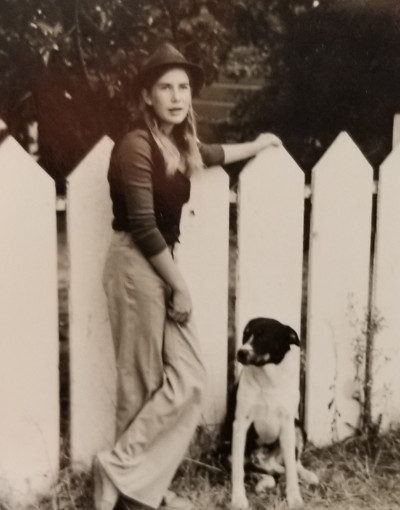
I think back to the dog I was allowed to keep for my very own, starting when I was about 13 years old, and who lived with me into my mid-twenties. He was a half-Kelpie, part-hound-mix, dog-aggressive and, it seemed to me then, hard-headed. Frustrated by his many attacks on other dogs and not knowing anyone who knew any better than me, I physically punished him for his many transgressions. I know now that all of that punishment only hardened his negative feelings about other dogs – and far from correcting the issue, it made his hatred of other dogs worse. This was a lifelong conflict between us, and I never found a better way to deal with the behavior. Forgive me, Tavi, I honestly didn’t know any better.
My heaviest burden of guilt has to do with the death of little Tito, a Chihuahua-mix who was sort of dumped on my husband and me by his niece some years back. I didn’t really want another dog at the time, and Tito didn’t really want new owners, either. It took us all a long time to get to know each other; he was a prickly little tough guy. He didn’t like to be picked up, he was a ferocious resource-guarder, and he generally just kept his own council. Over time, though, we got used to and accepted his tough-guy independence and we all actually grew quite fond of each other.
A couple years after we had finally accepted that Tito was a member of our family, he was mortally wounded by a dog I was fostering. It took me nearly a year to process and understand what happened and to write about it; as penance for the ignorance that led to Tito’s death, I still tell the story to anyone I know who is considering fostering an aggressive dog. It’s not that dogs who display aggression can’t be rehabilitated – they certainly can. But people need to know what they are getting into, and need to protect their own families (human and canine) from getting hurt in the process. I didn’t protect Tito, and he paid for my ignorance with his life. The dog who attacked him was euthanized following the event – and this death, too, is on my hands. I am not sure when or if I can, or should, forgive myself for these deaths.
Accidents can happen to the best of us
I know two different people who accidentally backed their cars over (and killed) their own dogs, each of whom was sleeping in the driveway. Two! Both of those people were understandably wracked with guilt about these horrible accidents.
I have another friend who will never forgive herself for letting her dog off-leash to chase some birds, who were covering a huge grassy playing field at a college. But the dog chased and chased and wouldn’t come back, and eventually chased them across a busy street and was hit by a car. Despite almost immediate emergency veterinary care, he died at a veterinarian’s office less than an hour later. My friend is almost pathologically careful about letting her current dog off-leash, which is good, but I’m sorry that she still suffers about her former mistake.
Dog ownership is a huge responsibility; their lives and health are fully in our hands. Guilt over the things we’ve done wrong, I guess, helps keep us alert to the possibility that we might make other mistakes, that we have to be more careful with these precious lives. And, as the saying goes, when we know better, we can do better. Sometimes I just wish learning some of these lessons wasn’t so hard.
What do you feel guilty about? Maybe others can learn from your mistakes.




We currently have a dog who we started fostering in 2016; he was a chained dog with very little human interaction, fear, anxiety, and some medical issues. Needless to say, he never left because he just wasn’t a good adoption candidate (people typically want a friendly, social dog and not a scared, anxiety-filled dog). Several months into fostering him, he started fighting with our other male dog to the point that both dogs ended up at the ER vet on several occasions and my husband and I both got bit during fight breakups. To this day, we have to kennel & rotate the two males because it just seems the safest way to keep everyone happy. Upon occasion, the once fostered dog will lash out and attack one of our female dogs, thankfully not causing any harm physically but I think they are wary of him. I feel guilt and even resentment about bringing this dog into our home because we had dog harmony in our house prior to him coming to live with us. He has caused so much strife and anxiety in me, and my husband and I don’t always agree on what the best approach is to deal with him. We have paid for training sessions and behaviorist consultations. I have tried positive reinforcement and not-so-positive approaches in dealing with the dog. I feel guilty because I sometimes hate this dog for the trauma he has caused to the rest of our pack and the anxiety he makes me feel.
I think back to my first Bouvier that I trained back in the 80’s. She was my first obedience dog and back then it was the old yank’em and choke’em method. She did great at learning the different exercises in obedience until it came to retrieving the dumb bell. She really didn’t want to do that (Bouvier – stubborn and smart) so my trainer had me use the “pinch ear” method to get her to pick up the dumb bell off the floor. I went along with it a few times in our training session until one day, as I walked into the living room where she and my husband were she literally got up and left the room. I’ll never forget that look of disgust in her eyes as I entered that room. I guess she told me what she thought about my “training method”. We always had a close relationship prior to that time so I got the message loud and clear. She was a very stoic and strong minded girl, so I guess instead of creating conflict between the two of us she chose abandonment that truly worked for me because I can be just as stubborn as my Bouviers. I sure learned my lesson. I trained my second Bouvier and all my others the positive method and feel so much better during our training sessions.
One of my own sweet dogs, Corky, was killed by one of my foster dogs, Molly. I kept Molly with me because I could not responsibly let her be adopted….she had “crazy eyes” declared another dog foster in our group. Molly had problems being house-trained (the only time I have failed to successfully house-train a dog) and she was extremely destructive of my house and everything in it but I was determined to help her. She had attacked other dogs in our pack 4 times ….and bit my husband twice. One day she grabbed Corky and ripped him open….I rushed him to our wonderful vet (where I had adopted Corky from) and she performed emergency surgery but Corky died a few days later. I did have Molly euthanized. It was certainly the worst experience of my life…..2 dogs died.
My first dog as an adult, Gabby, rescued some 20+ years ago, had fear aggression. I let some heavy handed obedience instructor tell me the only way to “fix her” was to use a prong collar and be the alpha in the house. It only made her worse. I took her to every trainer and behaviorist over all her with me, but she was never safe being around other people. It was a challenging 16 yrs to be on guard to be sure she never bit anyone, but, she had a lovely life of 17 years, living the last several years ruling the roost on my small sheep farm in Oregon. Though I know carrying around guilt is useless, I still fight it every day. My elderly father has a wonderful rescued, 9 yr old black Labrador as his ESA at his Assisted Living facility. Shadow is calming to Dad & all the other residents there. Unfortunately, Dad treats Shadow like one of his Police K9s he trained in the 1970’s. It took me years to get the choke chain away from Dad (including the one he used to whack Shadow on the rear end when he wasn’t following his instructions), to use a Gentle Leader to prevent Shadow from pulling (instead of yanking him thru the air as a correction), and the other old fashioned techniques that bordered on abuse. Even now, he still shouts at Shadow over the smallest things. The only saving grace is that Shadow is in love with Dad, never cowers in Dad’s presence, or shows any signs he is unhappy with Dad’s treatment. If he ever does, he will come live with me before Dad even notices he is gone!
Oh, Nancy. Your editorial hit me right in the heart. Now that I know better, I do better but the specter of guilt is always there. Thanks for letting me know I’m not alone and for giving all of us a way to connect.
My 10 year old dog stopped eating and drinking and wouldn’t come in the house but stayed in “his corner” outside under the dining room bay window. I went out with a leash and made him come in. Then I brought him some water and coaxed him to drink. He didn’t want to but did to please me. Then he vomited. Alarmed I rushed him to the animal emergency vet where he was kept overnight. The next evening around 9pm I got a call. They knew what was wrong. Cancer. I wanted to get him right away so he could die at home in his own bed. My vet knew a vet that would make house calls for euthanasia. But the emergency vet clinic said they didn’t want to release him until he ate something. I *should* have gone there immediately and demanded they release my dog. Instead I allowed the vet to have her way. I had a restless night, called in sick to work the next day and set my alarm for 5:30 am so I could be at the vet at 6am when they opened. Just as I had finished dressing at 5:45 I got a call from the vet that he was fading. I said I was already on my way and please for him to hold on until I got there. I was there in 10 min. but he was already gone. To this day I believe that he held on for me until I would return, but when I didn’t he thought I had abandoned him and decided to die. I will live with that guilt the rest of my life. He was my forever dog. I should have gone to get him the night before instead of listening to that vet. But I learned my lesson and I will never do that again. I hope that vet learned her lesson too. When an owner wants their terminal dog back, release them. No dog should die alone away from their family. It is what breaks my heart about the current pandemic crisis. Reading of owners with old, terminal dogs who have to drop them off at the vet for humane euthanasia but can’t go in to be with them. Or can’t decide whether to send their dogs off to die without them or keep them home and in pain. I was too compliant. I should have fought to bring Caesar home and I didn’t. I should have read the signs better and not taken him in but waited until the next day for my own vet. He should have died at home in his own bed with me beside him. Like Ramses did. And like Diana pawPrints will when her time comes.
Every dog I’ve ever adopted settled in smoothly from day one. Then I got Joey, age three. I thought I had adopted the worst dog in the world. In the first two days, he bit the resident dog, Roxy, twice. He terrorized the cat. He lifted his leg on the bottom shelf of my bookcase. He almost succeeded in grabbing a block of cheese off the kitchen table. He howled in the middle of the night. He chewed up some of my clothing. He was terrified of everything–walking across the threshold, riding in the car, being touched. I thought, I can’t take this, so I took him back to the shelter. When I handed him back, he tried to follow me. His nails scraped on the floor, he tried so hard to stay with me. I felt guilt but also I felt sad and cried all the way home. For the next six days I thought about what I had done–he was abandoned again. I talked to a couple of trainers and my vet about his behavior and after six days I went back to get him. He was still there. When he saw me he looked in my eyes and wagged his tail. He remembered me. The vet prescribed two weeks on Trazadone. Joey slept for a couple of days almost around the clock, and by the end of the two weeks, he was a different dog, ready to start working on his fears with training, positive reinforcement and bags and bags of treats. Someone had once loved this dog enough to work with him because he walked beautifully on leash and never jumped on people. Now it’s two years later, and he has turned out to be the best dog I ever had. And he’s even made friends with the cat.
I feel guilty about so many dogs… Most of all about those who used to live with me and my ex-husband, who beat them and my little son, badly because he thought that it is the only good method to make them well-behaved. Now I can’t understand how I could tolerate that!
One of them had been hit by the car because I kept her off-leash – she was obedient after my husband’s training, as I was aware! Another one stayed with my ex-husband when I escaped with two kids to another country. He moved and left her with the people who let her walk not more than 15 minutes a day, and she became very sick when one day my father found a good woman with a big yard out of the city who took her. She was so happy to run from her prison where she stayed for years – at the end of the day, because of me! It has happened more than 10 years ago, but when I recall it I start to cry, as now…
Maybe partly because of all the above, I decided to help the dogs and their owners to understand and love each other. In the country where I used to live people still use choke and prong collars a lot, and I’m trying to do my best to explain in my blog the modern methods of dog training and the science behind it. And with my current dog, I feel guilty just because I can’t play with him all the time he wants 🙂 I pray it will be my most guilt from now.
Thank you so much for writing this! Your words couldn’t be more timely for me. We recently adopted an adolescent coonhound, and I’ve been working with a wonderful trainer who has helped us navigate dog reactivity, pulling on the leash when walking, lunging and barking at passing cars, obsessive barking at rabbits/birds/squirrels, demand barking during human meal times, counter surfing…so many issues!!!! By utilizing positive reinforcement and counter conditioning, I’m seeing our dog’s behavior improve so quickly, and it fills me with such joy!
But I often think back to one of our previous dogs who also had issues with dog reactivity and leash pulling. I worked with a trainer for a year using choke collar techniques. Consequently his leash pulling never improved, and we just accepted that walks were a frustrating experience. He was so intelligent and eager to please; he would have thrived with positive reinforcement training. I think of him almost every time I set out with my current dog, wishing I’d had these wonderful tools back then.
I’m glad you asked about guilts. I have many of them, one of which is the same as Kathy Cockrill.
One time when I had to put down a dog the sedative prior to the euthanasia reacted to make the dog hyper. Then when the vet finally did administer the final drug, the dog would not die. He refused to go and the vet had to give him another shot before he actually passed. It broke my heart.
Another time, I took a dog to my regular vet to be euthanized and they had a NEW RULE. They would only allow the dog to be brought up to the owner AFTER the sedative was given. Stupidly I finally allowed them to taike the dog. A few minutes later I heard scream after scream from him. I went down to the room where they had him and he was at the end of the rope scared out of his mind. I realized he was either terrified or having hallucinations so I calmed him as best I could and demanded they give him the fnal drug right away. Meanwhile the “receptionist” came down and told me “You aren’t supposed to be here”. I said “I know and I’m not leaving”. Poor soul had been a relatively recent rescue that was too and I think was terrified of being away from me alone and not knowing what was happening to him. Actually, t hat was the case with both the previous dogs above; recent geriatric adoptees that were truly aggressive and I could not manage that aggression. They were both sick dogs and I was trying to heal them before I could do much training.
The other guilts I have are that I usually waited one day too long after the dog was in pain to call the vet. Ikept hoping he would be better the next day as often they were. But the look in t heir eyes on that last day when they told me it was time to go was never to be forgotten. I should have called the day before. My guilt with all these dogs will never leave me. All the dogs I had were “older, generally sick rescue dogs that I hoped to make the last days/months/years happy, secure and comfortable with the best vet care money could buy. ALmost every dog had quite serious temperament or behavioural problems that I was able to fix with loving kindness. Each dog was unique. Each dog came with his own usually terrible background that had to be overcome with kindness. Each dog broke my heart when he went over the Rainbow Bridge to play with his friends.
My heart was broken with each of my 13 dogs I adopted in 20 years. THey die much too soon but it does make room for another rescue.
My current rescue was 10 years old and he now is 11 and seems quite healthy aside from some issues I can manage.