
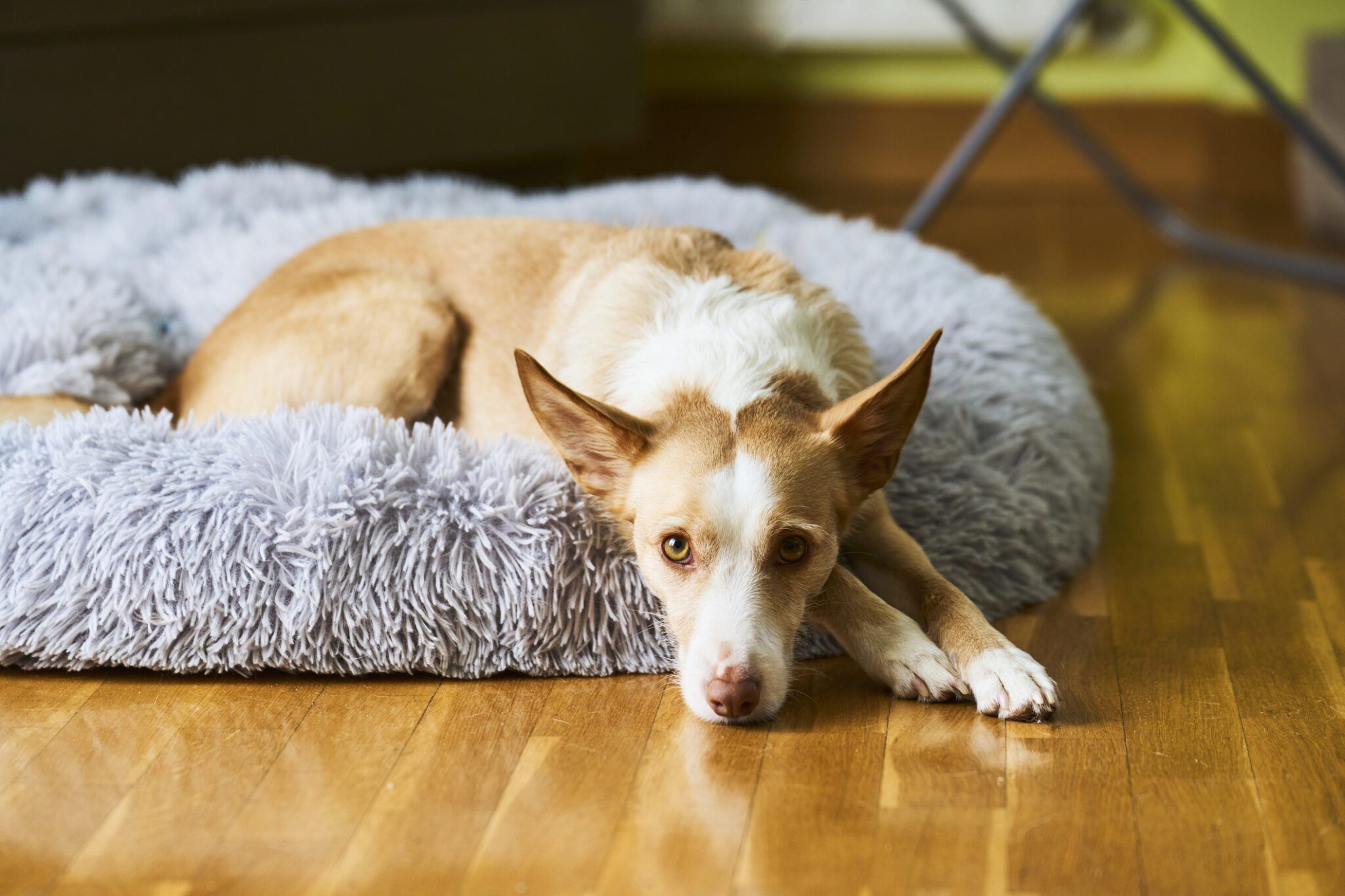
When your dog walks in circles, it can have many meanings, from nesting habits to neurological red flags. It’s important to look at your dog’s circle of life, including when it’s time to get her to a vet.
An old dog walking in circles can be as endearing as it is concerning. Watching a dog pat down an invisible bed is a throwback to their ancestry. But when that purposeful spin becomes a frantic or persistent, one-way trek, the “why” moves from instinct to anatomy. To understand where to draw the line, here’s look at how a dog’s internal compass—and their brain—functions.
“From a veterinary neurologist’s perspective, circling is a behavior that can mean very different things depending on the context. Many dogs will circle a few times before lying down, which is completely normal and thought to be a nesting instinct,” according to Christian Woelfel, DVM, a veterinary neurologist at Garden State Veterinary Services.
However, Dr. Woelfel adds that “frequent or repetitive circling in dogs, particularly when it consistently occurs in the same direction, can indicate an underlying neurologic problem involving the brain or the vestibular system [the balance center of the nervous system].”
Diagnosing Cognitive Dysfunction Syndrome
For senior dogs, circling can be a symptom of cognitive dysfunction syndrome (CDS). According to Cornell University’s College of Veterinary Medicine, CDS is a “common age-related disease in dogs that affects the brain, causing deterioration similar to Alzheimer’s disease in humans.”
CDS may appear around 9 years of age. “The condition may be underdiagnosed since the behavioral changes progress slowly, and owners may assume that some changes are a normal part of aging,” according to the Cornell report.
“In conditions affecting the brain, you can see additional signs such as disorientation, behavior changes, vision changes, and seizures,” says Dr. Woelfel. “Whereas for vestibular problems [similar to vertigo in humans], circling is often accompanied by a head tilt, loss of balance, involuntary eye movement (nystagmus), and nausea.”
When Circling Is Just Circling
Sometimes circling isn’t about the brain. It’s about the body trying to find a comfortable position for other reasons. “Inner ear infections can cause circling and balance issues as the inner ear is responsible for maintaining a dog’s equilibrium,” says Dr. Chyrle Bonk, an Idaho-based veterinarian.
“Some dogs may learn to turn a couple of circles before they lie down or have a bowel movement. This is usually just their way of getting comfortable and has become part of a routine,” Dr. Bonk adds.
She notes that anxiety in dogs can often mimic the symptoms of cognitive dysfunction. “The best way to distinguish between the two is that anxiety is often situational. Anxiety may be triggered by you leaving for the day, unexpected visitors, or some other change in the dog’s environment, while signs of cognitive dysfunction occur nearly all the time or get more severe around bedtime.”
Dr. Bonk says that circling before lying down is an instinctual behavior dogs use to create a safe, comfortable space to rest. It could also be a dog’s way of clearing the space of obstacles. However, it can also be a sign of a medical condition. “Pain from spinal issues or hip dysplasia can make lying down and getting up difficult and uncomfortable. You may see dogs circling when they start to lie down as they are trying to find the best way to lower themselves without causing pain,” she says.
When Should You Alert Your Vet?
“Turning a few circles before lying down or pooping is considered normal for most dogs,” says Dr. Bonk, “but you’ll want to consult your veterinarian if your dog suddenly starts to circle or if they are circling while doing other things as well. This is especially true if they are showing any other signs of incoordination, anxiety, pain, disorientation, changes in sleep patterns, or behavior.”
Dr. Woelfel concurs, adding that if you notice your dog walking in circles, especially if it occurs suddenly or alongside other neurological signs, it’s wise to see your veterinarian or a veterinary neurologist.
“Veterinary neurologists specialize in disorders of the nervous system and can help pinpoint the cause of circling while guiding the next steps for diagnosis and treatment,” he says.
Checklist: When to Call the Vet
Before calling the vet or neurologist, evaluate your dog for reasons for circling to rule out common physical triggers. However, contact your vet if your dog falls into one of these categories (based on information compiled from the American College of Veterinary Internal Medicine, Cornell University College of Veterinary Medicine and the UC Davis Veterinary Medical Teaching Hospital, the International Association of Animal Behavior Consultants, American Animal Hospital):
- Sudden Onset: The circling started overnight.
- One-Way Street: Your dog turns only in one direction.
- Nystagmus: Your dog’s eyes are flickering or darting back and forth.
- Circles With No Purpose: Your dog isn’t circling to nest but rather seems stuck or lost in corners.
- Physical Distress: Paired with a head tilt, nausea, or crying out when trying to lie down.