

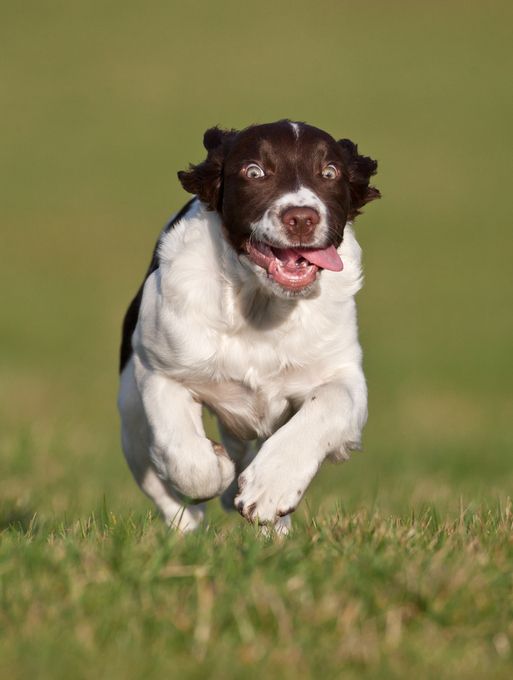
When your dog races around at top speed, seemingly unprovoked and with a wild look in her eye, she hasn’t gone mad—she has a case of the “zoomies!” The scientific name for these often-entertaining random energy bursts is “frenetic random activity period,” or FRAP, and some people refer to the behavior as “frapping.” Whatever you call it, dog zoomies are completely normal dog behavior and, under most circumstances, it’s nothing to worry about.
We don’t know specifically why dogs get the zoomies, but based on when they tend to happen, experts believe zoomies are an attempt to quickly release pent-up energy. All breeds of dogs can experience zoomies. The behavior is more common in younger dogs and puppies—they tend to have more energy to burn—but you’ll often see it in older dogs, too. (My 11-year-old Golden still gets the zoomies sometimes.) Dog zoomies are usually a sign of a happy dog, but be aware: Zoomies can also indicate that your dog is stressed.
When Do Dogs Usually Get the Zoomies?
The most common times you can expect to see your dog get the zoomies are:
- During periods of high excitement – For example, when you get home from work and your dog is excited to see you.
- During play – When the activity is especially stimulating, play can boil over into an innocent case of the zoomies.
- Late in the evening – Some dogs are more prone to zoomies late at night. It’s as if they’re looking to burn some energy before an extended period of rest.
- After a bath – Likely to release pent-up energy from tolerating the bath. It’s also possible they enjoy the feeling of a breeze on their wet coat, or even that they’re trying to dry off. Who doesn’t love a good air-dry cycle?
The Fun Side of Dog Zoomies
As the list above suggests, zoomies often show up as a side effect of high-energy play and excitement. Happy zoomies are common and typically accompanied by loose, bouncy movement and relaxed grins as the dog circles, pivots, and darts from room to room. If your dog looks like they’re having a good time—provided there’s a good surface to run on and nothing too breakable in the way—you’re safe to stand back and enjoy the show.
The main thing to watch for with happy zoomies is the point where high-energy fun becomes overstimulation. If your dog starts looking tense or fearful and their movement gets stiff and tight rather than bouncy and loose, it may be time to call a halt before overstimulation turns into stress.
Dog Zoomies Can Also Be a Stress Response
Similarly, it’s not uncommon to see a dog get the zoomies in stressful situations. As an example, it might happen during a training session when he becomes overstimulated or finds some aspect of the training to be stressful. Your dog isn’t being naughty—he’s letting you know he’s struggling with some aspect of the situation. You might be tempted to address the issue by drilling stays or recalls in a training setting, but if your dog is stressed by the environment (too many distractions) or the work you’re asking him to do (repeating an exercise he finds challenging), drilling obedience behaviors isn’t likely to help. You’ll want to take a few steps back to look for—and identify—the root cause of the behavior.
Alternatively, you might experience what feels like goofy, completely unfocused, class clown behavior, often accompanied by excessive jumping and mouthiness in social situations. This behavior is often misunderstood as excessiveness friendliness, when in actuality, the dog likely so overstimulated, she has little mental or physical control of her actions. This “fooling around” behavior can be just as much of a stress response as the better known, “flight, fight, or freeze” behaviors, and it’s your dog’s way of asking for help.
Are Dog Zoomies Safe?
In general, “fun zoomies” are totally fine—and even endearing! Be mindful of the environment to help prevent accidental injury from slipping on slick floors or crashing into things, and protect yourself and other humans in the area by staying out of the way of your dog when he’s wildly zooming. Obedience cues often go unheard during a case of the zoomies, so it’s best to let frenetic behavior burn itself out before expecting your dog to respond correctly to known cues.
If your dog frequently gets the zoomies around the house, it could be a sign that she would benefit from more physical or mental stimulation through additional exercise, training, enrichment puzzles or other types of brain games.
When To Worry: When Zoomies Are Not Zoomies
Occasionally, a dog who experiences a sudden fright or pain—such as a loud noise or bee sting—may run and spin in a way that resembles zoomies. If the dog seems to startle or yelp before running or their behavior and body language indicate fear or pain, it’s a good idea to check them over for injuries or sore spots and take them somewhere quiet to calm down. Things to watch for can include:
- Ears held tightly back
- Wide, rolling eyes
- Stiff body
- Tightly tucked tail
- Hiding
- Skin shivering
- Tender spots (check back, neck, legs, and feet in particular)
- Limping
- Headshaking
If this kind of unexplained zoomie-like behavior happens more than once—especially if your dog doesn’t usually zoom around—it’s best to check with a veterinarian to make sure there are no underlying physical or neurological issues.




PS Another favorite memory…Liam and I were on a flash mob team organized by the author of this article. He didn’t get the zoomies but he sure had a blast. Thanks, Stephanie!
My Irish Setter heart dog was famous for his zoomies in the rally ring. It made getting two RAEs very expensive, but now that he’s gone, those are my favorite memories, not the ones where he qualified or even came in first. He would light up when he realized he had an audience. Didn’t matter if it was laughter or applause. I remember being at a rally competition and overheard a steward discussing my Liam’s performance and comparing it to another Irish she’d seen several years prior. Tapped her on the shoulder, told her it was the same dog. Best. dog. ever.
My male 3 1/2 year old Great Dane gets the zoomies after every bowel movement. It never fails he runs into the house through the dog door up and down the stairs into the family room around and would repeat if I would let him. I have a learned to talk calmly to him telling him to stay calm and that I will massage him. He settles down right away every time. He loves to get his rub downs!