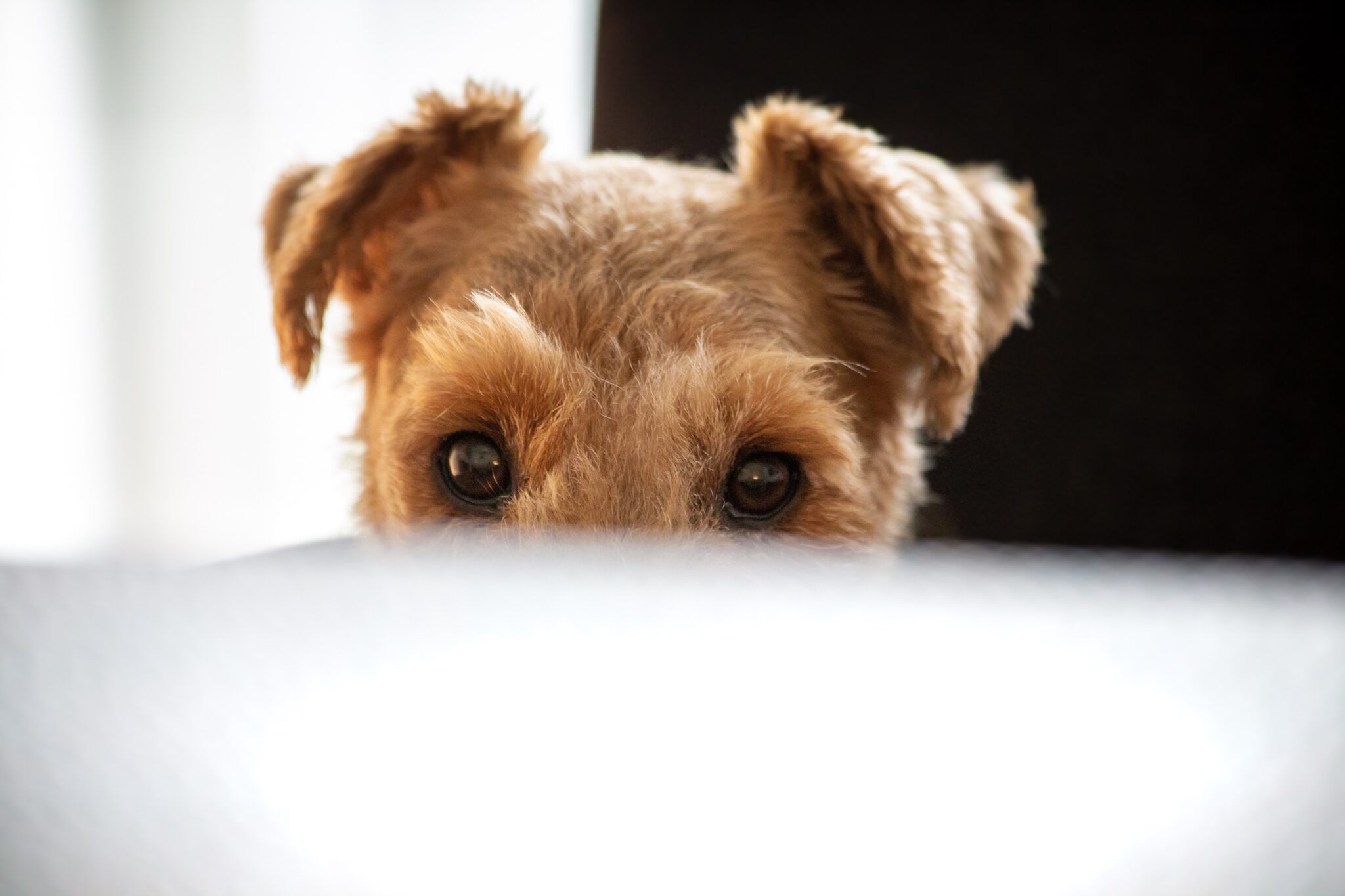
I get it when my dog follows me to the kitchen: I might get something to eat! Or when she follows me upstairs after my morning coffee: We’re going on a walk! But why, oh why, does she follow me into the bathroom?
Dog caretakers have been asking this question almost since humans created bathrooms in their homes (at least, that’s my guess), but science has yet to come up with a definitive answer—mostly because no one’s ever done a study on the phenomenon. In fact, while domestic dogs are never far away from our lives, objective understanding of their behavior is still surprisingly scarce. However, we can speculate, based on what researchers and dog experts know about why dogs tend to follow their people.
First, though, you can rest assured that when your pup follows you to the bathroom, it’s totally normal behavior. While scientific studies on this curious conduct are lacking, everyone from veterinarians to behaviorists to trainers concur that it’s just part of your dog’s nature.
Sociability and Curiosity
We know that dogs are, by their very nature, social animals. That said, modern science has all but discarded the notion that domestic dogs see humans as their “pack,” or, for that matter, that dogs are “pack animals.” We now understand that dogs see humans similar to the way a child looks to their parent: they see us as family, caregivers, and trusted companions.
Dogs are also innately curious, which leads them to do both dangerous things like investigating a rattlesnake in the grass and innocuous activities like sitting outside your closed bathroom door. And because they have such an advanced sense of smell, they’re attracted to scents—and we all know a bathroom contains a bevy of scents! From the wastebasket to your perfume to the floor where their humans have been walking to the toilet, the bathroom becomes a great place to explore. At the same time, dogs have learned over the millennia how to “read” us by watching us: we are the object of their attention and curiosity.
The Dog-Human Bond: Attachment
The domestic dog has an exceptional ability to form unique and lasting bonds with humans. They are attuned to us like no other species and have an instinctive desire to connect with us, both of which motivate them to join in our activities and social interactions. Research has also shown that dogs synchronize their behavior with their humans. Further, they synchronize their location and activity with us: they stay close to their caretaker, following and moving when their caretaker moves and standing still when their caretaker is still. But what exactly makes a dog want to follow us from room to room? It could be that they don’t want to miss out on something exciting. Or maybe they follow us around the house just because they want to be near us.
In the human experience, we know that infants develop strong attachment to their caregivers or parents and see those caregivers as a safe foundation for interacting with the world around them. Studies over the last decade have shown a parallel between this effect in the child-caregiver relationship and the dog-caretaker bond. For the dog, this attachment provides them with both security and the ability to experience less fear of threatening events.
We also know that these tight bonds between dogs and their human—much as exists in the infant-mother attachment bond—are facilitated by increased levels of oxytocin, a pituitary hormone related to bonding, and for the dog, sociability toward humans. In humans, this is often described as a loop, where the parental gaze stimulates oxytocin release in the infant, which then loops back to the parent and produces a release of oxytocin in them. This same oxytocin loop reinforces the relationship between dogs and humans, amplifying a dog’s desire to approach and develop relationships with caregivers and maintain those relationships over time.
Separation Anxiety in Dogs
Because the bond between our dogs and ourselves is so strong and enduring, in some dogs it can trigger separation anxiety, which is one of the biggest behavioral problems for pet dogs. Behaviors associated with separation anxiety can include destructive chewing, inappropriate urination or defecation, excessive barking or whining, vomiting, and salivation.
The science behind whether attachment is related to separation anxiety is murky at best. Some studies assert that separation anxiety is due to “hyperattachment” of the dog to the person. Hyperattachment is usually defined as constantly following the caretaker around the house and always needing physical contact, becoming extremely anxious when the caretaker leaves the room and becoming very upset when the caretaker prepares to leave, and on their return exhibiting frantic excitement, excessive licking, or jumping.
The “Velcro Dog”
In support of this hypothesis is that many dogs follow their owners around and are reluctant to let them out of their sight, becoming what are called “Velcro dogs.” Yet this type of clinginess isn’t by itself the sign of a problem: what separates a clingy dog from one with separation anxiety is how a dog reacts to being away from their person. Clingy dogs want to be around you when you’re at home, but they don’t panic when you’re not there. A dog with separation anxiety panics when you’re not around. And while some clinical reviews mentioned hyperattachment as a cause of separation anxiety, other studies indicate that hyperattachment can exist in dogs with or without separation anxiety. Recent data suggests that dogs with separation anxiety are not necessarily hyperattached but rather have insecure or pathological attachment style. In short, the relationship between hyperattachment and separation anxiety remains elusive.
Should You Worry If Your Dog Follows You Everywhere?
So, should you be concerned if your dog is an inveterate “follower”? In a word, no. The only time you need to worry is if there’s a sudden change in your pup’s behavior, or if his or her “clinginess” begins to present problems for you. As with all things dog, your best partner is your veterinarian.