

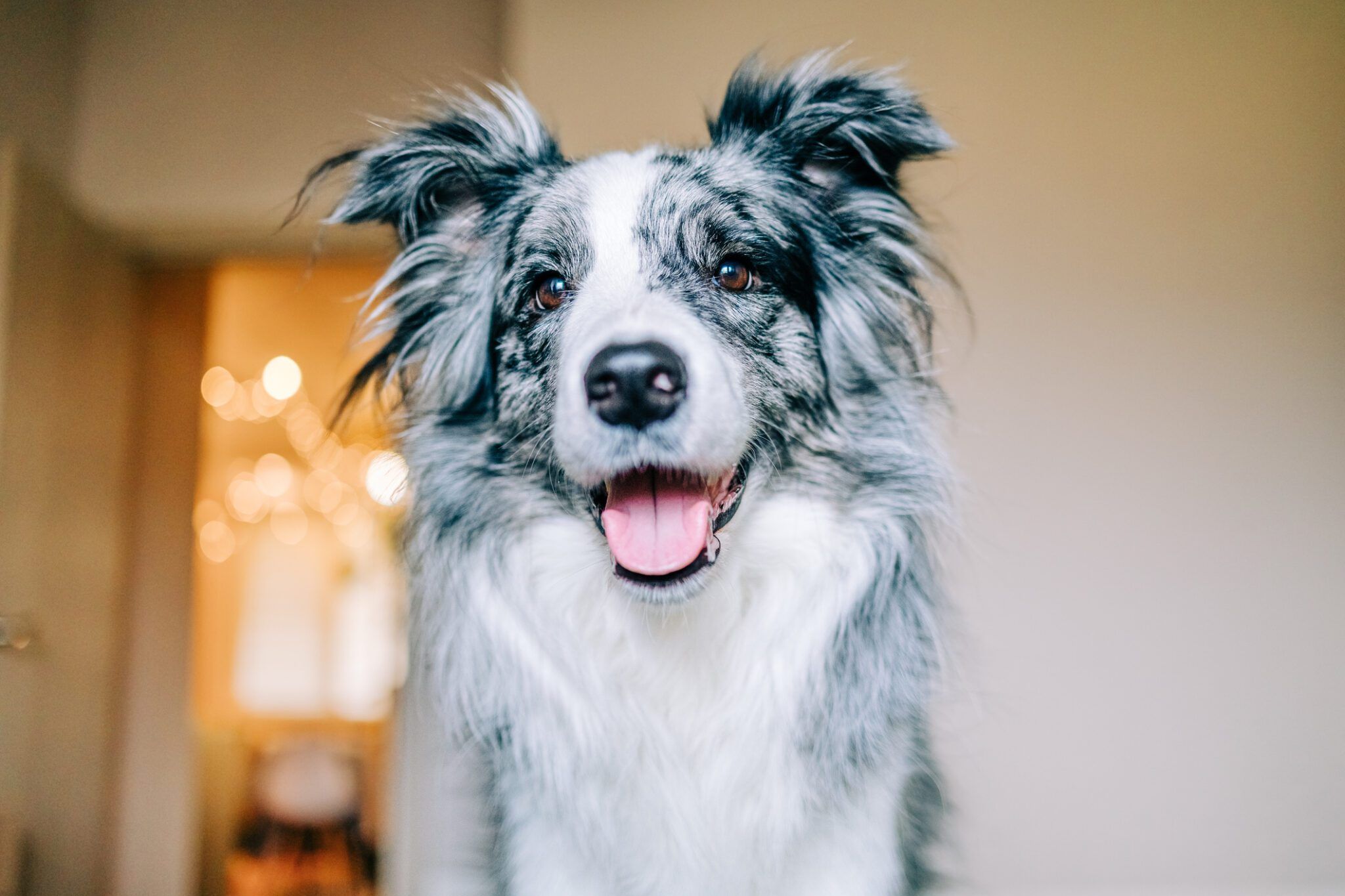
While your pooch can’t talk and tell you how much they love their life—their squeaky toys, walks in the park, and pup cups—they’re actually speaking to you.
“A lot of the time, dogs are so clear about what they’re trying to communicate, their body language, their movement; it all conveys a tremendous amount of information,” says veterinarian Gary Weitzman, president and CEO of the San Diego Humane Society, and author of several books about animal behavior.
Experts say body language is a universal language of sorts—dogs and humans each have their own form of nonverbal communication.
“It’s like being dropped into a foreign country, and you don’t speak the language, but you would understand somebody’s body language if they were motioning, ‘Come over here,’ you would get that right away,” says Robin Terrell, a certified professional dog trainer in the Dallas, Texas area.
The key is accurately interpreting what a dog is communicating. Though that can look different from dog to dog, researchers have identified typical happy dog body language and behaviors.
What a Happy Dog Looks Like
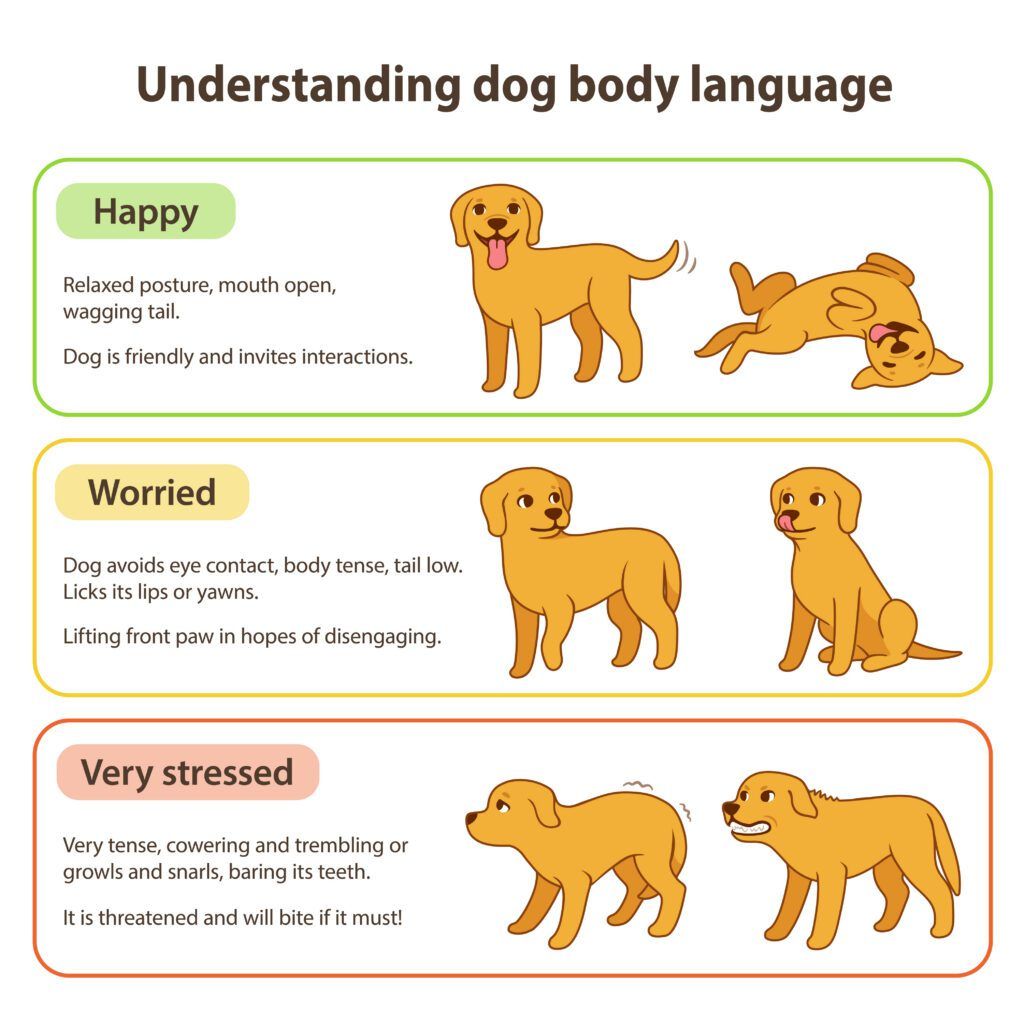
You’ve probably seen dog body language charts like the one above that help translate basic canine behavior, emotions, and feelings.
The charts usually show some of the most common signs of a happy dog, like a wagging tail, playful dog behavior, and a relaxed body. However, becoming fluent in dog body lingo means being aware that context matters when reading a dog’s mood.
For example, a typically happy dog may act differently in a shelter, at an animal hospital, or even within their own home.
“When the environment changes, it may change how your dog is going to look, and what signals they’re going to give you,” Terrell says. “If a guest comes and is standing up and reaching over my dog—that’s a very different environment versus if someone comes in, sits down, and then leans a bit to pet the dog; now you’re more approachable.”
A dog may demonstrate nervous body language like lip licking, yawning, and cowering. “You should take that into consideration, or you could be reading the signals wrong,” Terrell says.
What are the signs of a happy dog? While relaxed dog body language and playful dog behavior top the charts, we asked experts for their favorite characteristics.
10 Signs of a Happy Dog
All dogs have different personalities, energy levels, and needs, so this list isn’t a checklist; it’s a starting point, as only you know your dog best.
1. Relaxed Body and Face
Relaxed dog body language is key to figuring out if your dog is at ease.
“We look for that whole loose posture; that’s really the first tip off that a dog is comfortable and happy,” Dr. Weitzman says. “The facial muscles are relaxed, the mouth is relaxed, it may even be open, like a grin.”
2. Ears at Ease
The position and movement of a dog’s ears can indicate how they’re feeling, but this can be challenging to read since canine ears come in many shapes and sizes.
“Ear positions may not look the same in a German Shepherd or a Doberman as they do in a Labrador,” Dr. Weitzman says. “We like to see ears looking relaxed, but not too tense, and not pointing backward or forward.”
3. Soft Eyes
While we’re talking about relaxed pooches, that also includes a dog’s eyes.
“If a dog is comfortable with us, their eyes won’t have a hard stare,” Dr. Weitzman says. “We definitely don’t want to see that ‘whale eye’ (also called wide eye and half- moon eye) where the whites of the eyes are being shown. We want soft, relaxed eyes.”
4. Loose, Wagging Tail
A dog wagging their tail is one of the most popular clues a dog is happy, but even a dog’s tail wag can have different meanings.
“I’m looking for a tail that’s relaxed, high, and waggy,” Terrell says. “Waggy butt, waggy tail.”
If a dog’s tail is upright and moving in a fast motion, the pup could be nervous. If their tail is tucked behind their legs, that’s a sign of fear.
5. Playful Behaviors
Look for dogs expressing joy, like zoomies, squeaking toys, and giving play bows.
“The Academy Award of happiness would be a play bow,” Dr. Weitzman says. “I live for the moment that my dogs will do play bows. It’s definitely worth an Oscar if they’ll do that.”
6. Enjoying Attention and Interaction
A happy dog is excited to interact with you.
“I’m looking for a dog that wants to engage with me and wants to come into my space,” Terrell says. “When I call them, they come to me.”
7. Physical Contact
A dog that seeks you out for physical contact is often showing they’re content. A pooch may rub against your legs, lean into you, bop you for a pet or a hug, or sit on your lap.
8. Healthy Appetite
A healthy, hearty, and consistent appetite is another sign of a happy dog. If a dog is stressed, uncomfortable, or nervous, they may not eat well.
9. Blissful Barks
Dogs may let you know they’re happy by being yappy. Fast, high-pitched barks, yips, or yaps, while they’re playing, are common in dogs trying to show their bliss.
A happy bark is different from the “Who is at my door?” concerned bark or deep growl.
10. Sleeping Dogs Lie
A happy dog likes to sleep near you, next to you, perhaps even on top of you. Sleep is important to dogs, and if they’re stressed, like humans, they may not sleep as well. An adult dog can need up to 16 hours of sleep a day.
When “Happy” Behavior May Mean Something Else

Experts say it’s important to look for many indicators of a dog’s mood before assessing that a dog is happy.
“It’s not just the individual signs, it’s everything put together,” Dr. Weitzman says. “Like a wagging tail with a soft face, an open mouth, the ears being normal, the eyes focusing on you, but not really in an alarmed way. All of that together means that the dog is happy, but individually they may not.”
What may seem like happy behavior might mean something else. A dog who looks like they’re smiling could really be panting because they’re stressed, overheated, overwhelmed, or uncomfortable.
Look at the big picture before you come to any conclusions.
How To Support Your Dog’s Happiness
If you’re wondering how to make a dog happy, there are some simple ways to keep canines cheerful.
Reliable Routine
Dogs love routines. They like predictability each day, as you’ve likely noticed when it’s dinnertime and you are one minute late.
Exercise
Dogs need enough exercise, especially active breeds like Huskies, Labradors, and Border Collies. If they can’t burn off their energy, they may develop destructive behaviors like digging, chewing, and barking. If your dog likes playing with other dogs, safely socializing is also great.
Nose Work
While exercise is important for dogs while you’re out and about, let them sniff. Using their nose means using their brain, which makes them tired—even if we get tired of watching them sniff the same spot for what seems like an eternity.
“Don’t pull them away from sniffing something in the bushes, because they’re getting so much information from that bush,” Dr. Weitzman says. “It’s a completely normal, natural behavior and they’re getting so much enrichment from doing that. Even though it seems like it’s taking 11 hours, let them finish the conversation that’s going on in their heads.”
Mental Stimulation
Besides allowing your dog to go on sniffing safaris during walks, you can also use enrichment games to support their mental stimulation, such as dog puzzles, but there are free games you can play at home.
“I like to play a hunt game,” Terrell says. “I put my dog behind a baby gate, I take their food and put it around the baseboards in a room or underneath a chair, and then I release them. They go and sniff out their meal, and they’re using their nose to find their food and activating their brain, which gives them satisfaction.”
Signs of a Happy Dog
No one knows a dog better than their family, and learning to read your dog’s distinctive body language, signs and signals is the best way to spot happiness.
“We can generalize some things like ear posture, tail posture, things like that,” Terrell says. “But really a dog is an individual, and we need to look for that individual personality.”



How can I train my 8 year old rescue dog not to Mark in the house?