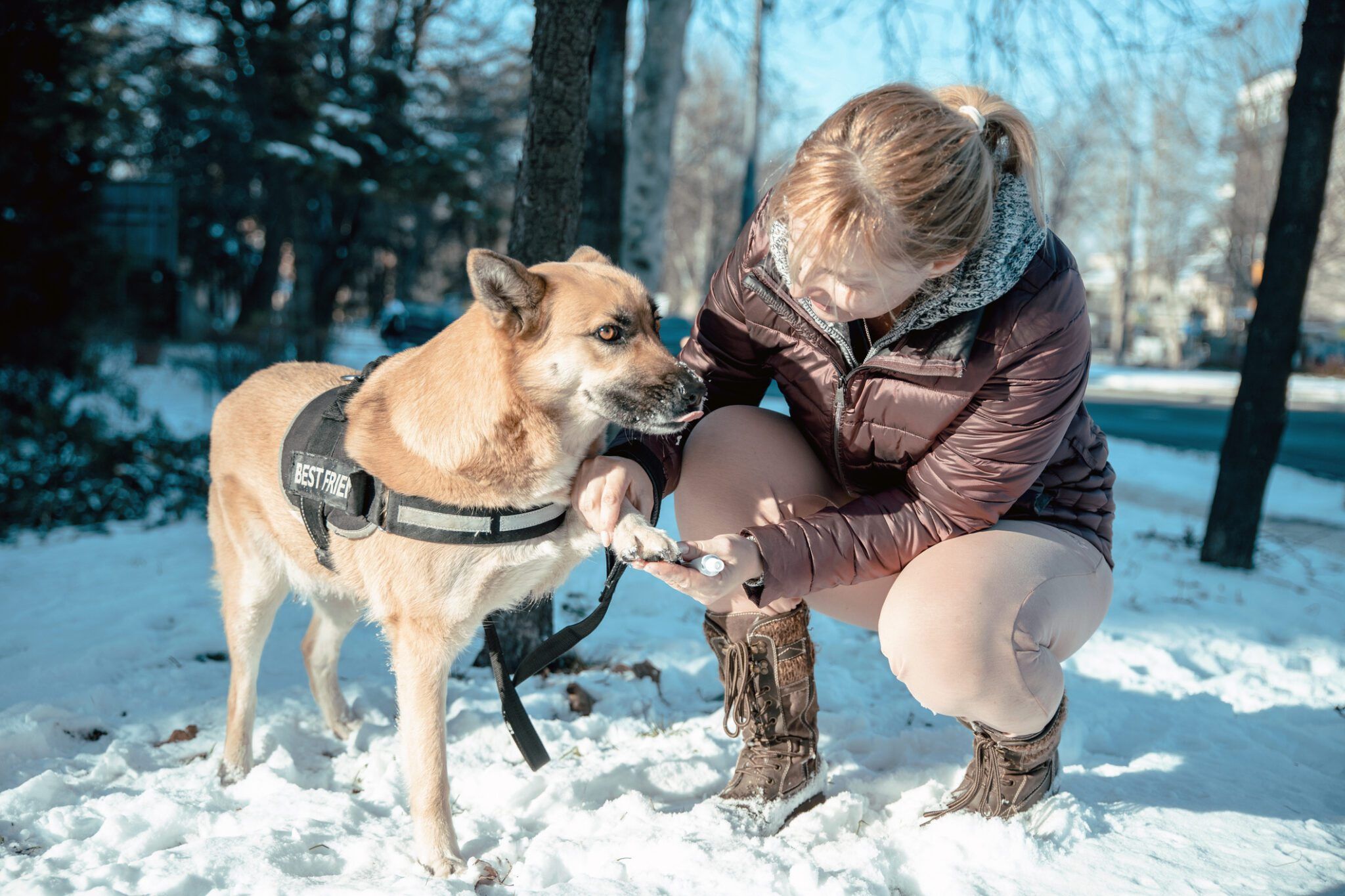
Vaseline and generic petroleum jelly are safe to use on dogs, with some caveats that we will discuss. As the generic name suggests, Vaseline is petroleum-based. It comes in a thick, jelly-like state that makes it easy to apply to dried areas of skin on your dog’s pads and nose. It is generally not used on haired areas as it is “gooey” and will clump the fur.
What Does Vaseline Do For a Dog?
Vaseline is designed to hold moisture in which is why it helps with dry skin. For maximum benefit, you might want to apply it to dry areas after wetting or soaking. By keeping an area moist, it encourages healing. Its thick texture helps it to stay where it is applied. Because it seals the area underneath it, it is important to only apply Vaseline to clean areas of skin, otherwise you might seal a bacterial infection in.
Vaseline For Dog Paw Pads
Dry, cracked pads in summer or winter can benefit from Vaseline as an inexpensive alternative to some dog-specific skin moisture products. Many owners find it excellent to put on their dogs’ pads when out walking in winter, especially if they might encounter road salt or ice-melt products. The oily layer keeps those substances from directly contacting the pads. You can then wipe the pads off when you get home.
How to Apply Vaseline to Your Dog’s Paws
If you apply Vaseline to your dog’s paw pads, it can make them slippery when walking on non-carpeted areas in the house. It can also be messy, especially if it gets on carpets.
For very dry feet, you may want to soak the paws, lightly dry them, apply Vaseline, and then a gauze and a light wrap over the paw. Putting booties also works well to keep things clean.
Cautions When Using Vaseline on Your Dog
When using Vaseline, you only need a light film, not a thick layer. Nose, muzzle, and paws are all areas your dog can easily lick. The same is true if you want to use Vaseline around the anus or genitals (your dog’s private parts). That is where we get into some of the cautions.
Dogs tend to like the taste of Vaseline. As the ASPCA Animal Poison Control Center notes, petroleum jelly is a laxative and can cause gastric irritation. A dog needs to consume a fair amount to have reactions, but if your dog chews into the container or licks a bunch out of a container you left open, there could be gastrointestinal effects.
Due to the oil-based nature of Vaseline and petroleum jelly, it is dangerous if your dog vomits it up. If any gets inhaled, it can cause serious aspiration pneumonia.
If your dog has wounds or burns and your veterinarian feels Vaseline may be the best option for keeping the area clean and moist, you will need an Elizabethan collar or a surgery suit to keep your dog from licking off the petroleum jelly.
The bottom line is that Vaseline can be an inexpensive solution to helping your dog heal dry, cracked skin areas, but you need to be watch for licking. Your veterinarian may also recommend a more suitable ointment for infected, inflamed, or pruritic (itchy) areas.