

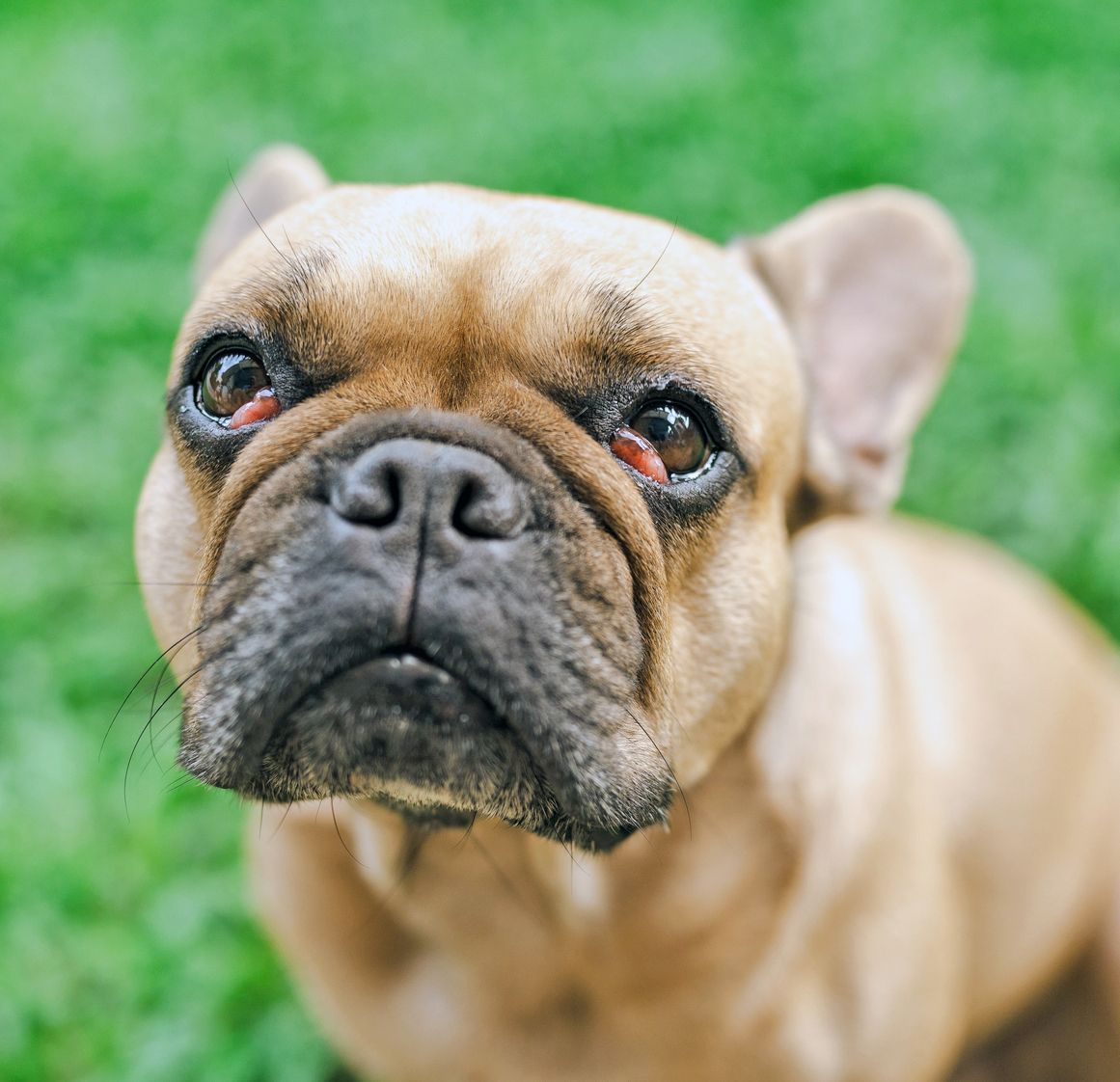
Cherry eye in dogs refers is a prolapse (displacement outward) of the tear gland of the third eyelid, also known as the nictitating membrane, or nictitans. The prolapsed gland extrudes from the corner of the eye, is red in color, and somewhat resembles a cherry. The condition is caused by a breakdown of the tissue fibers in the dog’s eye. Surgical correction is recommended to prevent secondary issues.
Cherry eye is more common in short-muzzled or brachycephalic dogs. Breeds with brachycephalic skull conformation have almost seven times the risk of experiencing cherry eye, according to one study, compared to other dogs. Note: If you have an English Bulldog with cherry eye, don’t mess around. See a board-certified ophthalmologist as soon as possible. Cherry eyes in this brachycephalic breed are particularly challenging, and recurrence rates after initial surgery are high.
Early-Stage Cherry Eye
Cherry eye appears without warning as a smooth pink lump located near the inner corner of the eye. It usually occurs in dogs who are 1 to 2 years old. In the early stages, most dogs are not adversely affected by it. Long-term cherry eye in dogs can lead to chronic inflammation of the prolapsed tissue, chronic dry eye due to impeded function, and overall inflammation of the eyes. This can leave your dog’s eyes more vulnerable to other complications like eye irritation and infection. Veterinary intervention at this stage is wise.
The cause of cherry eye, what leads to the tissue breakdown, isn’t fully understood. It is is believed to have a genetic or hereditary component leading to some breeds being much more likely to experience the condition than others. Commonly affected breeds include:
- Beagle
- Bloodhound
- Boston Terriers
- Chinese Shar Pei
- English Bulldog
- English Cocker
- French Bulldog
- Great Dane
- Lhasa Apso
- Newfoundland
- Pekingese
- Saint Bernard
- Shih Tzu
How to Treat Cherry Eye in Dogs at Home
If you want to manage cherry eye at home, be sure you know that you have diagnosed it correctly and it’s not a red eye or pink eye.
To treat cherry eye in dogs, you must keep the eye clean, including the corneal surface, by using a safe eye wash solution (human solutions are fine) daily. Artificial tears ointment applied a few times daily will help protect the exposed cornel surface from injury (again, human products are fine).
If there is swelling of the gland, your veterinarian may prescribe steroid drops as needed. If secondary bacterial infection develops, your vet may prescribe an ophthalmic antibiotic ointment. Your dog will have to be monitored for the development of dry-eye syndrome, or keratoconjunctivitis sicca (KCS), which is done with periodic Schirmer Tear testing. KCS is extremely uncomfortable and can cause vision loss.
The Cost of Cherry Eye Surgery in Dogs
Surgical correction helps prevent secondary issues. Untreated dogs with cherry eye cannot fully close the eyelids, so they are more prone to corneal injury and secondary bacterial infection. The cost of cherry eye surgery varies depending on where you live, if one or both eyes are affected, whether your regular veterinarian can do the surgery or you are referred to a specialist, and the size of your dog (the larger the dog, the higher the costs of anesthesia). An estimated range is $500 to $1,500.
Surgery involves anchoring or tacking the gland back down or creating a pocket with overlapping edges that holds the gland back down in place. The longer the gland is out of place, the more difficult the surgery, making surgical complications like recurrence more likely.

Great article!!!