

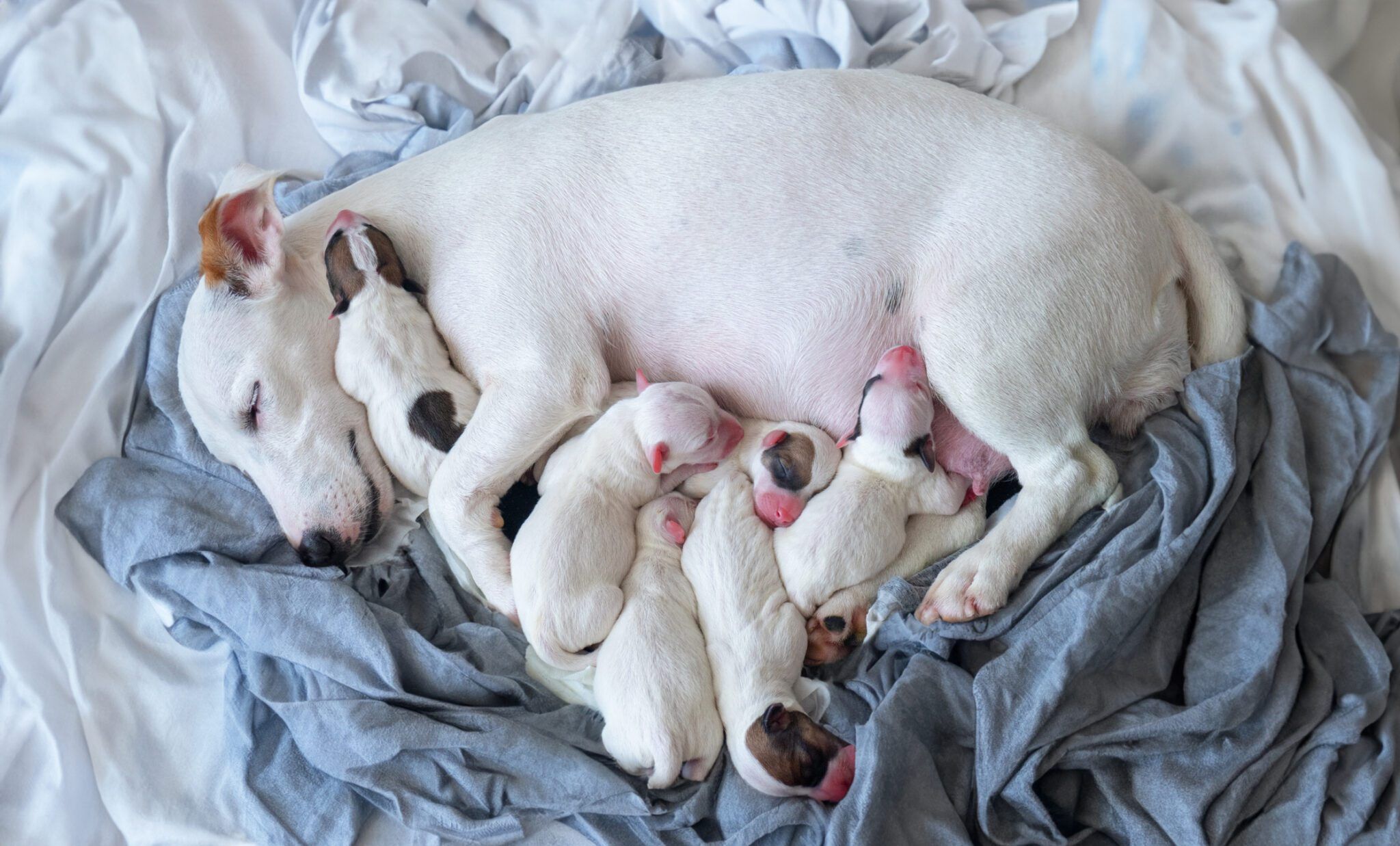
About 80% of canine liver shunts are present at birth (congenital) and involve the portal vein. In utero, puppies have a vessel called the ductus venosus that shunts blood flow around the liver since it is not functioning pre-whelping. When a puppy is born, however, this vessel should collapse so normal canine anatomy takes over.
“Five out of every 1,000 dogs in the general population are born with an inherited liver shunt,” says Jerold S. Bell, DVM, of Tuft’s Cummings School of Veterinary Medicine, in his paper “Exploring the Mysteries of Liver Shunts.” Caught early on, however, puppies with a congenital portosystemic shunt can go on to have a normal life once the shunt is corrected. Note: These dogs should not be bred however, since there is a genetic component.
Shunts may occur within the liver (intrahepatic) or outside the liver (extrahepatic). Secondary shunts can occur in older dogs due to cirrhosis with multiple small blood vessels interfering with the normal blood flow plan.
What Is a Liver Shunt in a Dog?
A liver shunt is an anatomic defect that directs blood flow from your dog’s gastrointestinal tract, including the pancreas, plus the spleen around the liver instead of through it. With the portal vein shunted off, the liver isn’t doing its normal functions of handling nutrients and filtering out toxins. You will often see the term “portosystemic shunt” used since the portal vein is usually the culprit.
The liver has multiple important functions in the body. With nutrients not being handled efficiently, puppies with liver shunts tend to be smaller than littermates. They are often less active as well. As toxins build up in the blood, neurologic signs are noted.
Signs of a Liver Shunt in a Dog
Dogs with liver shunts may circle, press their heads into corners and “be stuck,” act disoriented, and eventually progress to seizures. Some may show gastrointestinal signs such as vomiting and diarrhea. Often clinical symptoms are seen after a high-protein meal due to the metabolites from protein.
Some dogs may form bladder stones and others will exhibit pica, which is a tendency to eat unusual items. Some breeds, ranging from Irish Wolfhounds to Yorkshire Terriers, have a genetic predisposition to portosystemic shunts.
Diagnosing a Portosystemic Shunt in Dogs
Diagnosing a portosystemic shunt may be easy or tricky. Bloodwork is often the first step. A complete blood count and a blood chemistry panel, combined with the physical exam and history, will often be diagnostic but not always.
Some dogs will have mild anemia and some abnormally small red blood cells. Low levels of blood urea nitrogen (BUN) and albumin (a protein) are common. Liver enzymes such as aspartate aminotransferase (AST) and alanine aminotransferase (ALT) are elevated. A urinalysis may show ammonium biurate crystals. Beyond the basic laboratory tests, the next step is often a bile acid test. Dogs with shunts tend to have increased bile acids.
For bile acid testing, two samples are required. The first is a fasting sample that gives your dog’s baseline for bile acids. A second sample is taken after your dog’s normal meal (usually breakfast). Bile acid numbers are expected to increase after a meal.
Imaging procedures are next. A plain X-ray may show a small liver. Ultrasound with contrast may illuminate abnormal blood flow pathways. CT scans, MRIs, and X-rays with dye can all help to pinpoint the location of the problem. Recent work out of Cornell University’s College of Veterinary Medicine using CT scans has helped to illustrate intrahepatic shunts, showing that in at least some cases, the shunts are between liver lobes, not located in liver tissue.
Caring for a Dog with a Liver Shunt
For mild liver shunts and true intrahepatic shunts, medical management may provide decent quality of life. These dogs need strict dietary management to minimize the toxin buildup. The goal for treatment is to decrease the production and absorption of toxins from the gastrointestinal tract into the bloodstream.
If your dog shows signs of hepatic encephalopathy (neurologic signs), his dietary protein needs to be managed carefully. All dogs need protein in their diets, so severe restrictions are generally not recommended. High-quality protein that is highly digestible is ideal. Some dogs do better with dairy or plant-based proteins versus meat proteins.
Lactulose is often recommended to help decrease the absorption of ammonia and other toxins. This is a non-absorbable synthetic disaccharide that decreases transit time in the gut by acting as an osmotic laxative, meaning that digested nutrients move through the intestinal tract faster than normal. This could lead to diarrhea, so generally dosing starts at a very low level and is gradually increased so your dog’s gastrointestinal tract can adapt somewhat. Antibiotics may change the intestinal microbiome and help to reduce toxins as well.
Medical therapy may work for mild cases or for older dogs with cirrhosis who can’t handle surgery. In addition, for cases that are truly intrahepatic, it may be next to impossible to surgically correct the problem.
Surgery is the ideal treatment, particularly for extrahepatic shunts. The basic idea is to close the shunt, with accessory blood vessels picking up the load and delivering most of the blood to the liver instead of bypassing it. Very few dogs can handle an acute closure of the shunt. Portal hypertension can cause abdominal pain, endotoxic shock and even death.
Luckily newer surgical techniques using rings, bands, constrictors, or intravenous coils can all act to gradually close the shunt, allowing time for the underused vessels to replace it. These surgeries are usually referred to a board-certified veterinary surgeon.

Got one month to go, before my beagle will hopefully be off lactulose and able to return to a regular diet! He had surgery for an extrahepatic shunt this past fall.
When we adopted our Bentley at age 1.5 yrs he had a liver shunt though he was mis-diagnosed for 3 wks until our regular vet (Dr Frank Coons) came back from vacation and one look at him he knew what was wrong, band surgery was done to fix it and a complete success, and Bentley is now 13.5 yrs old now we were very luck to have adopted him if not he would had died. Bentley is a Chinese crested powder puff and Chi mix.
Great article! Our dog Tassy had an intrahepatic liver shunt. This was 9 years ago & it was tough to find information at that time. I was lucky to have a great vet who picked up on it when she was a puppy. There were many vet visits & we were again fortunate to find a surgeon nearby at Penn Ryan animal hospital who was doing the coil surgery. She was an amazing doctor – Dr. Dana Clarke! The surgery was a complete success!!