

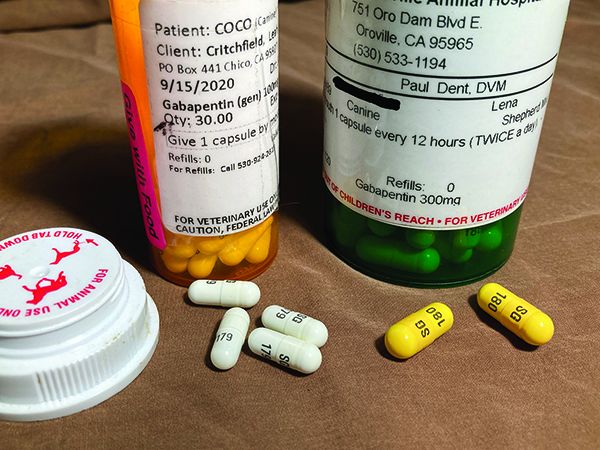
Gabapentin is a medication that veterinarians are prescribing with increasing frequency, sometimes alone but more commonly in combination with other medications, for the management of pain in dogs. It’s also increasingly prescribed in combination with other medications for canine anxiety. Why has it become so popular? I’ll get to that, but first we have to discuss pain.
Why Dog Pain Relief is a Priority
Pain management has become an integral aspect of health care in both human and veterinary medicine. If you’ve ever been hospitalized or had surgery, you will be familiar with the frequent question, “How’s your pain? Rate it on a scale from zero to 10.” So you try to pick a number, again and again, throughout the time you are hospitalized.
It turns out there is a very compelling reason for this. Pain is not our friend. It hurts. But the significance goes much deeper than that. Left uncontrolled, pain causes not only physical damage but also emotional and psychological damage. It delays healing and negatively impacts the immune system. In humans and nonhuman animals alike, it frequently results in harmful, unwanted behaviors like self-trauma, aggression, or withdrawal from the joys of life.
You’ve heard medical professionals say it’s important to stay ahead of the pain. There’s a strong reason for this as well. Untreated pain makes your pain receptors increasingly sensitive, which results in increasingly worsening pain. This is called “wind-up” pain, and it becomes more difficult to control.
We, veterinarians, work hard to prevent pain. When this is not possible, we work even harder to relieve it. This has become easier over the years with the ongoing advancements in science, medical knowledge, and extrapolation from discoveries made in human medicine. Veterinarians now have a whole array of medications and other therapeutics at their disposal for managing pain.
Chronic pain, something that is not expected to go away, is particularly challenging for us. It must be managed, often for the remainder of the dog’s life. For this type of pain, “polypharmacy” (multiple medications) and a multi-modal (more than one treatment modality) approach are usually most effective.
To manage chronic pain, we usually employ prescription medications, as well as safe and potentially effective “nutraceuticals” –nutritional supplements that have positive effects for a medical condition. There are increasing numbers of veterinarians who use Chinese and herbal medicine as complementary therapies to treat pain. Modalities like acupuncture, laser therapy, therapeutic ultrasound, physical therapy, and rehabilitation are all readily available to dog owners in most areas. An increasing number of dog owners now use various forms of cannabidiol (CBD) to treat their dog’s pain.
Pain is a highly personal experience. How one patient perceives pain may be completely different from another. Some have higher tolerances than others. One medication or therapy may work wonders for one patient and do nothing for another. This makes it crucial for owners to be observant, monitor their dogs closely for response to therapy, report accurately back to their veterinarians, and be open to recommended changes in the prescribed pain protocol.
What Does Gabapentin do for Dogs?

Gabapentin has gained popularity in leaps and bounds (hey! that’s what we’re going for: leaping and bounding dogs!) for its potential contribution to pain management in veterinary medicine. But this isn’t what it was initially developed to treat.
Pharmaceutically, gabapentin is classified as an anticonvulsant, or an anti-seizure medication. It works by blocking the transmission of certain signals in the central nervous system that results in seizures. Then researchers learned that some of these same transmitters are involved in the biochemical cascade involved in pain perception, and doctors began exploring its use for pain management.
Today, gabapentin is best known and respected for its ability to manage a specific form of pain called neuropathic pain. Neuropathic pain comes from damaged nerves, either deep in the brain and spinal cord or in the peripheral nerves, which are the ones that extend outward from the brain and spinal cord. It is different from the pain that is transmitted along healthy nerves from damaged tissue. Examples of neuropathic pain include neck and back pain from bulging discs, pinched nerves, tumors of a nerve or tumors pressing on nerves; some cancers; and dental pain.
A perfect example of neuropathic pain in humans is fibromyalgia. You’ve probably seen the commercials for Lyrica, a treatment for this chronic, debilitating, painful nerve disorder. Lyrica is pregabalin, an analog of gabapentin. (By the way, pregabalin is used in dogs as well, so if your dog’s current pain protocol includes gabapentin but isn’t working well enough, ask your veterinarian about pregabalin.)
How Gabapentin is Used to Manage Pain in Dogs
Although gabapentin is primarily thought to work best for conditions with neuropathic pain, it is most commonly used as an adjunctive or “add-on” medication in the polypharmacy approach to managing any chronic pain. It is rarely used alone, as the sole medication for pain, even in neuropathic conditions like neck and back pain.
Non-steroidal anti-inflammatory drugs (NSAIDs) are, and likely always will be, the first-line choice in veterinary pain management. But gabapentin is being added more frequently when an NSAID alone isn’t helping enough. Gabapentin is so safe it can be added to virtually any of the drugs currently used for pain management in dogs. There is a recent study that shows gabapentin has a synergistic effect, which means when it’s used in combination with another drug, such as the opioid pain-reliever tramadol, the effect of both drugs are enhanced.
When adding gabapentin to a current pain protocol, you may see some effect within 24 hours, but you won’t see the maximal effect for seven to 10 days. For this reason, dosage adjustments are usually made only every couple of weeks. Be patient. Gabapentin has the potential to add much value to your dog’s current pain-management plan.
Additionally, adding gabapentin, which has minimal side effects, sometimes allows for dosage reduction of other medications like NSAIDs, which do have potentially dangerous side effects, especially with long-term use. This is a huge plus for both your dog and your veterinarian, who took an oath to “do no harm.”
What are the side effects? Nothing much. There is the potential for mild sedation and muscular weakness, which increases with higher dosages. This side effect is usually minimal at the dosages typically prescribed for pain. Veterinarians actually take advantage of this side effect by using higher dosages of gabapentin in combination with other sedative drugs like trazadone to enhance the calming effect for anxious or aggressive patients in the veterinary clinic setting.
Side Effects of Gabapentin for Dogs
Gabapentin has a huge safety margin in dogs. It won’t hurt your dog’s kidneys or liver and is even safe to use with CBD products, although the mild sedative effect of both products may be enhanced.
There are some important precautions of gabapentin for dogs, however:
- First and foremost, do not use the commercially available liquid form of gabapentin made for humans. This preparation contains xylitol, the sweetener that’s commonly used to sweeten sugar-free gum. Xylitol is extremely toxic, even deadly, for dogs.
- Wait before giving gabapentin after antacids. If you regularly give your dog an antacid like Pepcid or Prilosec, you must wait at least two hours after giving the antacid before giving gabapentin, as the antacid decreases absorption of gabapentin from the stomach.
- Never stop gabapentin cold turkey if your dog has been on it for a while. This could result in rebound pain, which is similar to wind-up pain, in that it’s pain that’s worse than ever. For this reason, always wean your dog off gabapentin gradually.
Is Gabapentin Safe for Dogs?
As you can probably tell, I am a huge fan of gabapentin for dogs. It helps many of my patients with their pain, it’s safe, and it’s not expensive. I prescribe it most frequently as part of my polypharmacy approach to managing chronically painful conditions like osteoarthritis and cancer. I prescribe it for dental pain. It works wonders for neck and back pain.
While gabapentin is not currently used heavily for post-operative pain as its efficacy in that realm has been questionable, I’m excited right now as there is a study under way to assess its efficacy pre-emptively (before the pain) for dogs undergoing surgery. Many veterinarians already prescribe it for their surgical patients to be started before the procedure, because they have so much faith in it.
Gabapentin is extremely safe for dogs, and it has the potential to alleviate pain for our dogs and improve their quality and enjoyment of life. If you’ve been wondering why so many veterinarians are prescribing this medication more and more, there’s your answer. We see results, plain and simple.
Gabapentin does not have a direct anxiolytic (anti-anxiety) effect, limiting its usefulness for treating the chronically stressed, anxious dog as a stand-alone drug. However, as with its synergistic use alongside pain medications, it is sometimes prescribed in combination with Prozac (fluoxetine, a selective serotonin reputable inhibitor [SSRI]) or Clomicalm (clomipramine, a tricyclic antidepressant [TCA]) for persistent cases of generalized anxiety, panic disorders, compulsive disorders, and true separation anxiety.
The goal when adding gabapentin in these instances is to help the dog relax in the face of his stressors, as you try to help him through his issues with appropriate desensitization and behavior modification exercises. This is particularly useful in cases where the dog is already receiving the maximum dose of anti-anxiety medication, with less than the desired effect.
It’s important to note that medication alone is not likely to relieve anxiety for your dog unless paired with the above-mentioned desensitization and behavior-modification exercises. These exercises can be prescribed by your veterinarian or a veterinary behavior specialist.
Gabapentin’s sedative effect at higher dosages can be used on an as needed basis to help dogs relax and get through specific situations that cause undue stress for them. Examples of this type of situational anxiety are veterinary visits, grooming appointments, long car rides, thunderstorms and fireworks.



Would never give Gabapentin to dogs again. My IG Lance was given it for herniated disks in his neck, before he was the most loveable dog anyone could imagine. After on it for a week I noticed changes in his behavior and after a month on it he would hide and not want anyone to be hear him. Took him off and his personality slowly (took a month) to come back and he is back to his normal self. My other IG Lola was given it for anxiety issues, her anxiety got worse on it. After 2 weeks I took her off it and she returned to her normal anxious self. We went with CBD for other issues and it helped her anxiety. She just had her left eye removed and the vet wanted to use it for pain and I said no way. It was the only pain med they use so I had to have them call in tramadol for her.
Thank you to everyone for sharing your experiences with this drug. Our pit bull mix was prescribed 300mg (1-2 capsules every 8-12 hours) for an apparent torn/ruptured ACL. I gave him one at 11:30am and another at 7pm, and then I found these valuable experiences and stopped them immediately. By that night he could barely walk, he was stumbling everywhere, and the whole next day was the same. He is a very sensitive dog. Yesterday he started rubbing his head up in a small bush (2 different bushes on 2 occasions) and I couldn’t figure out what he was doing. He was so wobbly yesterday, which caused him a lot more pain in his injured ACL that most of all needs stability, that he wouldn’t go outside after noon, and this morning he was still so afraid of the pain it took me until 9am to get him out the door, by which time he had trouble emptying his extremely full bladder — however once he was willing to go out he realized he could walk a lot better. We thought his wobbliness was from his injury, but now I know it was from the drug. I’m sure it was extremely confusing and stressful for him to suddenly not be able to walk right. This morning he went into the bush again and started digging a hole under it — I think he was trying to hide. He is under the dining room table now facing the wall – not in one of his many soft beds which I’m sure would feel better on his knee. I’m so glad to hear that Lance’s behavior got better over time. I am using Arnica 30C, Curcumin, Omega 3 and Quercetin for his pain. I can’t tell you how important it was that you shared this experience — thank you again!
Had anyone had problems with Gab. causing seizures? If my dog doesn’t get hers EXACTLY 12 hours apart she has grand maul seizures. The Gab is for pain from a spine disorder. I have only had her 5 months and took her to one vet that just re-prescribed what the rescue had prescribed. I finally have an appointment at an animal hospital that took months to get. I really want to get her off of Gab (by the way, if you look up cautions: the worst is NOT the pain returning, it’s risk of seizures that can be fatal. I hate to ask, but we’re you paid to write this article? Did I read an ad and mistake it for an article? Apologies if it’s my error-this is clearly a vet who is paid by the pharm company though). I learned from all of the vets I have talked to at the hospitals and the veg that saw her that you must not take your pets off cold turkey and I’m learning you can’t even accidentally skip a dose or be late!
Anyone else have a recommendation for a drug that is not so dangerous? I will say that if it weren’t for the seizures, I’d be happy. She seems to not be in pain. But not worth the risk. Thanks for any anecdotal successful experiences with pain management for pooches!
I would research more before giving to any of my babies ( I lost my QWEENSLAND to my old vet giving her SO many steroids for allergies. I would have just given her the money with no shots to have my Koeda back. Now my babies get nothing until I am satisfied with my investigating and research. My border collie has acute panckritis and wasn’t suppose live to 3 . She is 10 yrs. Old now and eats only raw liver hearts (cow n chicken) kidneys (main organs) no dry kibble I do cook eggs and chicken and carrots for them. After trying anything and everything I discovered RAW. With help from friends (thank u Cheryl DOMM) AND DOC LITHFIELD from our shelter she has been at a good weight for at least 3to 4 yrs. Now people think she’s around 3 yrs. Old. My shepards are older than that and she acts like a puppy. Owe and bone marrow bones raw from grocery store… never any of them get pre packaged treats… I’m a happy dog mommy
on 2 Sept in the evening, we have our 3 yr and 10 month old Hemophilic type A ( part Doberman part Belgian Malinois ) a 100 mg Gabapentin. He was limping and in some pain. He did not do well with other meds such as Tramadol and ofcourse couldn’t take NSAIDS. Every few months when he would have a Hematoma he would receive a transfusion at the ER and we did regular blood test to check his clotting factor, he was a beautiful happy and lively pup we loved dearly. Because we foster rescued Dobermans and have our own we are very familiar with the vets prescribing Gabapentin and had been told we could safely give it to Moki, our pup. I normally research everything and he has been kept alive because we have been extremely careful. Except this time, at the advise of the vet we gave him the Gabapentin, he didn’t eat that evening, nor the next morning, was extremely confused and disorientated, slept most of the day, all effects of the Gabapentin. That evening 3 Sept @ 17:57 almost exactly 24 hours later, while getting his daily meds, he started to fall and my husband helped him on his bed. With minutes, he face became as if in terrible pain and he curled his paws. I knew immediately what was happening, he suffered for several minutes and was gone while I was holding him. Imagine the shock and disbelief, it was horrible but he was gone. As I was holding and somewhat turned around I noticed a horrific bruise the size of a silver dollar on his chest and with no idea of what had happened. I didn’t want a necropsy and wanted him left whole before being cremated. I notices later that the bruise had somewhat spread and the discoloration remained very noticeable. Having done more reading about Gabapentin and some of the side effects 2 items stand out as more serious unusual bruising or bleeding. I realize our vet most likely never read that far into the side effects on a Hemophiliac dog seeing ours was the first case he had ever seen.
Now having read this, we should have never given him that 100 mg Gabapentin. I feel his death was too soon at only 3 and should never have happened. Caused by internal bleeding over the course of the day and caused sudden death 24 hours later. I hope that by chance this can be helpful for anyone who may have a pup with similar issues. He was taking many supplements and receiving excellent care with a good prognosis and now taken away from us, all in our opinion because of bad advise and lack of knowledge.
first want to say im so saddened what happened to your pup, must of been devastating to say the least, and i also want to thank you for rescuing Doberman’s they are such a misunderstood breed, you are angel!
I currently have 2 bullmastiffs (both 8 y/o) on carprofren and gabapentin. They are in the end stages of osteosarcoma, both with tumors on their front wrists. Currently taking 200mg gabapentin at night and 100mg carprofen every 8 hrs. One is 165lb and the other is 135lb. I have heard both positive and negative reviews on both medications. Have been looking into natural pain remedies (Horsetail, turmeric golden paste, boswellia, Devils claw, so on) but don’t want to waste time if these aren’t as strong, as my babies are in immense pain. Any recommendations?
No way I would take Gabapentin nor give it to my dog! I am disappointed the Whole Dog Journal is pushing this medication – really changes my opinion of it.
I had to Collies at age 12 the begin to loose the strength in their back legs. They would go out to use the yard and sort of take in the fresh air and walk a bit. Then start up the steps to come lay on their beds. If I had known about the Gabapentin, which I now take for a botched knee & now the hip. I would have tried 100 mil for them, as thing would get worse 200mil. I begin to take Gummy for my pain (Hemp) and found relief. The second Collie I begin to do the same for her. She could not eat a whole one so I sat on the floor and tore pieces off and then she would chew a bit. Did not stop the aging but she was comfortable. The first Collie we had to him down ( that was so awful) I only wish I had know about the Gaba & the Hemp. For Blue.) Nothing the Vet gave him really didn’t work Annabelle before I became her Vet she had developed Kidney disease. But at lease she was almost pain free. One other thing until I was given food from the Vet! We gave them food from Pet Smart. It all came from China, and has since been pulled from the Market. One was Kibble & Bits. Be aware where the food comes from for your pets
Thank u, I wS unaware to wait 2 hours after pepsid. I will change this tomorrow.
And what about cats? Seems this drug is being given a lot for all sorts of pain for cats. It’s harder to get a pill down a cat’s throat, than a dog’s throat, for the average Cat Owner. And cats hate the smell and taste, too. Other suggestions?
My elderly cat is on gabapentin and I pay extra to have it compounded into a liquid .It has made a world of difference .
I would never give this drug to another dog after the experience I had with my last dog who had cancer. It caused horrible hallucinations and and made him ravenous. He was miserable until I took him off it.
My 11 year old westie has been just diagnosed with osteosarcoma. She has been on it for 10days and has severe hind leg weakness. She keeps falling over and can barely get up when she falls over. Did you wean your dog off or just take him off? She is on only one 100mg pill a day. Did you find another pain reliever for you dog with cancer after you stopped the gabapentin?
I cannot believe I am back on this site. I am just now seeing your message. I took my other dog off of it. Recently, another dog of mine was having nerve pain and reluctantly I used this drug again because I didn’t want to see him suffer. But now he cannot walk, is knuckling, and crossing his legs over. He looks like he might be paralyzed! I have read that this has happened in humans as well. He is a 45 lb dog and was taking 300-400mg per day even though the dosage was up to 800mg per day. I’m taking him off of this and praying the damage isn’t permanent after reading several other stories of gabapentin-induced taxia.
I believe that is way too high of a dose! Please check with a vet and pharmacist….
Our 14 year old lab began to have increased muscle weakness when taking Gabapentin. She was unable to support herself when squatting & consistently fell over. We weaned her off the Gabapentin & the muscle weakness immediately improved. We do have her on Carprofen.