

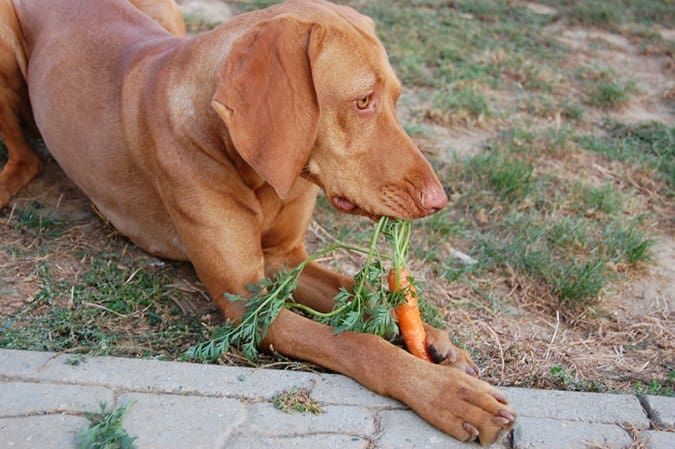
As omnivores, dogs can eat vegetables without ill effect—at least they can eat most vegetables. Many nutritionists believe a mixture of both meat and vegetables is important for a healthy dog. My darling baby boy is a 12-year-old German Shorthair Pointer mix. When he was around 6 years old, he started to put on some weight. Based on a suggestion from a friend, I did some research on what vegetables dogs can eat, cut back on his commercial dog food, and added a handful of frozen green beans to his dinner. The vegetable slowed down the gobbling up of his food, added volume without many calories to help him feel full, and easily fit into my budget. The trick worked! My pup slimmed down.
What Vegetables Can Dogs Eat?
Dogs Can Eat Cabbage, Lettuce, and Many Other Leafy Greens
A good rule for finding leafy greens that your dog can eat is to stick to those that you would consume. Lettuce, spinach, chard, cabbage and kale are all okay for dogs. Besides being rich in vitamins A, C, and K, calcium, iron and potassium, leafy greens are also a good source of fiber. Much like humans, dogs get the most nutrients when the veggies are uncooked. Of course, if you want you can steam your dog’s vegetables for something a little different, or bake them for a crunchier treat. The high fiber in leafy greens can cause some dogs to have an upset stomach after initially added to their diet. Introduce any new food slowly to keep your dog’s tummy safe.
Can Dogs Eat Carrots, Beets, and Other Root Vegetables?
In general root vegetables like carrots, beets, sweet potatoes and parsnips are safe to feed your dog. These vegetables are starchy and high in sugar, which means you do want to limit the amount you give to your dog (especially if his commercial or raw dog food already contains root vegetables – many do).
Get the recipe for homemade sweet potato dog chews.
Can Dogs Eat Stalk Vegetables?
This includes vegetables like celery and asparagus. It may be a little harder to get your dog to enjoy these types of vegetables, but they are safe for dogs to eat. Some don’t like the taste, and some find them hard to grind up in their teeth. To help, cut stalky vegetables into small pieces and/or steam them.
Can Dogs Eat Broccoli, Brussels Sprouts, Cauliflower, Corn, and Cucumber?
All of these veggies are safe for your dog to munch on but, like other vegetables, keep it to small quantities – especially if your dog isn’t used to eating these types of foods. Remember to take the corn off the cob before handing it over to your dog. Although the cob itself isn’t bad for a dog to consume, it is easy to swallow in chunks or whole, which can cause choking or intestinal obstruction. Whenever changing your dog’s diet make sure to check with your vet, go slow, and pay attention to your dog. If you follow these guidelines, adding vegetables to your pup’s food can help him receive a more varied, nutritionally complete profile in his diet.
Dogs Can Eat Squash
Squash of all varieties are safe for dogs to eat. Pumpkin and butternut squash can help dogs with bouts of diarrhea, and most dogs don’t mind the taste of squash. Use up all your excess summer squash from the garden by steaming it up for your dog, or cut up and bake this year’s jack-o-lantern after Halloween for your dog to eat. It’s best to limit your pup’s consumption to the meat of the squash, keeping the seeds and skin away.
Can Dogs Eat Peas and Other Legumes?
This vegetable group includes bean and alfalfa sprouts, mature beans such as kidney, pinto, and lentil, and peas. The topic of legumes in dog food has been in the news lately. The reason is due to a recent FDA update which states there are reports of canine dilated cardiopulmonary (DCM) in dogs eating pet foods containing legumes or potatoes high up on the ingredients list. If the protein of your dog’s diet relies heavily on legumes or potatoes, you should not only avoid giving more of this plant group to your dog, but also consider reducing the levels of legumes in his main dog food, i.e. changing dog foods. A note on green beans: Green beans may be the most widely-fed vegetable to dogs because of their taste and easy digestion. Please be aware that, despite their name, green beans are not actually classified as beans, and therefore don’t warrant the limitations recommended for true legumes.
Vegetables Dogs Can’t Eat
Dogs Can’t Eat Onions, Garlic, and Other Alliums
Alliums are bulb vegetables like onions, garlic, leeks, chives, and shallots. Do not give your dog access to these plants, as they are toxic to dogs. Negative side effects of eating onions or garlic for dogs range from a stomach ache to developing anemia which, at it’s worse, can cause organs to shut down.
- Frozen bags of vegetables are often on sale. Stock up. Have a blend ready to grab in a Tupperware bowl in the freezer.
- If your pup is sensitive to the cold of a frozen vegetable, put a small bowl in the refrigerator for easy treat access.
- For a summer treat, add vegetables to a 1:1 mixture of chicken broth and water in an ice tray. Once frozen, pop out one or two for a delicious hot day treat.
- When cooking, set aside the unused vegetable trimmings that are safe for your dog to consume. A great no-waste alternative to throwing it in the garbage.
- If your dog doesn’t want anything to do with vegetables and you want to supplement what he is getting in his regular diet, you can chop or puree them and mix them into his meals. For treats, adding some dog-safe peanut butter (no sugar, just peanuts) can get your dog started. Eventually you should be able to back off on the addition and feed the vegetable plain.
- Vegetables are a great reward in treat puzzle games. As always make sure you watch your dog when those are in use and that all edible treats are cleaned from the puzzle before storing away.



I have read through most of the comments and no one that I saw mentioned eggs. I fry an egg for every meal along with almost everything else I’ve read here. My GSD loves it and she loves to watch me prepare a fresh, hot meal for her every day.
i give my dog mixed frozen veg with a tad of beef gravy loves it and he is a staffy he is also 15 so i guess we are doing something right
I have been making my own dig food for my 4 year old Chihuahua for a couple years now. He would not touch hard dog food or soft dog food of any kind . Eventually with the food I make I started putting a small amount of a good quality hard dog food mixed in with the homemade. I hope I’m putting proper ingredients in his food because now I’m concerned after reading all these comments. How do I make it…. I boil about three large chicken breasts in water, either cut 1/3 of a roast epic small pieces and fried in coconut oil or a package of lean hamburger or turkey burger, I recently also started adding chicken liver or gizzards or beef liver in smaller amounts in this recipe also. I use all of those meats together using a grater for part of the meat and cut the rest up in small pieces. For vegetables I use one large carrot steamed and cut up in small pieces along with a handful of raw spinach chopped up very finely and I have an apple either grated or chop’t up very small. She doesn’t really like Apple which is why I like to chop it finely and blend it well because he will eat it then and I figured he needs fruits of some sort. Iused to take three eggs and beat them. I cooked white or brown rice preferably brown and added one cup of cooked rice and fried the scrambled eggs in with the cooked rice. I recently started boiling the eggs and chopping them up finely which he enjoys a lot more that way! At the end of bringing everything together I gently stir the eggs in the recipe. Also as far as vegetables along with the carrots I steam a medium sized sweet potato. Of course I peel them but not always the carrot. I then take the bowl of meat products and mix with the other ingredients gently. I use cheap Ziploc sandwich bags 2 store two or three Meals in each bag and freeze them. I generally come out is about a week and a half to two weeks worth of dog food for my chihuahua. This is quite a process to make. It takes a few hours usually so I give him an appropriate amount for a meal so I don’t waste it and like I said I add a Small palm full of quality dog . Sometimes I boil the rice with the chicken broth after boiling the chicken breasts. You really seems to enjoy this combination ingredients for his diet. I hope these are all healthy and safe foods I give him. A couple things concern me after reading these comments above like the spinach possibly being bad for him and saying not to feed it to him daily because when I make this amount of dog food he gets the same thing everyday. I thought I was really putting forth the effort to keep my little buddy healthy and happy! I sure hope so!
Corrina, Seems like a good diet but not complete. According to the author, Mary Straus, of another Whole Dog Journal Article, “How to Make Homemade Food Diet” no diet is complete with added calcium (can get from pulverized eggshells and other sources, and some fish and even Vitamin E. Check out that article which was updated on March 24, 2020.
Don’t forget the organs. Pet tao, vital essentials and walk about make great treats.
Kale is not good for dogs as it’s high in Calcium Oxalate and can cause kidney and bladder stones. Small amounts may be ok as with most foods (depending on the size of the dog) but it’s best to avoid it. Green beans or peas are a better option.
Dogs are primarily carnivores… I dare you to only feed them vegetables for a month. A balanced diet primarily of meat with some vegetables or even fruit mixed in very slightly gives them a pseudo omnivore tag. Feels like 90/10 or 95/5 ratio of meat vs plant matter.
What do wolves & coyotes eat when the habitat is covered with snow and ice? They hunt rabbits and other mammals to survive. They ain’t eating pine cones.
There is so much more energy per pound consumed when you eat meat as your primary food source. When it’s cold, that is really important.
question for all. My shadow (Aussie) just had many huge and small stones removed, but lots… poor thing. i feel like a horrible mom. I wish they could talk! she really didn’t show signs she was in pain, but some stones were over an inch. just having to go potty often. we feed both Aussies science diet and I try to make homemade treats but milkbone for emergency. now, I don’t know what to feed, switch to, homemaker, no idea. Any help awesome!
Is kale a part of your pups diet? You might want to do some research into what you’re feeding – Calcium Oxalate causes stones (which kale, spinach, beet greens, roots of beets, Swiss chard, collards, parsley, collards, leeks, quinoa, and okra are high in according to American Kennel Club), As well monitoring your dogs sugar intake (treats, bananas, apples are high in sugar) will help.
My aussi used to get UTIs often and would pee at any moment of excitement or fear. I found that they stopped when I cut chicken out of his diet (I feed simply nourish salmon and sweet potato) and added green beans, fish, and small amounts of celery to his diet it seemed to help.
Kidney stones often show up when people dont drink enough water. I know for my boyfriend is one that has had kidney stone problems and he has a history of going for hours without drinking anything. I would do a search online also as to what vegetables can contribute to the problem for maybe the dog’s food you are using has too many of them in it. Im just guessing here but being a bit of a detective can help you here and save you some expensive vet bills!
Cheryl, it’s vital to know what type of stones they were. The type of stones determines the appropriate diet. Bladder stones aren’t uncommon – but some breeds like my aussie – have a rare genetic predisposition to very rare cystine stones, and to avoid future stones and surgeries he needs a permanent diet that is radically different than if he had developed a more typical type of stone (like struvite stones). For *all* stones, increased fluids is important to flush minerals out of the bladder and prevent build up (which can develope into stones). Wet food or kibble saturated with water is really important. For certain breeds (like aussies) who develope cystine stones, a low protein (but with enough taurine for heart health, via supplement if necessary) alkaline diet is essential according to the both his vet and the veterinarian dietitian (and any reputable vet source you research). The poor pup was in so much pain! But if we fed him what would be appropriate for more common types of stones he would *definitely* develope more! If your vet didn’t have a lab analyze and identify the type of stone, you can’t know what to feed your aussie to avoid future problems. You have to start there. Good luck!
I just started giving my 19 month old Beagle boy vegetables. He loves green beans, frozen, bell peppers, cucumbers, and broccoli and cauliflower. I started giving him yellow squash today. He goes to the fridge for a treat now.
Kale is dangerous for dogs
Why?
Dear, you have beautifully elaborated for the dog owners, that aspire to give their dogs vegetables raw diet.
which part is good? which is not, all have been cleared.
Thanks for such a piece of good information.
Dogs are carnivorous omnivores, which means that they should eat mostly meat, and some veggies (but not carbs). Pretty simple!
Dogs are facultative carnivores, meaning that they can derive some nutrients from plants but do not need carbohydrates in their diet. Yes, there are great nutrients in fruits and vegetables, and I feed both to my raw, whole-food-fed dog. After reading this article and comments about beef and chicken meal being good for dogs,
I am choosing not to renew my subscription. This has too much misinformation.
I make my own dog food and can not. I use fresh cooked chicken and then add vegetables and parsley with the chicken broth. Then I serve it with rice and some dry dog food. My dogs love it and they look so much better since I changed it. I know exactly what goes in it.
I ment to say I can it.
Mostly my dogs only get small amounts of leafy veggies. Outside leaves, and left overs from preparing our meals. I DO like to add parsley to their meals and since I grow my own parsley there is more than enough for both them and us.
If you grow cat grass, then some of that cut up finely and added to meals would be good.
I read that I should never feed my dogs white rice, only brown rice. Is this factual? Thank you.
I cook for my dogs regularly. Before I started, I did research and looked up lots of recipes on YouTube and other sites, looking for recipes from VETERINARIANS FIRST. I got lots of great ideas and in many, WHITE RICE WAS USED. I USE IT AND MY DOGS LOVE IT.
Brown rice has about 80% more arsenic than white. I prepare my dogs’ food with human grade ingredients but was told by my vet to use only white rice because of the arsenic content in brown rice.
I make my own dog food as well. It’s better then the stuff on the shelf.