

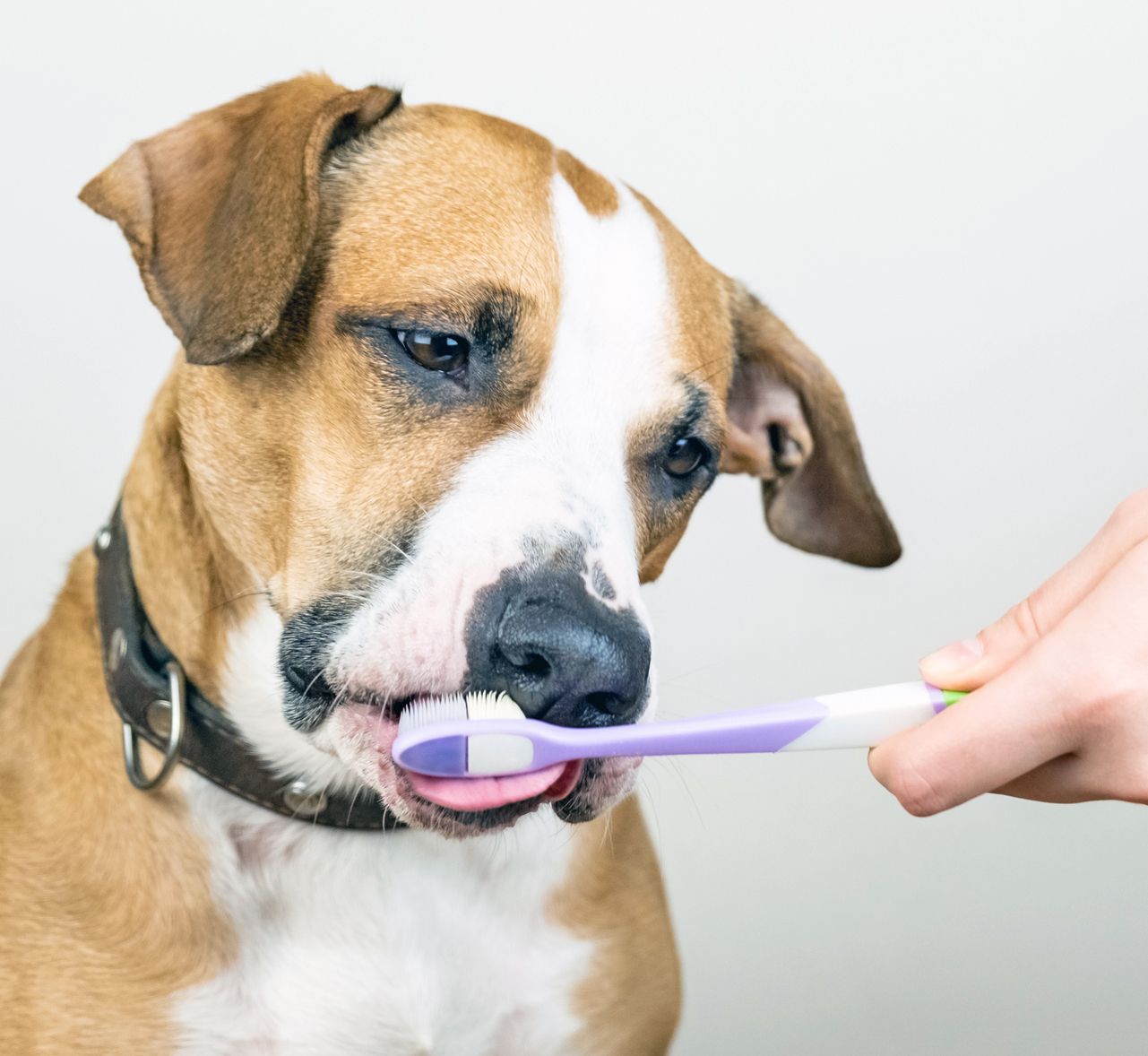
According to CareCredit, the cost of veterinary dental cleaning for your dog is between $300 to $700 or more, especially if problems are found. The least expensive and most efficient way to protect your dog and your wallet from this huge veterinary bill is to brush your dog’s teeth every day.
While most dogs don’t enjoy it, patience and the right toothpaste makes it easier. One of my dogs is so crazy about the toothpaste I use, which is Virbac C.E.T, an enzymatic toothpaste for dogs, that he begs to have his teeth brushed. Our toothpaste reviewer called that brand “chicken-flavored frosting” because her dogs love it, too.
Daily Brushing Is Proven Effective
Research supports the benefits of brushing your dog’s teeth every day, although experts say if you can’t do that, at least try to brush the dog’s teeth three to four times a week, AKA every other day. The Veterinary Oral Health Council (VOHC) advises that any brushing is better than no brushing.
Keeping your dog’s teeth brushed regularly helps with bad breath, helps avoid tooth loss, heart disease, diabetes, and sinus problems that are caused at least partially by bad dental care. Dogs also get periodontal disease just like we do, from neglected teeth. Periodontal disease painfully destroys the bone and gums that hold the teeth in place. A dog with painful teeth won’t eat well, if at all.
Dog Toothbrush Choices
It’s best to choose a brush made for dog, but many people successfully use a child’s toothbrush on a small dog and an adult toothbrush for a larger dog (soft bristles only). Pay attention to the size of the brush you choose. An oversized brush will be uncomfortable for a little dog, and a tiny brush will be inefficient for use on a larger dog. Always clean the brush and allow it to dry out thoroughly between brushings, just like you do your own. Note: The finger brushes really don’t work well.
The VOHC list of approved products includes some dental chews. While some people may scoff at the effectiveness of dental chews, a study published in the Journal of Veterinary Dentistry disagrees: “Adding a dental chew to the diet results in statistically significant reductions in plaque and calculus accumulation, and oral malador while improving gingival indices.” In other words, dental chews help.
Use Toothpaste for Dogs
Toothpaste made for dogs includes enzymes that help destroy bacteria in the dog’s mouth. Bacteria is what promotes plaque, and plaque hardens into sticky, destructive tartar. The enzymes in the toothpaste are powerful. A few dogs who absolutely refuse to allow a toothbrush in their mouth can be helped at least somewhat if you can just rub the toothpaste on their gums. Again, daily is preferable.
Usually the toothpaste is flavored, and most dogs like it. (Human toothpaste is made to be spit out, not swallowed; never use human toothpaste for your dog.) Try to choose products that are accepted by the VOHC because that means there is proof that the products work.
How to Brush Dog Teeth
Start slowly, and be patient. Let the dog lick the enzymatic toothpaste off the brush—if that’s all you can do, that’s fine for a start. If you can get the brush in the dog’s mouth, just brush a few of the dog’s teeth. don’t fight him. Be gentle. Reward your dog frequently and richly with treats and praise. For a thorough lesson on technique, watch this video from the University of California, Davis, Veterinary School.
Finally, when you brush your dog’s teeth, pay special attention to the outer surface of the upper teeth, cheek side, which accumulates a great deal of tartar. “Dental plaque and tartar accumulate most rapidly on the buccal (cheek) surfaces of the upper teeth,” according to the VOHC.


Our 15 year old dog who was slowly killed by a veterinarian which insisted on a rabies ‘refresher’ (despite a positive titer and our dog not being completely healthy at the time of that office visit), had healthy teeth and gums all his life. We never cleaned his teeth, neither did any other person. What we always did is to feed him home-prepared food after he came to us at 3 months. Maybe the absence of veterinary visits other than those that provided him with his ‘puppy shots’ and an occasional rabies titer, also helped him to stay healthy?
What about those dental powders to add to their food? They claim they remove tarter. I’ve used them for years and never saw a difference.