

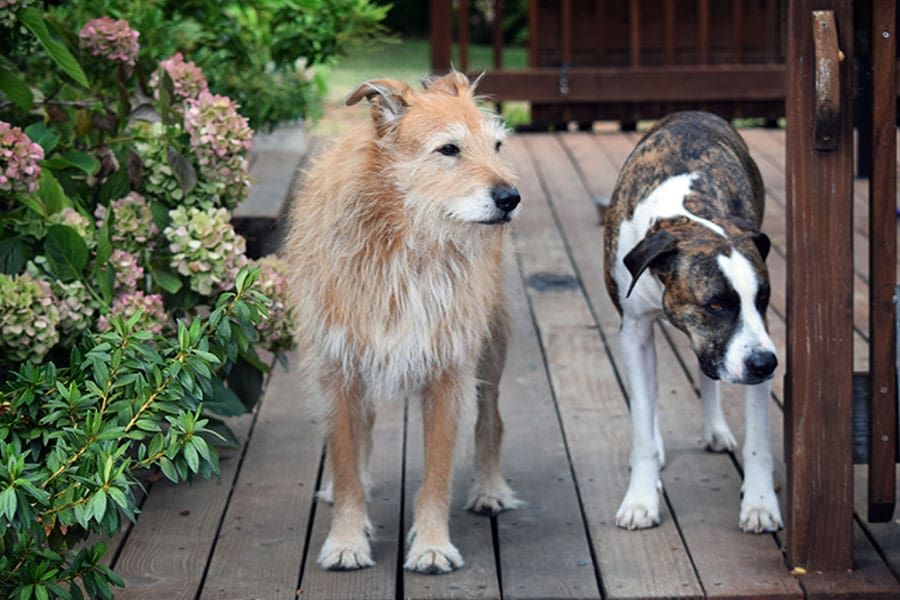
I read a recent article in The Atlantic about some scientists who taught rats to play hide-and-seek as part of a larger study about the neuroscience of play. I’m riveted by animal behavior, I’m a huge fan of play, and I find neuroscience interesting, so an article like this can send me straight down a rabbit hole of further reading, investigation, and thinking while gazing out the window.
The abstract of the study, which was originally published in the magazine Science, concludes, “The elaborate cognitive capacities for hide-and-seek in rats suggest that this game might be evolutionarily old.”
Animal behavior experts have long speculated about the purpose of play; it is thought to be a sort of behavioral practice time, when predator species practice stalking and hunting prey, and prey species practice escape tactics (such as running and dodging) and rudimentary self-defense behaviors such as kicking or biting. And of course, all species tend to engage in playful social behaviors, such as social grooming. The play of humans incorporates all of these things!
All mammals play the most when they are young, and most species spend less and less time playing as they mature. Interestingly, humans and dogs are two species who retain a greater than average interest in play well into their senior years, though the “games” may change greatly over time. This is why good dog trainers frequently recommend using play as a reinforcer for a dog’s behavior that the owner likes or wants more of. Mutually enjoyable play also helps strengthen the bond between dogs and their humans, and keeps them engaged and motivated to pay attention to and work with us.
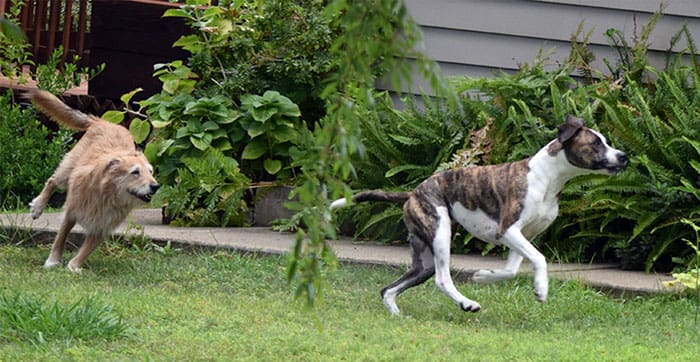
Interestingly, hide-and-seek is a favorite game of many humans and their dogs, me and mine included. Both my dignified senior dog, Otto, and my always goofy, playful four-year-old Woody will leap to their feet and stare at me if I signal the start of a game by just looking at them and then pantomiming an exaggerated sneaking out of the room: Oh, it’s on! they seem to say. They know to wait for me to whistle before starting their search, without me having to tell them to “stay.” I never taught them this, but if they come and find me before I’m actually hidden, I just tell them, “Aw, you wrecked it!” and resume doing whatever it was that I was doing before I initiated the game. So they learned that if they wait for the whistle, I’m both more difficult to find and I almost always let out that inadvertent squeal of joy and surprise that humans almost can’t help but make when they are discovered hiding by their intensely seeking dogs. And then we all celebrate with laughter and a little bit of roughhousing.
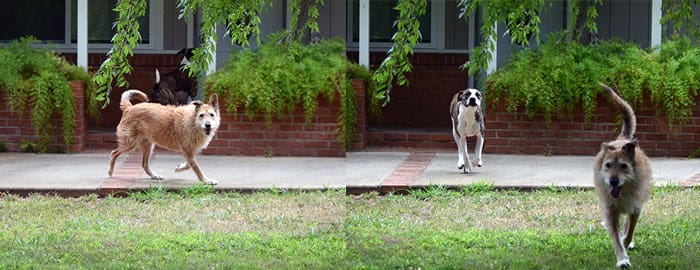
The party starts when they reach me. Good dogs!
Mutually enjoyable play is so reinforcing for most dogs, that I would hazard a guess that people who play with their dogs would rate their dogs’ behavior – or at the very least, the strength of their relationship – more highly than people who don’t play with their dogs. Shoot, if I were a scientist with time and money to spare, I’d try to find a way to test this hypothesis. Instead, I’ll just ask you guys: Do you play with your dogs? How and why?




We adopted a beagle mix puppy from the pound, adding to our three dog home – a 6 yr old pit bull, 6 ur old dachshund mix, and an 11 yr old lab mix. We dubbed our new pup Norman. He has brought joyous play to our home. We’ve always made sure the dogs are active and that they have fun brain games and toys. But with Norman around the play has erupted. It’s instinctive. Tug of war, chase, wrestling, stalking and hunting (each other!). I call it Norman’s dog lessons. It’s been a blast.
Gisela, your comment filled my heart with delight to read! Thanks for sharing it and for the home you have created for your lucky dogs!!
I used to play “Chase the water” with my dogs and the hose. They loved to chase it and bite the water and it sure made bath time easier. I also used to play “Find it” with them and a certain toy I saved for the occasion. I would have them wait outside right by the door, walk all over the house to find a hiding place so they couldn’t identify the site by hearing, and then open the door and say “where is it?” They really loved that and would tear through the house looking until one found it and would come trotting triumphant to me with the prize so we could play it again. The 2 dogs I now have are afraid of water and only understand hunting for something if it’s a rat outside in the bushes. I need to find someone with a dog they can befriend who likes to chase water. I think that will help.
Love to hide! Behind shrubs or sheds. My dogs have great recall. Where’s your ball is great, find tug too. I’ve taught give and drop. Sometimes I’ll hide a couple bully sticks to play find it, kind of nose work play. We also compete in agility and keep training very short, stop on a good note then go for a walk or ride to keep the happy going.
I have two puppies (litter mates). They are a year and 4 months old now. They have the same mom but different dads…the mom was border collie, lab, German shepherd. One dad was Australian shepherd and the other was golden retriever, black mouth cur. At least according to the DNA tests I did 🙂
Starting at about age 6 months, I taught them how to play “Scavenger Hunt”. I’ll put them in the bathroom or bedroom and close the door, then tiptoe around the house hiding treats. Once I’m done hiding them, I’ll go open the door and declare “Scavenger hunt!!” and then it’s on! Their noses get to work sniffing out all of the hiding spots. It’s one of their favorite things to do!
I started out very easily; I used “fragrant” treats (such as freeze dried meat treats like the “Natural Instincts Mixers”), stuck to hiding them in one room, and hid everything on the floor and in plain sight. Once they understood what the goal of the game was, I gradually increased the difficulty; sometimes using less fragrant treats, expanding the hiding zone to multiple rooms, and hiding the treats in more difficult places, like on low tables, behind couch pillows, etc. Now when I ask them “do you two want to have a scavenger hunt?”, they “play bow” pounce on the floor and then go zooming off to the nearest bathroom or bedroom to be closed in while I hide the goodies.
I have just as much fun as they do watching their little minds work and hearing their loud, excited sniffing as they hunt around!!
I would love to play “find me” but my Doxie is like a barnacle stuck to me everywhere I go!!! Might be able to get my Am Staff/Great Pyrenees mix to participate. If I could keep the Doxie from giving me away!! 😳🤔😂
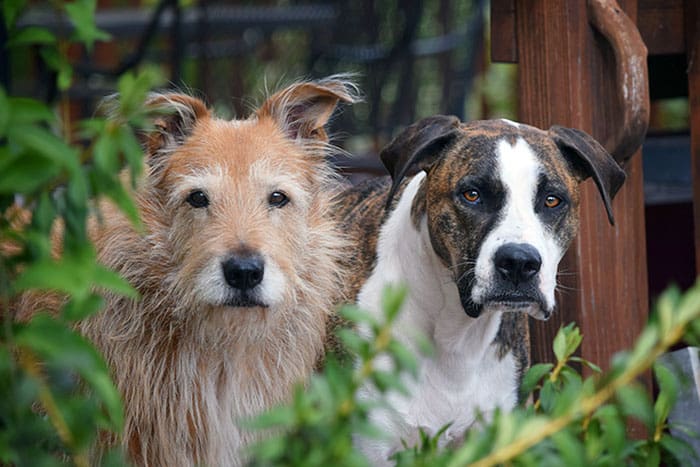
Spectacular photo of Otto and Woody peering out of the woods. (We’re watching you.”)
My rescue beagle mix doesn’t seem interested in play. He is happy and social but will run around the yard a couple of times with a toy and then proceed to try to destroy it. We have tried to teach him the fetch game but it only lasts for a few throws, as far as “tug” he tires of that really quickly, the only thing that holds his interest is searching for food or treats. I’ve done a lot of research and my daughter trains professionally; if anyone has any hints or tips I’d love to hear them!
Hi Anne, thanks for rescuing! My 18 y.o. Pittie mix was never big on playing with toys but has always loved hide-and-seek in the yard of house. She has become highly treat motivated in her elder years so she still loves hide-and-seek with the reward of a treat every time she finds me. I do a mix of hiding in obvious places and hiding in more challenging places. Another interactive treat-based activity is “treasure hunt” in which I make Athena stay while I place treats about the house for her to find with my occasional help in the form of pointing in the direction of the treats that she misses. Interestingly, I taught her how to follow my pointing finger when she was 16. As with teaching any new skill, the teaching took the form of small, upbeat steps until one day Athena “got it!” Old dogs can learn new tricks :0) !
Good luck with your precious pup!
I believe that dogs play more than other animals partly because they have more time, since their basic survival needs are met by their humans. Also, dogs, unlike most other animals, have been bred to be social with humans and part of socializing is play. In addition to the social aspects of play, (learning how to get along with others, determining one’s position in the group, etc.), play teaches animals to think, learn, and practice skills. What amazes me most is that scientists were so slow to understand how important play is to all species.
We try to play with our dogs, but as we get older, it is harder for us to do physical play with them. Our most successful move is to have two dogs at a time, so that they can play with one another. Note size doesn’t matter. Our Great Dane taught our much smaller Beagle mix how to play gently. Our challenge is to get them to do it outside, rather in the house. Imagine a 100 lb tall beast dashing through your house with the smaller dog jumping and bouncing around her.
Some of the best toys are stuffed animals we find at local yard sales and thrift stores. Don’t buy anything with plastic eyes or noses or any small pieces, and feel them to make sure that there are no beans or metal parts inside. And you must supervise them to make sure the dogs spit out any stuffing when they rip them up. It also makes a mess for you to clean up the stuffing when they do pull them apart. But our two love to play tug of war or toss with these and their price of 50 cents or a dollar makes them an inexpensive option.
We’ve adopted three dogs who really don’t know how to play. I’ve tried to teach them, but either I didn’t do it correctly, or they just weren’t interested. Two of them were young, and even then, really didn’t catch on. Our Lab/Mastiff mix was nine years old when we got him, and already suffering from arthritis. He would fetch a ball (three times max, then he was done), but even that’s gone by the wayside.
I think this is the online training course PK was speaking of:
https://absolute-dogs.com/products/21-days-to-stress-free-walks