

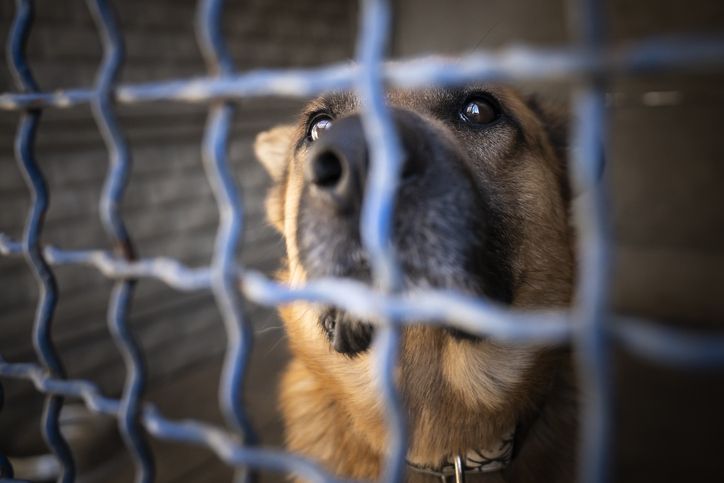
When you have a career that involves dogs, everyone you know sends you memes and articles about dogs. Unfortunately, those little gems, meant to amuse or enlighten me, often aggravate me instead.
Take, for example, this article from People Magazine: a profile of a dog who has been waiting for almost six years to be adopted from a rescue facility. You see, the rescue is a no-kill shelter, and the dog has some behavioral issues that are described as “severe.” An employee of the rescue is quoted as saying, “I think that the ideal adopter would be an adult-only home with definitely some dog experience. She (the dog) wouldn’t do well with dogs, cats, or kids in the home because of her touch sensitivity. And she can resource guard as well.”
I think the intended effect of this article was supposed to elicit sympathy for and interest in the dog, but it made me see red. Personally, I can’t understand how it makes sense to spend years trying to find a home for a dog who doesn’t want to be touched and can’t live with other dogs, cats, or kids.
Most of us want dogs for some positive trait: an ability to be a great companion, to give and receive affection, to go with us when we explore or exercise, and/or to participate in the sports or hobbies that we enjoy. Sometimes, in spite of our best efforts to buy or adopt a dog with the traits we want, we end up with a dog who needs a lot of help in order to resemble the dog we had in mind . . . and I’m obviously aware that many problematic behaviors can be improved if not eliminated through caring training, management, and (sometimes) medication. But who actually goes looking for a dog who can’t be around anyone else or go anywhere safely? Very few people want a project – a dog who is going to require very careful handling and management in order to keep from biting them or someone in their home.
And while the concept of a no-kill shelter sounds like a good thing, the reality is, this often means a life sentence in prison for dogs like the one in the People article.
I have always struggled with the concept of spending a ton of money, space, and time on unfriendly, unsocial dogs when there are so many friendly, social dogs looking for homes. But maybe I’m just crabby. What do you think? Who can convince me that housing unadoptable dogs for life is a worthwhile endeavor?




We have to remember that we as humans did this to dogs. Why should they have to pay for our mistakes? We irresponsibly bred them in the backyard, failed to spay/neuter them, didn’t socialize them, made them live outside, fed them poor quality food, yelled at them, punished them, expected them to know what we wanted from them, and sometimes beat them. And then we decide that they shouldn’t keep their lives because they protest or react out of fear? We created the human-dependent dog. We are now responsible for their care and well-being. I do not believe death is the answer, with some rare exceptions, and neither is prison for life. We have to come together to create a better solution. We have to do better.
This article hurt my heart. I worked in a high kill shelter and my husband was one of the behaviorists who assessed wether dogs could be put up for adoption. He realized after hundreds of assessments that some dogs who do are assessed poorly, do really well in a home environment. Other dogs that have great assessments turn out to act aggressively after adoption. Dogs are individuals and can’t accurately be assessed by the 10 minute shelter assessments. It’s like judging someone’s intelligence by the SATs. (He now suffers from PTSD as a result of the hundreds of dogs that were euthanized based on his assessments.)
I strongly disagree with your opinion that dogs with behavior issues don’t deserve to live a loved life. Keeping a dog incarcerated for 6 years is inhuman, lazy and shameful. Too many shelters ( in my book those are pounds and not shelters), warehouse homeless pets. I have volunteered in several shelters in different states and too often staff sit all day in the offices at their computers while desperate animals are going crazy in their cells. Shelters have to interact with the communities they are located in, have positive relations with reputable rescues, find the resources to have behavior issue dogs evaluated by a certified animal behaviorists and receive appropriate training from a positive reinforcement trainer. Many shelters once the dog or cat are in their cells do nothing to help and promote the animals. And ALL shelters that do not have regular “Dogs playing (literally) for life”, daily play groups are POUNDS!
Thank You, Nancy! I feel there is no such thing as a “no kill” facility. No kill just means someone else is doing it for you. Some humanely, some not. A fabulous shelter in Oklahoma has a program that actually does something. BAT (Breed, advertise and transfer) keeps backyard breeders from selling poorly bred, overpriced and innocent dogs to the public. Again, thank you for voicing what so many of us feel!
I would ask how the dog feels about living in the high stress environment of the shelter with a complete lack of agency and minimal (if any) enrichment. There may be dogs that would choose this existence over euthanasia but not many that I have run into. Surprisingly, deaf dog do better in the shelter, probably because they can sleep. The shelter environments that I have experienced erode confidence, create reactive behaviors and chip away at resilience. And, I’m talking about the good ones with behavioral teams offering playgroups and individualized training plans, volunteers doing regular enrichment and vets who know when to use medication to reduce stress. Each dog has his/her own limit to how long they will hang on waiting for an adopter or foster, but, it’s not unusual for the transition to present difficulties requiring management and professional training to make it work. Sanctuaries can be a solution for a few animals but are cost/space prohibitive for most. The only way I can find to make any real impact on this growing problem is a move toward regulating back yard breeders. These are the dogs that end up in the shelters in large numbers usually at the age of adolescence when behavior stops being cute and starts becoming dangerous. Thanks for this article.
I believe you are wrong to certain extent. I know of a case in our local humane society where this dog was considered unadoptable and sat in the shelter 2 1/2 years. There is a gentelman (S&B Kountry Kennel) that works with dogs and boards dogs. He picks adoptalble dogs from a shelter to work with and trys to find a home for it. He picked Diesel, worked with him, which, didn’t take much. The dog was totally misread and actually is a very sweet dog. He now has his own facebook page with updates on how he is doing. Everyone in the area fell in love and was rooting him on. Check out his Facebook page it’s Diesel’s Destiny he has 293 followers! Sharon
The issues is finding the correct situation for the animal. The fact spending money was mentioned as a reason to consider killing the dog tells me you are no true animal person! Convenience and budget are never valid reasons to kill an animal. If someone would take the initiative to remove the dog from the shelters, this dog would probably make an excellent pet! The no kill movement has produced shelter managers who find every reason to kill as legitimate reasons. Behavior is a major one. Any scared dog is at risk! Kennel cough is a reason to kill for health! The list goes on! More time needs to be spent with spay/neuter legislation and banning puppy mills! Less time killing.
Great and much needed article, thank you. Most dogs can be saved, but we must realize that some cannot. I have worked in rescue for 20 years and seen amazing turnarounds and also dogs who are miserable and warehoused. All the comments are valid, but the first rule of rescue is “you can’t save them all”. Volunteers, time, money, medical treatment and safety all have their limits. Many won’t agree with me and that is your right, but please look at this article with an open mind.
Another very good article. I am only writing a comment because the 2nd comment I read went to spaying and neutering. The people who have dogs and do not do this are contributing to the problem of the overpopulation and poor quality of lives that these caged animals have. I just feel compelled to bring up the other contributors to this problem. It would be the people breeding dogs for sheer profit with a total disregard for the lives of these animals. One group of people does it out of a lack of understanding. The other group does it for money. Over the years I have worked with half dozen people whose pets have had accidental litters. There have been 3 dozen people at least that let me know they are/have bred their dogs and want to see if I want to buy a puppy from them. Just because the breeder has “buyers” lined up before the pups even come out still means they are adding dogs to an already overpopulated society.
Brave Nancy, it must be challenging to be 100% wrong while also being 100% right, depending on who is writing. I think that people who have worked in a busy open-admission shelter (that takes in all dogs, can’t pick and choose) probably have a different perspective on this than those who have not. Yes, every life matters, but what about the lives of the millions of adoptable dogs whose lives get cut short every year because there just isn’t enough room to house them for very long? The shelters are not at fault; this problem is caused by our ignorant, selfish and immediate-gratification culture where you just “get rid of” (abandon, rehome, or send to the shelter) any pet that is inconvenient or no longer satisfies your wants. Most shelters are doing the best they can with what resources their communities are willing to give them. The shelter in this article evidently has the capacity to house a dog for years. Most shelters don’t. In busy shelters with limited space, you have to constantly make decisions about how to save the most dogs with the kennel space you have, knowing that you don’t have the resources to keep and work with them all. What use of that kennel will save the most lives: housing a very-difficult-to-adopt dog for six years and euthanizing dozens of others who would use it and get adopted, or saving those dozens of others and saying an “I’m sorry that humans failed you” goodbye to one? And then quality of life also matters; as others have said, this dog’s quality of life is terrible for a social animal who is going to spend 14 hrs of every day alone (evening and overnight) and only have brief contact with a few trusted staff each day for a few minutes at a time, amidst a chaotic and usually loud and anxiety ridden setting. I don’t believe dogs should be kept in this kind of misery. Having a life means more than physically surviving. There are fates worse than death.