

When you have a career that involves dogs, everyone you know sends you memes and articles about dogs. Unfortunately, those little gems, meant to amuse or enlighten me, often aggravate me instead.
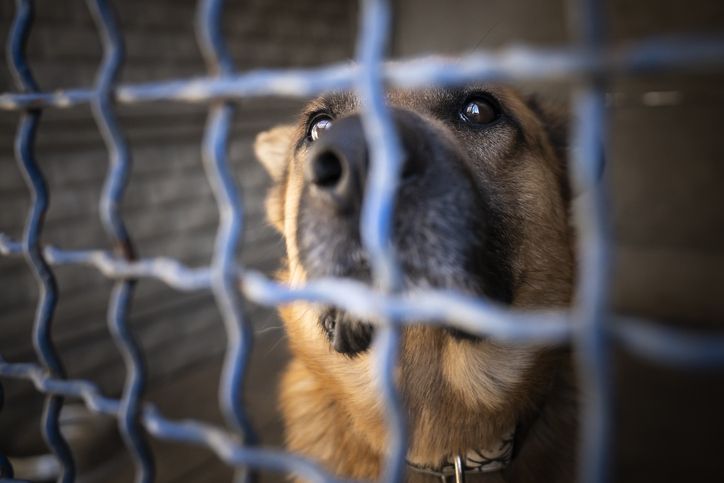
Take, for example, this article from People Magazine: a profile of a dog who has been waiting for almost six years to be adopted from a rescue facility. You see, the rescue is a no-kill shelter, and the dog has some behavioral issues that are described as “severe.” An employee of the rescue is quoted as saying, “I think that the ideal adopter would be an adult-only home with definitely some dog experience. She (the dog) wouldn’t do well with dogs, cats, or kids in the home because of her touch sensitivity. And she can resource guard as well.”
I think the intended effect of this article was supposed to elicit sympathy for and interest in the dog, but it made me see red. Personally, I can’t understand how it makes sense to spend years trying to find a home for a dog who doesn’t want to be touched and can’t live with other dogs, cats, or kids.
Most of us want dogs for some positive trait: an ability to be a great companion, to give and receive affection, to go with us when we explore or exercise, and/or to participate in the sports or hobbies that we enjoy. Sometimes, in spite of our best efforts to buy or adopt a dog with the traits we want, we end up with a dog who needs a lot of help in order to resemble the dog we had in mind . . . and I’m obviously aware that many problematic behaviors can be improved if not eliminated through caring training, management, and (sometimes) medication. But who actually goes looking for a dog who can’t be around anyone else or go anywhere safely? Very few people want a project – a dog who is going to require very careful handling and management in order to keep from biting them or someone in their home.
And while the concept of a no-kill shelter sounds like a good thing, the reality is, this often means a life sentence in prison for dogs like the one in the People article.
I have always struggled with the concept of spending a ton of money, space, and time on unfriendly, unsocial dogs when there are so many friendly, social dogs looking for homes. But maybe I’m just crabby. What do you think? Who can convince me that housing unadoptable dogs for life is a worthwhile endeavor?




Nancy, I commend your bravery in bringing up this issue. As with so many issues of our time, it can be extremely difficult to understand nuance. A dog living in a shelter for 6 years does not have a great quality of life; better than on the street, perhaps but living in a cage 365 days a year for 6 years? If there was an adopter out there who could handle all the challenges, wouldn’t that person have come along by now? How many others dogs were shut out of a chance to be adopted out of that shelter because this dog has been taking up a slot for 6 years. I know these discussions are hard. It’s very easy to say every life matters but the reality is that dogs are euthanized for space every day all over the country. There are not enough homes for them all, and those deemed the most adoptable deserve the top priority in getting a chance. I really wish they could all be saved.
Nancy, I usually treasure your articles but this one is atrocious.
In this article you are reducing dogs to a commodity that performs to what people expect from them. These are lives you are talking about not things to be disposed of just because they are inconvenient due to having been mishandled before they entered the shelter or who are just overwhelmed and too sensitive to be able to bear the shelter environment.
I have news for you: there are people like myself who go out and look for poor souls like that to adopt them to better their lives. And, guess what, these dogs turn out to be great dogs. Thank you Nancy Matthews, Patricia Noland, Rona Diestenfeld and Sheila Wasserman for speaking up for life and not subscribing to this authoritarian backward thinking. I guess they called us bleeding heart liberals in the sixties. I thought we had come a way in our thinking. Please reconsider.
After over 40 years of rescuing these ‘problem’ dogs, I believe there is no absolute answer and pretending otherwise is no kindness. Some dogs have triggers such as undiagnosed epilepsy which manifests in visible seizures later. I have had 5 such dogs, only 2 survived: one had a normal life on Keppra. The repeat-cluster seizure dogs did not. The sad truth is, some dogs are so damaged they are unable to enjoy any quality of life at all. Euthanasia is a kindness in these cases. Most dogs are resilient enough to recover and go on to successful placements as pets/working dogs.
After being given every chance to succeed, and a balanced and careful assessment, responsible caregivers reach the best decision we can. Euthanasia is not the worst fate a dog can suffer.
What is the alternative? This dog needs extensive behavioral training the shelter is not equipped to provide. The choices are to get that training to become adoptable, be housed until adopted as is or euthanasia. Ideally the shelter could release the dog to a rescue or foster with the knowledge, experience and time to work with her on her issues until she is adoptable. After six years in the shelter she will be a senior dog by then and getting senior dogs adopted has its own issues. We cannot ask a dog is she would rather spend the rest of her life in a prison and routine she knows or be humanely euthanized. I expect all living creatures would choose life, unless they were in great pain and dying anyway. The cruelty lies in housing and feeding this dog and yet doing nothing to make her life better.
I could not agree with you more on the point that long term sheltering is not the answer. Unfortunately, you can’t convince the individuals who believe love can solve all problems associated with aggression or those that think all of these dogs would do great on a farm with no one around and LAND to run on. I can tell you those of us in rural areas don’t want those dogs around either. There are two huge organizations that started the warehouse the dogs until the are unhealthy mentally and physically movement and they have made a lot of money in the process. One near me houses the dogs in the worst conditions. It floods, it freezes, they have no cool in 110 degree temps and they medicate every single one of these dogs that enjoys no attention for the months upon months they live there. Imagine solitary confinement and that is what these dogs live in until they don’t. I’ve been in the shelter world long enough to know this is not humane. It is profitable for these organizations though.
As can be seen from the responses to this article, the mention of euthanasia can really raise hackles. I hate to think of a dog being put down because of mistakes humans make with them. This dog wasn’t born this way. But there are other problems to consider: injury from dog bites, the subsequent lawsuits, and yes, it would take a very special person to take on a dog like this. However, this dog has been in the stressful environment of the shelter for so long I wonder if his brain has been changed beyond saving. If no one has stepped up to take this dog in six years, what’s left for him? If every life matters, are those people who are against euthanasia willing to take him, or any dog like him, into their homes?
I hate to dignify your ridiculous challenge with a response, but people who understand exactly how this dog feels because we feel the same way, realize the value in every life.
I wouldn’t do well in a shelter either, and I love that they’ve given this beautiful creature her own space.
How would you like to be euthanized for just being who you are… who you can’t help but be?
Are you paying for this animal’s care? If not, you are in no position to judge whether it’s worth the life that money is saving or not.
I am grateful that this wonderful organization is doing this for sweet Lightning. I will be adding Dog Tales Rescue and Sanctuary to my donation list.
Every life matters. Shame on you for suggesting otherwise.
Nancy Matthews
Dana Point, CA
Thank you for this, Nancy – you are absolutely RIGHT ON. I worked at an open door/full service shelter for 20 years before starting my dog training business, and have done my share of euthanasia. So-called no-kill (SCNK) started a few years before I left Marin Humane to start Peaceable Paws, and even then we were seeing the warning signs. SFSPCA the first SCNK in the country would adopt out dogs and when they didn’t work out, refused to take them back so we, in the first county north of SF, got them surrendered to us. When I first started speaking out against SCNK at my seminars I got a lot of puzzled looks. Now I get standing ovations. In the last decade, the percentage of clients I’ve seen with dogs who are *never* going to be even close to behaviorally normal has skyrocketed, and many shelters and rescue have deliberately not fully disclosed their knowledge of the behaviors or what it means in terms of quality of life for the dogs *and* the humans who care for them. Not only is housing unadoptable dogs for life (Or placing them in homes with unsuspecting adopters) NOT a worthwhile endeavor — it is also inhumane.
I volunteer at a no-kill shelter that also picks up stray dogs for the city. It is small, underfunded as all shelters, and swamped right now with strays. Euthanasia, except for extreme medical issues, is only a last choice. There are staff trainers, volunteers who are certified trainers, and professional trainers who work with the dogs. The volunteers are enthusiastic and dedicated because the CEO and staff are so amazing. They work with the dogs. There is a daily enrichment program run solely by volunteers. Yes-some dogs have emotional issues that make adoption almost impossible. For them there is a committee to evaluate the situation and a set of steps that must be taken before euthanasia is considered. Most of the dogs put in the protocol succeed and happily adjust to a home. In any other shelter they would be put down without much thought. I adopted a dog on death row in a different shelter. She was pulled by a staff member from another shelter and given that second chance. Need I say that is wonderful? Funny, adorable, loving, goofy and absolutely terrified by any type of barrier. Who can blame her? I love her antics and make sure that no barriers enter her life. She is so very lucky to be alive. Yes – every effort should be made to save ALL the dogs.
I had a Chow (she passed in 2019) who was considered a behavior problem dog and aggressive since she bit 2 people while in the shelter. I took her originally as a foster and took her through HW treatment. When she first came she didn’t want to be touched and I had to leave a drag leash on her to be able to move her or take her for a walk. Within a few days that was no longer necessary and she was letting me pet her, which I did gently and only a few pets at a time. She as still very defensively aggressive to people on walks or who would come into my home (she was fine with my other dogs, and dogs out in the world, after a few days). Again, using relationship based training techniques and feeding her a raw diet so her nutritional needs were finally being met she came to see me as the only important thing. People could come in my home and she’d just watch me. Neighbors could come over and talk to us on walks and she’d just watch me. But when I was actually threatened by an aggressive person while I was out climbing she put herself between me and that person and made it clear he wasn’t to come any closer. She didn’t lunge at him or bite him because he listened to her and when the cops came to get him and I told her it was ok she moved off and let them take him away. She became an off leash dog and traveled with me in my RV with my other dogs and never had a problem again. I have another dog now, a little deaf pit mix, who was also considered unadaptable because she also bit several people in the shelter and was seen as unpredictable. She is 13 now and spent the first 11 years of her life in shelters but she has been with me for two years and is a great cuddler and is doing great overall. Finally, not a shelter case, but a client of mine had a dog for 8 years who wouldn’t let anyone touch her, wouldn’t take treats from anyone, and would never come in from the yard when called. After doing one lesson with them and getting them to make some basic changes they texted me 4 days later to say Kona was soliciting attention, taking treats, and coming in. Where there is life there is hope. These dogs just need to right approach, one that builds trust and gives them a voice and brings them out of survival mode.