

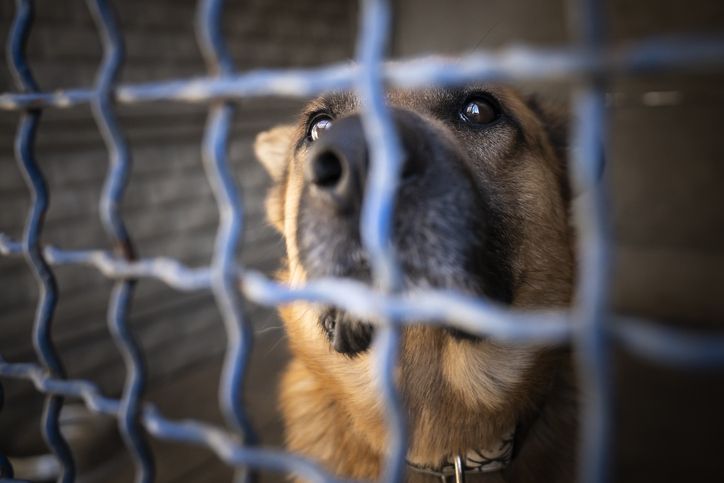
When you have a career that involves dogs, everyone you know sends you memes and articles about dogs. Unfortunately, those little gems, meant to amuse or enlighten me, often aggravate me instead.
Take, for example, this article from People Magazine: a profile of a dog who has been waiting for almost six years to be adopted from a rescue facility. You see, the rescue is a no-kill shelter, and the dog has some behavioral issues that are described as “severe.” An employee of the rescue is quoted as saying, “I think that the ideal adopter would be an adult-only home with definitely some dog experience. She (the dog) wouldn’t do well with dogs, cats, or kids in the home because of her touch sensitivity. And she can resource guard as well.”
I think the intended effect of this article was supposed to elicit sympathy for and interest in the dog, but it made me see red. Personally, I can’t understand how it makes sense to spend years trying to find a home for a dog who doesn’t want to be touched and can’t live with other dogs, cats, or kids.
Most of us want dogs for some positive trait: an ability to be a great companion, to give and receive affection, to go with us when we explore or exercise, and/or to participate in the sports or hobbies that we enjoy. Sometimes, in spite of our best efforts to buy or adopt a dog with the traits we want, we end up with a dog who needs a lot of help in order to resemble the dog we had in mind . . . and I’m obviously aware that many problematic behaviors can be improved if not eliminated through caring training, management, and (sometimes) medication. But who actually goes looking for a dog who can’t be around anyone else or go anywhere safely? Very few people want a project – a dog who is going to require very careful handling and management in order to keep from biting them or someone in their home.
And while the concept of a no-kill shelter sounds like a good thing, the reality is, this often means a life sentence in prison for dogs like the one in the People article.
I have always struggled with the concept of spending a ton of money, space, and time on unfriendly, unsocial dogs when there are so many friendly, social dogs looking for homes. But maybe I’m just crabby. What do you think? Who can convince me that housing unadoptable dogs for life is a worthwhile endeavor?




Please note: Anything published under the “BLOG” tab on this website, or with “Blog” in the small black bar above the headline, IS a personal platform. From Oxford, the definition of “blog”: A regularly updated website or web page, typically one run by an individual or small group, that is written in an informal or conversational style.
I’m required by WDJ’s publisher to write a blog post each week, and have done so for more than 10 years. Feel free to skip these posts!
First off, I subscribe to Whole Dog Journal for sound information on health, education, products and more from experts in those fields. I do not subscribe for personal agenda opinion pieces. Especially when the intent is to divide and drive forward a narrow viewpoint of an; “I am right, black and white position.” Please stick to providing informative data on a variety of subjects. Those are the resources we all need to help our animal companions thrive. Cease using this forum as your personal platform to vent.
I think you are way off base in your “rant”. I have been involved with a no kill, and no cage shelter since it was started in 2007. We are a small shelter and can handle about 8 dogs and 35 cats. Over that period of time, we have successfully adopted over 99% of the dogs and cats. We euthanized several dogs because they became a danger to people (4 out of 714 rescued). We have had several dogs that were in the shelter for 12 to 36 months before being adopted—so I understand your concern about the difficulties some dogs (and cats) can present.
However, you miss the point. Most of the behavioural problems can be addressed, assuming the dog or cat is not a danger to the people working with them. Additionally, and perhaps most importantly, every behavioural problem we encountered was most likely caused by a person or persons who mis-handled the dog or cat.
So if we (people) are the cause, then it seems to me that we (other people) are obligated to try to fix the problems that are fixable. And I don’t consider euthanasia a satisfactory solution to any behavioural problem, including the 4 we had to put down. I cannot agree that we should be taking care of “nice dogs” at the expense of difficult ones. Each life has a value, and I don’t think creating a space for a nice dog by killing an difficult dog has any merit. You either value life of every dog or you don’t value the life of any dog.
Yes we need more shelters, more spay/neuter programs., more training for dog owners and a change in attitude about the disposability of pets that become too troublesome to keep. (In my experience there are quite a few owners that consider dogs and cats sort of like their cell phones—replaceable and disposable).
One last point. You also left out the dogs and cats that are injured or have medical needs. We take them as well and do everything we can to rehabilitate them. Yes it is expensive and we struggle every year with staying solvent, but we have also saved the lives and placed some wonderful dogs and cats that would have died. Out donors appreciate the efforts as does the community.
One more last point. I believe we must value each dog and cat for itself, not for its ability to bring happiness to a human owner. Caring for and working to modify problem behaviours or rehabilitate a sick/injured animal brings its own happiness for both the dog/cat and the people that work tirelessly to help them.