

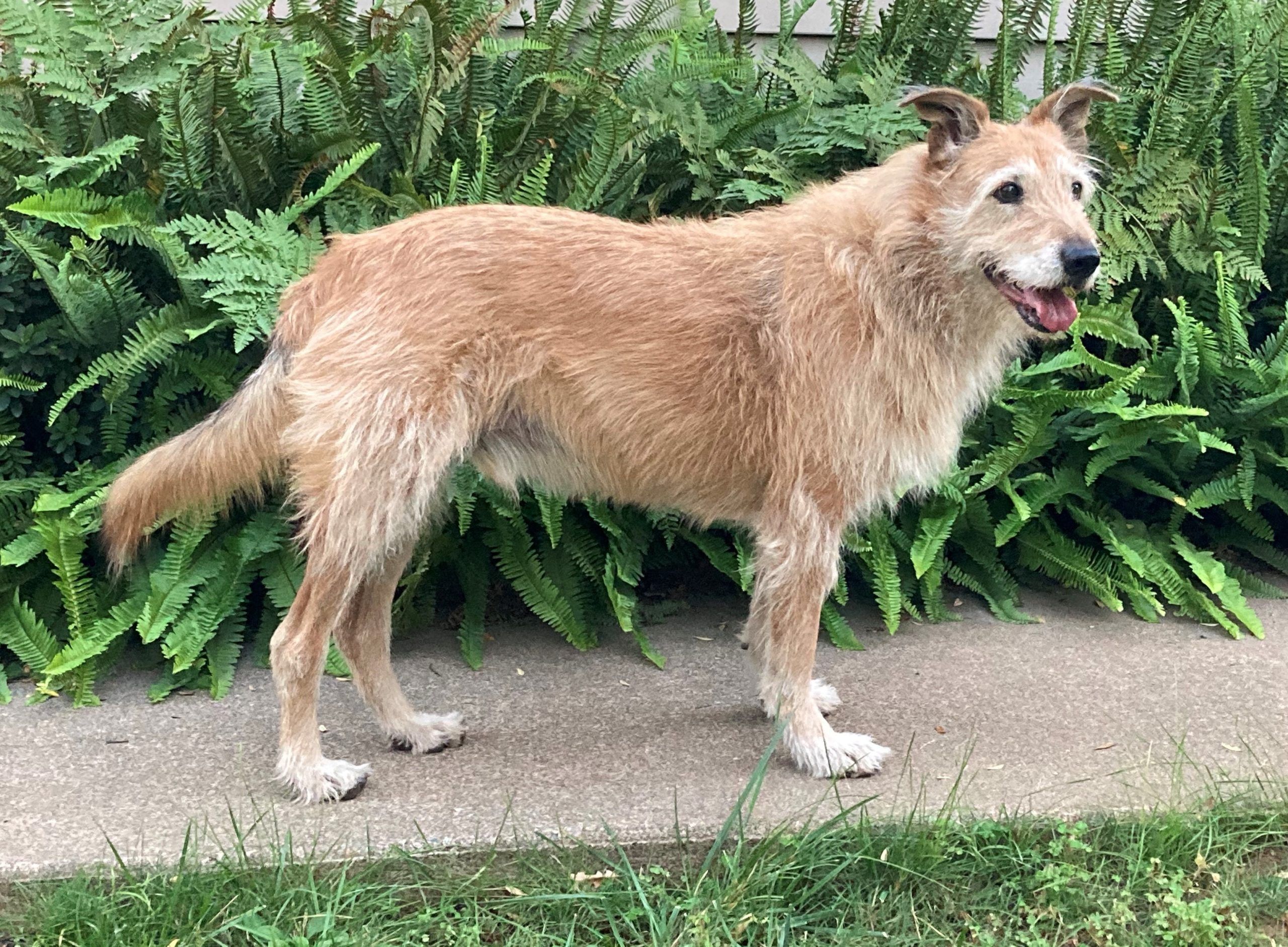
Over the past two years, my senior dog, Otto, has started having trouble maintaining his body mass at a healthy weight. He has had a few health issues that his veterinarians and I are monitoring, but one symptom of his issues has caused him to suffer from a bit of gastric reflux. We have been able to keep his stomach acid in check with a daily medication, but there was a period of months when he just didn’t feel like eating. During that time, I had to tempt his appetite with all sorts of foods, split into many small meals a day, to get him to eat at all. At his lowest, his weight, normally about 70 pounds, dipped all the way down to 63 pounds. He felt ribby and definitely lost muscle mass.
Eventually, the tide turned and Otto started eating again, although it was a challenge to get him back up to his “college” weight of 70 pounds. I can’t give him huge meals – he won’t eat a ton in one sitting – so I often give him three meals a day. He also gets canned food mixed into his dry food at each meal, and eats more than a can a day. I also mix some warm water into his food and stir the canned food in, so he doesn’t pick out the canned food and leave any kibble behind.
One unfortunate side effect of the campaign to get Otto to gain and hold his weight: My younger dog Woody has gained too much weight! Because when he sees the canned food come out, he (quite understandably) wants some, too. I don’t have to, of course, but I stir about a teaspoonful of the canned food into Woody’s kibble, and add warm water to it, so he feels like he’s getting special treatment, too. So, of course, I’ve had to cut back the amount of kibble he gets, just a little bit, to make up for the addition of the fattier canned food.
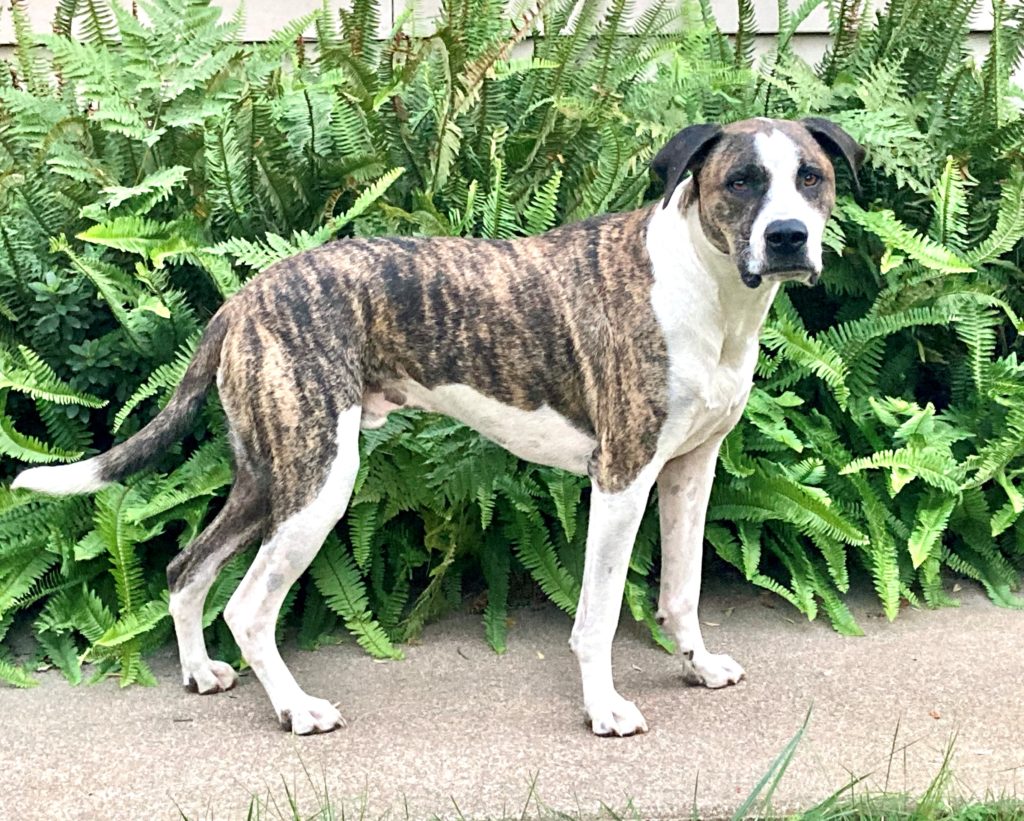
At age 5, Woody is in the prime of his life. He is carrying a few more pounds than I would like, even though it is hard to see given his deep chest and narrow waist. But his ribs are more padded than what is ideal. He is such an active dog that carrying extra weight stresses his joints more than is good for him.
It’s nuts: Both dogs used to weigh the same amount. To get and keep Otto at 70 pounds, I’ve added nearly an entire can of food to what he gets each day, and have had to reduce Woody’s portion of dry food to make up for the addition of only a teaspoon of canned food, and yet Woody is up to about 73 or 74 pounds.
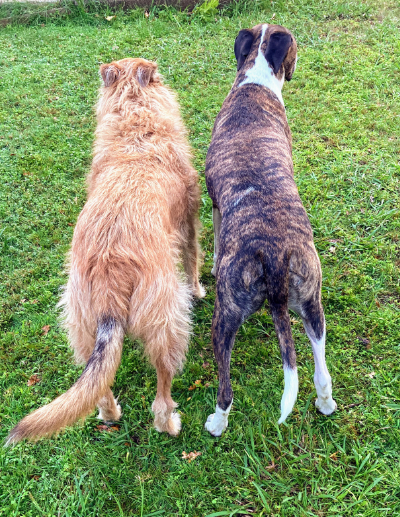
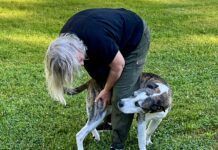
It’s hard to get two dogs to stand with their backs to you while you hover over them, but I did my best. As you can see, both dogs look okay – but Otto’s waist is a bit more pronounced, and Woody’s is less defined than ever before.
I know it’s silly to feel as though Woody would judge me for failing to add anything “nice” to his kibble at each meal, and yet, I absolutely see him watching me carefully when I prepare both dogs’ meals. I actually fork the wet food from the cans into the dogs’ bowls with my back blocking his view, so he can’t see how much of the delicious pâté goes into each bowl, and I deliver the food to them separately. Otto eats outside, with his bowl on a stair that’s one step higher than the deck; Woody eats in the house.
Another wrinkle: Since Coronavirus has changed the world, we definitely have been going out less. The lack of walks has likely contributed both to Otto’s loss of muscle mass and Woody’s weight gain.
Also, I give Otto a pill each day hidden in a piece of cheese. Woody, too, lines up and sits politely, looking for his cheese. Those extra calories, too, aren’t helping me maintain his figure!
Have you had this problem before? Trying to keep one dog thin and helping another dog gain weight? Do you have any tips for us?


I have 4 pups ranging from 3 months to 13 yrs. I sit with them on the patio while they eat. Some are picky , some love to eat. What canned do you mix in your kibble?
There is an erroneous theory going around that gastric reflux in both people and dogs is caused by low stomach acid. GERD is caused by one of two things or often a combination – a higher than normal amount of stomach acid and/or a weak lower esophageal sphincter. Both my dog & I have it verified by medical tests that measured the amount of gastric acid we produced. Medication, small, frequent meals, nothing to eat three hours before bedtime, & avoiding certain foods have gotten our problems under control.
I once read of a conversation between a vet and an older woman. The vet remarked how her dogs were always looking good and their weight was close to ideal. He asked her how she did it. She said, “When they look a little heavy, I feed a little less and when they look a little skinny, I feed a little more.” Stupid, but so simple. It is what I do. I have 3 dogs, and used to have 4. I feed 2 at the same time. One gets a little more then the other, but they don’t notice. If I have to give special attention to one, I simply feed one, let them out, then feed the other. I used to hide pills in cheese, but went to deli sliced meat, because it was easier to conceal.
Now, if I could stop them from eating poop, I would be happy. I know, keep it picked up, but with these dogs I would have to hold a shovel under their butts!
Good luck with Otto. I hope he continues to get better.
We moved to the country a few months ago. My two Golden’s don’t eat their own poop but they love to scarf up the deer, goose, and turkey poop! Drives us crazy! We pick up what is in our yard but when walking we’re always telling them to stop eating.
I feed ¼ cup of kibble, 3 heaping teaspoons of canned. In the morning I add can no salt green beans and carrots. Was using raw carrots but that seems to come out in her stool. I also, in the morning, cut Cucumber into very small pieces. She doesn’t seem to devour that as quickly as she use to but, if left, goes back. Her weight, with less walks due to my own surgery, has put a little weight on. She’s an Australian Terrier. Should weigh 19-20 but probably borders 22 now. Any suggestions. 8 years old.
Hey Mary Lou … I have two AT’s, one has had two surgeries in the past year so have had to work at keeping him trim. Because they are not big dogs it’s tough to cut back food when they don’t seem to get much! We have started lots of “slow feeding” with snuffle mats, kongs and licki mats. Seems to help and keeps them busy.
Dogs can’t break down the cellulose in raw vegetables. That’s why the carrots come out the same way they went. They either have to be gently cooked (steamed is great) or if left raw pureed.
Our Siberian Husky got very picky with her food and had bouts of loud stomach growling with occasional diarrhea. She ate less and less. Within 6 months she stopped eating entirely and the diarrhea was frequent. We tried different foods but nothing worked. We spent way too much money on expensive tests and a biopsy. It was severe IBD. We tube fed her for 3 months but she kept losing weight, then weakness caused falling. When the uncontrollable diarrhea turned bloody, we made the hard decision. Since then I’ve read that foods with a high percentage of pea protein can cause problems in dogs. Her regular food for years had pea protein as a major ingredient (listed 2nd on the label). We try not to feel guilty (and the vets would never say it) but I think pea protein killed our sweet dog. We don’t geed our new dog pea protein at all.
I feed raw that I weigh, so it is easy to adjust amounts. I had an older Boston with Addison’s Disease that lost a lot of muscle mass and my sister’s elderly dog is currently losing muscle mass. It would be great to slow that down.
I have that problem — different age dogs with different metabolisms. i substitute green beans (frozen, no salt or other things) for a portion of their meal — limited calories, bit of extra fiber. each dog sees something “special” going in their bowl and is happy.
The problem is that acid reflux is actually caused by low stomach acid. Giving your dog an acid blocker will make the problem worse. It doesn’t make sense that the majority of veterinarians and medical doctors have not yet gotten the memo on this. It’s heartbreaking that many humans and animals are made to suffer because Big Pharma continues to brainwash well-meaning veterinarians and MD’s to further their financial gain.
So what should we be doing for these dogs instead?
My oldest dog started throwing up bile around 6:00 a.m. in the morning, after not having eaten since dinner at 5:30 p.m. So I save a couple of spoonfuls of her dinner and give them to her at bedtime — 10:30 p.m. This seems to have solved the problem.
That’s what I do for my old guy too.
I have a similar problem with a 12.5 year old Catahoula. I’d be very interested in what you’re feeding Otto, and any tips on restoring muscle mass.
We’ve dealt with this for years. Our previous “pack” had 1 healthy dog and 2 dogs with IBD in it, so for years, we bought 2 entirely separate “menus” for them. That included different types of prep. 3 times a day.
The 2 dogs that live with us now are healthy, but different in size and nutrition requirements. We feed them twice a day. We’ve found foods that each of them like and that meet their nutrition requirements. We also measure out what they get at each meal (different for each dog). The foods are different. That’s just the easiest way for us to manage their weight. But they eat at the same time (twice a day) and they get their lunch “treats” at the same time. That helps.
The only thing we have to deal with that breaks this routine is on Sundays when they’re in church. Everybody brings them treats, so we go a little light with their breakfast and dinner on Sundays.