

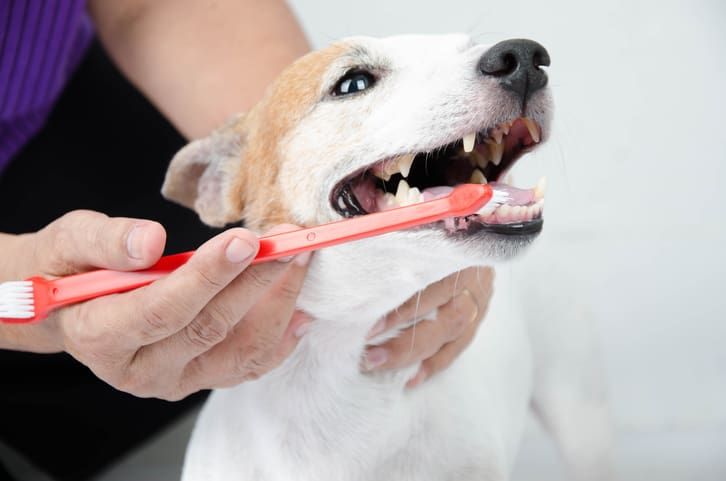
I know that we’re supposed to be the experts here—but I need some advice, preferably from those of you with longer-haired dogs.
As I told you a few weeks ago, my 2-year-old dog Boone recently broke two of his front teeth. When he had surgery to remove the broken-off roots of those teeth, he also had x-rays and a thorough dental examination—during which the veterinarian found a significant accumulation of dental tartar and resultant inflammation along Boone’s gum line. He even had periodontitis—a gum infection that damages the soft tissue around teeth—in a couple of spots. And he’s not even 3 years old!
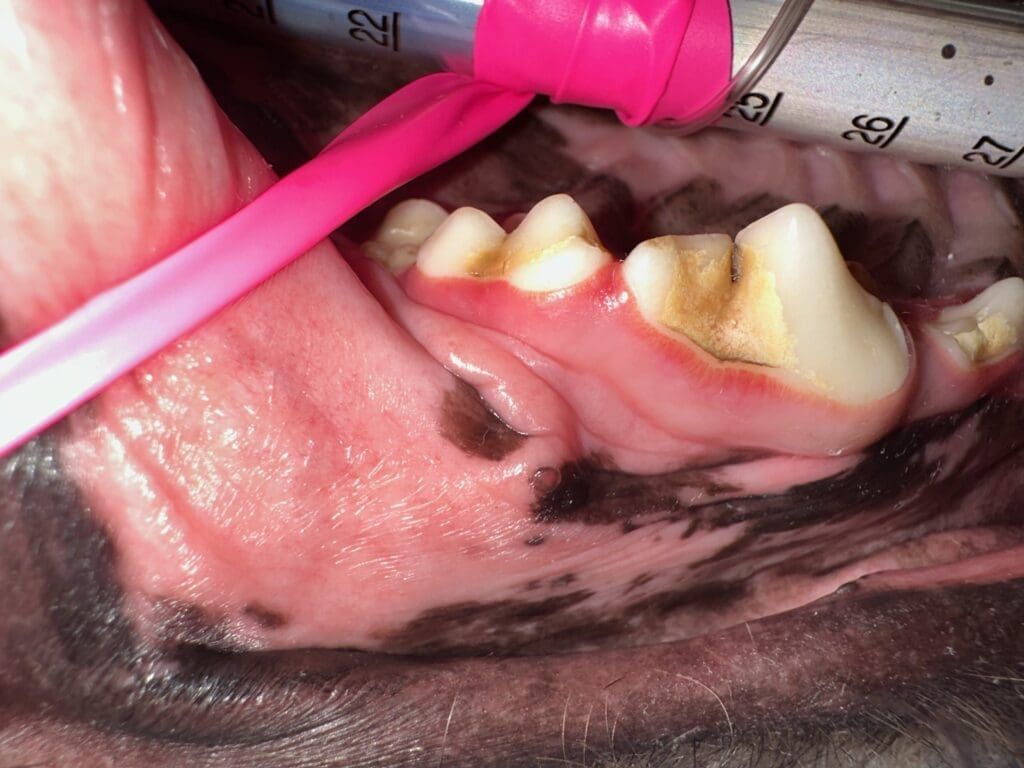
Until now, I’ve been pretty lucky; my dogs have mostly managed to get by with just one or two veterinary dental cleanings in their entire lifetimes, even though I (true confession time) have never been good about brushing their teeth. Otto, who nearly made it to 16 years of age, had a couple of dental cleanings when he was under anesthesia to have cracked or broken teeth removed, but he never developed gum disease. And Woody, at age 8, has never had a dental cleaning, and his teeth and gums look pretty good! But Boone’s teeth are already a disaster.
Well, isn’t bad luck; this is more like the norm. WDJ’s authors have previously cited a widely reported statistic: 80% of dogs over the age of 3 years have active dental disease. And the statistic has finally caught up with me. It’s clear that with Boone in particular, I can either start brushing his teeth frequently in order to support his dental health, or plan to spend thousands on fairly frequent veterinary cleaning during his lifetime.
So I’m trying, and Boone is actually more or less cooperating; he likes the taste of the toothpaste! But here’s my dilemma: He’s got such a fuzzy face, and sort of frilly lips, that it’s hard to clear all of that fur and those lips out of the way in order to see whether I’m actually scrubbing his teeth! Someone among you must have solved this problem; please share any tips you have!



And, I use Virbac enzymatic beef toothpaste. (Actually, it is more of a gel.) Use the softest toothbrush that you can find, and be sure to clean the tooth brush thoroughly in hot, running water so that it stays clean and free from toothpaste buildup, just like you would your own toothbrush.
My girl has a Scottie beard, so I understand your dilemma. I place my dog in my lap, facing away from me, like a baby in a papoose sling. She enjoys this, and this is comfort, safety, and love to her. She even sits still in my lap while I load the toothbrush. I am left handed, so I begin with her right side of her mouth. I lift up on her hair and her gums, exposing her back molars. I start at the gum line and brush in a downward motion. She opens her mouth on her own and allows me to brush the inside of her molars immediately afterwards. I work my way to the front of her mouth on both the outside and inside of her teeth. It’s important to note that she eats twice a day, and I brush her teeth twice a day. The more you develop a routine, the more your dog will look forward to the procedure. I reload the tooth brush—yes, I use quite a bit of toothpaste—and I turn to the left side of her mouth, pull up the long hair and gums, and start at the back with the molars. She actually looks forward to it, so she is eager to have her teeth brushed. I wet one of her white bath cloths with warm water and clean her mouth, hair, and gums both before I brush her teeth and after I brush her teeth, just in case tooth paste gets on her hair. I say sweet nothings to her the entire time, and make it an encouraging, loving, affirming time for her. I don’t want gum diseases. My Scottie before lived to be 17 years old, and I believe one of the reasons for this is that I had the same routine with her. We all know that healthy teeth reduces inflammation, and makes for a long life and healthier people and pets.
A finger with dog toothpaste is easiest because you can feel what you need to “brush”. And you can be a little more aggressive because you are less likely to hurt them.
Just what works for us.
Feed green tripe! My sister feeds her dogs some green tripe daily, and their teeth look great!
I feed green tripe ocaisonally and my dog’s teeth don’t look as good (although her teeth are in great shape for a dog her age). We both brush our dogs teeth every night. In fact, I might skip my teeth, but never hers.
(Years ago I had a dog with advanced dental disease. This was before tooth brushing for dogs was a thing, but I won’t let another dog get in that shape).
These are all great suggestions already posted. Also, my wonderful veterinary periodontist developed a canine toothpaste which I was using. Much to his credit, a few years later, he told me to switch to “Healthy Mouth” because it got better research results! Amazing man. But also amazing product. Comes as gel for brushing and drops to add to water. I have a 17 y o Maltese who still has most of her teeth. In addition to cleaning under anesthesia if necessary, I highly recommend a good quality, monitored-by-vet, non-anesthetic dental cleaning. 🍀