

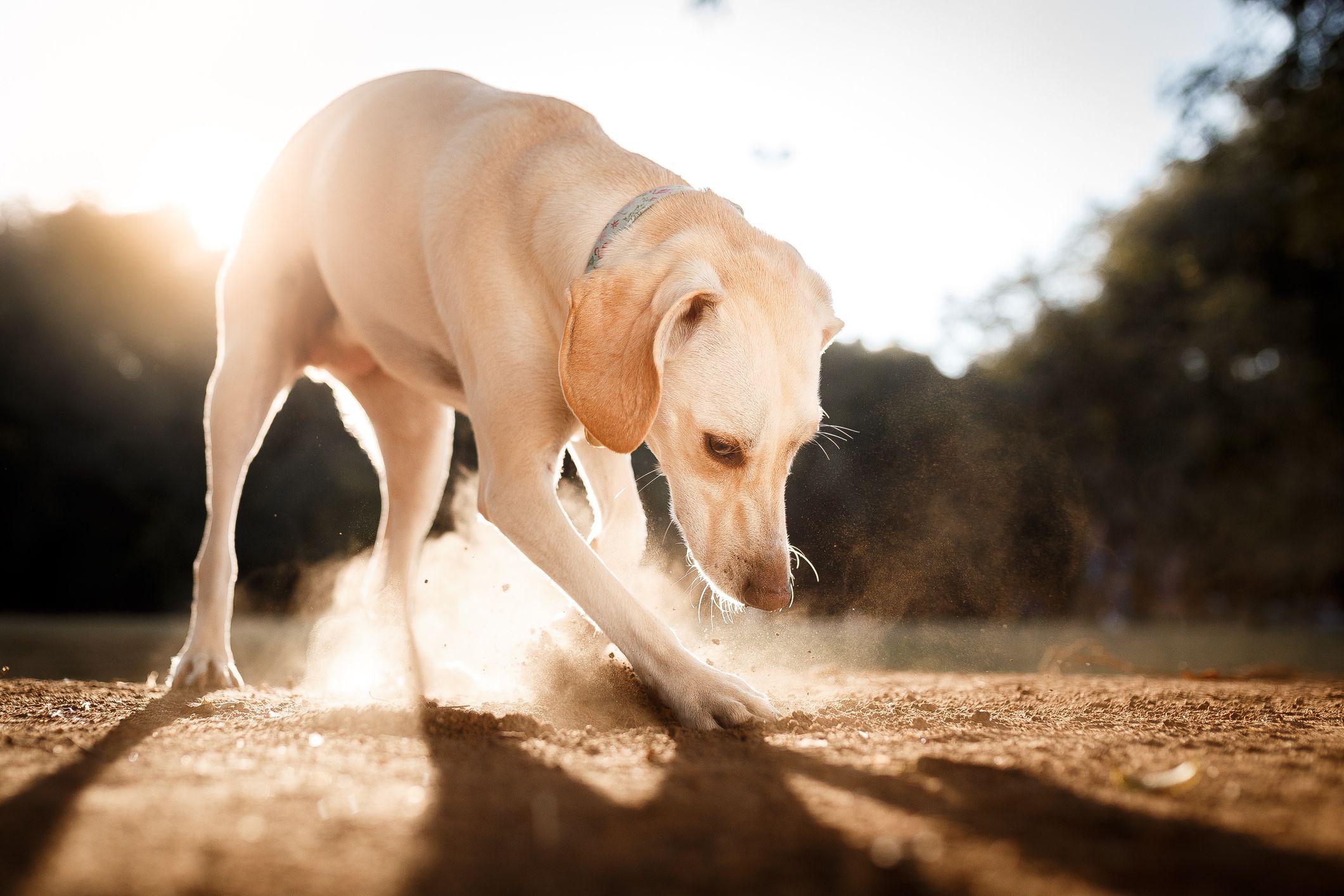
There is no single reason why dogs eat dirt. Healthy dogs may eat some dirt or suddenly start eating grass if they smell something tasty in it, but a little bit of dirt eating is nothing to worry about. However, if your dog is eating large amounts of dirt, she could be suffering from a vitamin or mineral deficiency that she is trying to remedy. Maybe. While there’s a lot of anecdotal support for this theory, research is fairly inconclusive as to exactly why dogs consume dirt.
Pica in Dogs: Why Dogs Eat Dirt, Rocks, and Fabric
Dirt, rocks, and fabric items (such as clothing or upholstery) are some of the more “popular” things for dogs with pica to eat, but it could be anything. Dogs often like to chew on wood, too.
The key difference between normal dog chewing behaviors and pica is that the dog seeks out the non-food item(s) repeatedly.
Pica is another reason why dogs eat dirt and other inedible items. Pica in dogs is a behavioral condition where the dog frequently chooses to eat non-food items. Besides being annoying, pica can lead to broken teeth, intestinal blockages, or even toxicity.
Pica can be caused by behavioral and medical disorders.
If your dog eats dirt or consistently seeks out other non-food items to eat, your veterinarian will start by doing a medical workup. Your dog will receive a full physical exam, bloodwork, and a fecal analysis. Health problems in the digestive tract, such as inflammatory bowel syndrome (IBS), intestinal worms or other parasites, or malnutrition, are some of the more common medical causes of dogs eating dirt or pica in dogs.
Dog Suddenly Eating Grass Like Crazy
Eating grass is a normal behavior for dogs. Dogs are omnivores, and many seem to legitimately enjoy eating grass! It’s also widely believed that dogs sometimes eat grass when their stomach feels off or to induce vomiting, but eating grass alone does not mean your dog is definitely sick.
Grass is not typically a target for dogs with pica, but it is possible. Suspect pica if your dog is eating large quantities of grass multiple times a day, especially if he is also eating non-food items such as your carpet.
Once medical issues have been ruled out, your veterinarian will investigate behavioral disorders that may be contributing to your dog’s pica. You should know how to recognize the signs of stress in a dog because it can be a cause of pica, along with anxiety, boredom, and obsessive-compulsive disorders. This is because the act of eating releases endorphins that make the dog feel better.




Very interesting article. My Lab has Pica. He eats rocks. He had 2 surgeries for intestinal blockage and the third time he got several enemas to pass the rock. Vet ruled out physical and nutritional issues and thinks it could be genetic. We keep an Out Fox Field Guard (meant to protect against foxtails) on him whenever he is outside. This has literally saved his life. It has been several years since he ate a rock but we don’t feel like we can risk trusting him to not wear the mask. In every other way he is a happy, friendly, and healthy dog.