
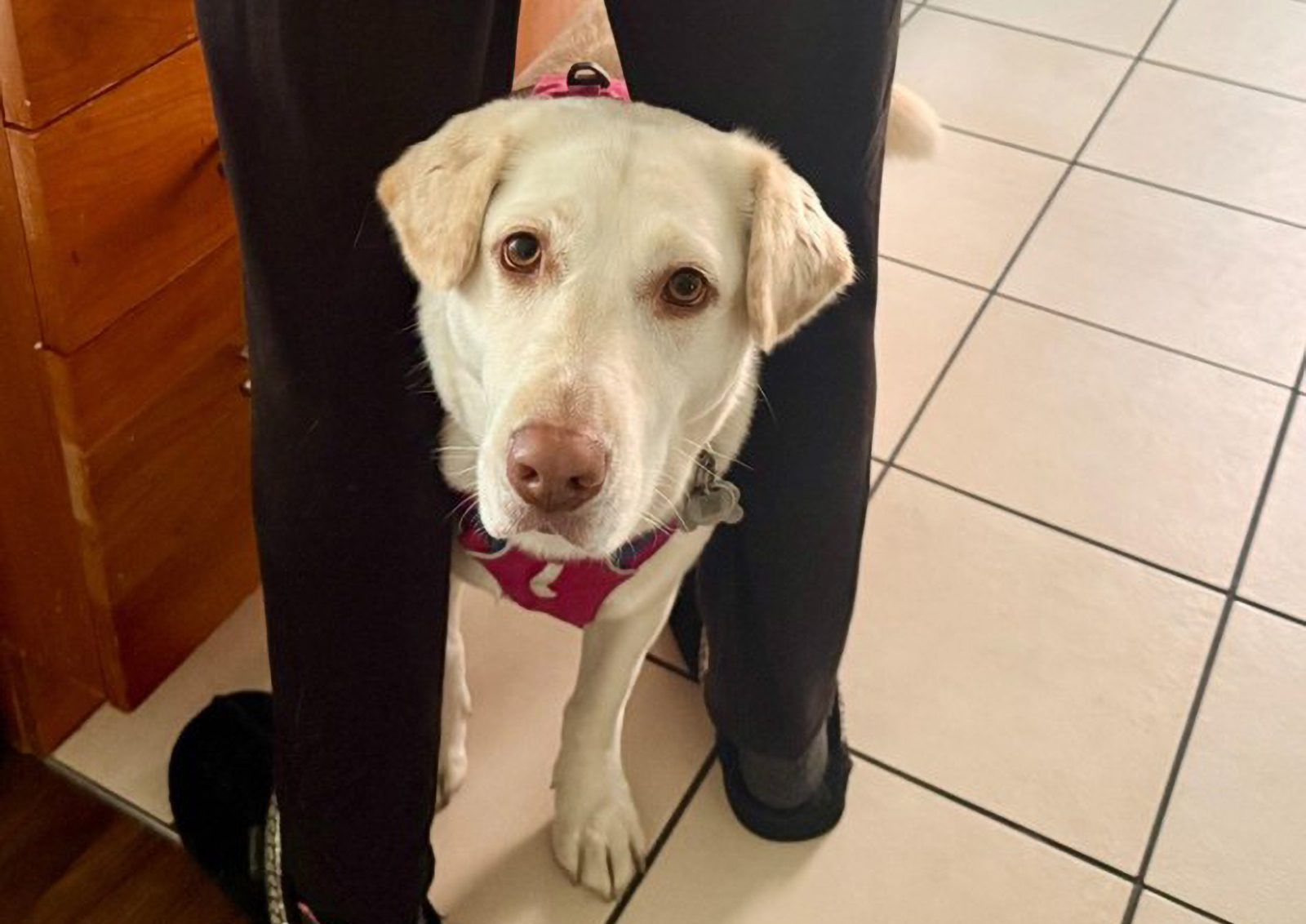
When one of my dogs, Macy, was about a year old, she abruptly developed a bizarre behavior: she’d wedge herself between my legs, peer out, and wouldn’t move.
I thought, “Why is my dog so clingy all of a sudden?
It turns out a suddenly clingy dog is fairly common; the key is that the dog’s behavior changes seemingly out of nowhere and they act like they can’t relax until they’re next to you.
Sometimes they seek extreme physical contact like jumping into your lap, sitting at your feet, or not moving from your side; some call it Velcro-dog behavior. Other times, you may observe dog anxiety symptoms like whining and barking for attention.
“You always want to really pay attention to any sudden behavior changes,” says veterinarian Danielle Clem, senior hospital director at the San Diego Humane Society.
Experts say if your pup starts unexpectedly acting differently, put on your pet detective hat, because it’s important to identify the clingy dog causes.
What Sudden Clinginess in Dogs Can Mean
Sudden dog clingy behavior could point to stress, a change in habit, a health issue, or learned attention-seeking.
“You don’t want to reinforce that behavior,” Dr. Clem says. “It’s okay if a dog wants companionship; that closeness is fine, but when it’s suddenly much more than normal for that dog, or if it becomes a nuisance type behavior, then that’s when we need to look a little deeper and figure out, ‘Hey, what can we do to make this dog feel more comfortable and also allow us to feel comfortable in our own environment?’”
Some common clues can help you identify the causes of clingy dog behavior.
Common Reasons Your Dog May Suddenly Be Clingy
Anxiety, boredom, or routine-related changes are some typical reasons a dog may start acting clingy.
“Maybe the routine has changed, suddenly the head of the household got a new job, and they’re home less often, or there’s some sort of change, and the pet is trying to adapt; perhaps there’s less opportunity for enrichment,” Dr. Clem says.
Some say male dogs are more clingy and more attached to their pet parents than females, but no scientific evidence supports that.
Research does show that uneasiness, agitation, and fear can drive sudden clingy behavior, and recognizing what came just before your pooch started clinging to you can help reveal what’s causing it.
“A lot of times it could be something that precipitated that behavior change, like the Fourth of July; there were fireworks and the dog is still a little anxious because of something that terrified them,” Dr. Clem says. “Even if there’s a lot of construction going on in your home, or you’ve got new people coming by the house.”
New people coming to our place seemed to trigger Macy’s behavior of hiding between my legs and it soon became a recurring pattern.
“I would associate that with the event,” Dr. Clem says. “There might be some sort of stimulus that is causing that fear or anxiety, and it’s great if you can identify what that is,” Dr. Clem says.
But clingy dog stress and anxiety are different from separation anxiety.
Could Clinginess Be Separation Anxiety?
Dog separation anxiety signs are recognizable by their intensity and timing. The dog’s anxiety symptoms appear around the time you leave and typically after you’ve left.
“You may come back to find evidence of destruction,” Dr. Clem says. “You may have heard from a neighbor that the dog was barking the whole time you were gone. They might urinate in the home. Sometimes they try to escape and may cause damage. So those more extreme signs of anxiety when you’re not around would be more associated with a true separation anxiety.”
Health problems can also cause separation anxiety and clingy dog behavior.
Health Problems That Can Cause Clinginess in Dogs
Sensory decline, age-related changes, and illness can contribute to a sudden shift in behavior.
“Pain can manifest in many different ways,” Dr. Clem says. “Sometimes that clingy behavior might be a pain response, or the dog trying to let us know, ‘I’m not feeling well.’”
Infections, tooth pain, and even arthritis can be culprits. Also, as your dog gets older, their bodies change, and they may develop senior-dog clinginess.
“Age changes happen more gradually over time, but that is a possibility, especially if you’re noticing more gradual changes and the dog is older,” Dr. Clem says. “They can have a little bit of cognitive decline, and even hearing or vision loss can also manifest as a little bit more clinginess.”
If your dog doesn’t have a health problem causing the clinginess, you can take steps at home to help your dog be less velcroed to you.
What You Can Do About Clingy Dog Behavior at Home
Practical steps like maintaining routine, increasing exercise, adding mental stimulation, and rewarding calm independence can help create some boundaries between you and your dog.
“Reinforce the behavior you want to see,” Dr. Clem says. “You want to really encourage the pet to relax and find comfort by themselves for a little while and praise them when they are able to relax away from you, for example on a dog bed nearby, but not necessarily right in your lap.”
Though it’s easy to give in when your dog demands attention by pawing at you, barking, or whining, resist. If you cave, you reward that behavior.
“I do that with my dog when she does that attention-seeking barking, and that’s not how I would prefer her to do that,” Dr. Clem says. “So, I have to completely ignore her and turn my whole body away from her until she settles, and then that’s when I start to give her that attention.”
You can always seek help from a positive-reinforcement, pain-free trainer or behaviorist.
When To Call The Vet
In some cases, you may need to contact your veterinarian, especially if the sudden clinginess is severe or accompanied by other medical symptoms.
Here are concerns to watch for:
- Changes in urinating and defecating
- Changes in appetite
- Changes in activity levels
- Signs of pain (limping, whimpering, crying)
- Nausea or vomiting
- The dog just isn’t acting like themself
“You are the pet’s best advocate, and even if you can’t pinpoint what is wrong with your pet, simply just knowing that they are not themselves is significant,” Dr. Clem says. “You could also just start with an exam, then your veterinarian can try to pinpoint what may have changed or where they might need to look a little bit deeper to figure out what’s going on.”
If your dog doesn’t have a medical condition causing the clingy behavior and it appears stress-or anxiety-related, like fear of thunderstorms or fireworks, your veterinarian may be able to prescribe medications that may help take the edge off.
“There are some things that we can do to mitigate the fear and anxiety surrounding those events, especially if we know that they’re going to occur,” Dr. Clem says. “We can provide that pet with some short-term anxiety medication just for that day or that weekend to help them.”
Why Is My Dog So Clingy?
If you found yourself reading this article after searching “Why is my dog so clingy?” online, the key is to address sudden behavior changes early and find the best remedy so your dog is comfortable.
For Macy, we now give her extra reassurance when someone comes over that no one will take her from us or hurt her.
Even if you have to consult a trainer, behaviorist, or veterinarian, the team approach and collaboration can be win-win for your dog in the end.