
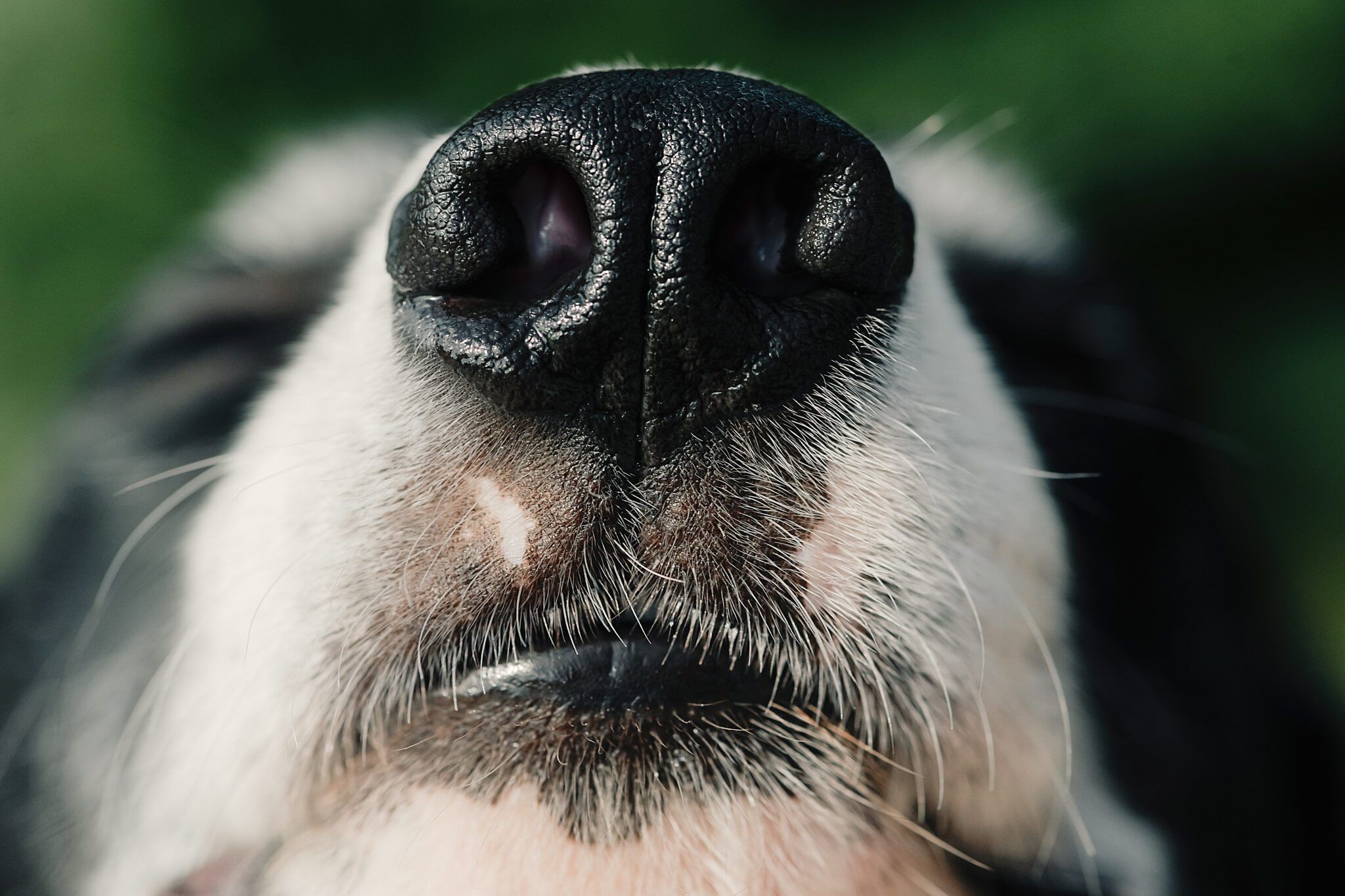
When my dogs smack and lick their lips, it’s often the warm-up act before gooey saliva leaks from their mouths and pools on the floor. As a dog mom to two food-motivated Labradors, I watch for slippery spots in the kitchen.
That familiar rhythmic dog lip-smacking echoed in my car just the other night as I pulled away from a drive-thru with delicious-smelling French fries. One of my Labs put his head right next to mine, and the dog was licking his lips and drooling down my arm as though he was practicing how he’d eat them.
Social media is filled with dog lovers equally entertained by this pooch phenomenon.
The lip-smacking noise has become so popular that it even has an internet slang name: “mlem,” which refers to the sounds of dogs licking their lips, which some say makes fabulous ASMR relaxation videos.
View this post on Instagram
But dog lip smacking isn’t always adorable, relaxing, or about food for your pooch. Twice, my (never a dull moment) Labs have started smacking their lips nonstop for reasons that sent us to the emergency animal hospital.
Sometimes lip smacking signals a problem—and food, the smell of food, or the hope of food wasn’t the cause. That’s why it’s important to figure out your dog’s lip licking meaning, which depends on the context and frequency of their lip smacking.
What Does It Mean When My Dog Smacks His Lips?
So, what does it mean when my dog smacks his lips? The best clues are to notice what’s happening around your dog, how long the behavior lasts, and whether the lip smacking is paired with other behaviors.
Your Dog Sees or Smells Food
Most of the time, especially with an “I’ll do anything for food kinda breed,” a dog licking their lips is normal, especially around mealtime or if you’re filling their bowl. It could mean they’re anticipating dinner.
“If your dog is in the kitchen and you’re making something that smells really good, they may actually start drooling and licking their lips,” says Dr. Lori Teller, a veterinarian and clinical professor at Texas A&M University. “Sometimes it’s just like the lip-licking, lip-smacking emoji that you may use when somebody sends you a picture of a yummy meal.”
But what if your dog is smacking their lips after eating? Dr. Teller says not to worry. “They may also lick their lips or smack their lips just to get crumbs or water droplets off—normal hygiene.”
Sometimes a dog smacks his lips and swallows because saliva has built up in their mouth. “A lot of times when they’re doing lip-smacking behavior, there’s also excessive saliva production, and that makes them swallow,” Dr. Teller explains. “Sometimes they may drool; sometimes they’ll swallow that excess saliva instead of it drooling out.”
Your Dog is Feeling Nauseous
A dog licking lips and drooling around a tempting meal is easy to understand, but if your dog licks or smacks their lips persistently, without food motivation, it could signal a problem.
If your dog keeps smacking his lips, watch him closely; look for clues to help identify the cause.
“If the behavior is repetitive, accompanied by inappetence, vomiting, pawing, or excessive drooling, then a veterinary visit is recommended,” says Dr. Carly Fox, a senior veterinarian in the Emergency and Critical Care Service at the Schwarzman Animal Medical Center in New York City.
One of the top reasons a dog may continually smack their lips is due to nausea.
That was the culprit with one of my Labs, Macy. It all started after a swim at a lake. She began licking her lips repeatedly and frantically. We couldn’t get her to stop, so I took her to the animal hospital.
X-rays revealed sand in Macy’s stomach. She likely ingested it after her rubber ball got stuck in the sand and she obsessively attempted to dig it out.
The veterinarian attributed her lip licking to nausea, gave her medications, and luckily, the sand situation passed without long-term complications.
Dogs with GI upset or motion sickness may also smack their lips as a precursor to hearing another sound: that dreaded toilet-plunger noise.
Your Dog is Stressed or Anxious
Anxiety and stress can also cause a dog to smack their lips. Additionally, dogs may use lip smacking and lip licking as a calming or soothing signal.
Perhaps your dog is triggered by common situations that make some pups nervous, like visitors, loud noises, or unfamiliar environments like the animal hospital.
“A lot of times we’ll see this with dogs in the exam room who are anxious or nervous about visiting the veterinarian, and they’ll lip smack in front of us,” Dr. Teller says. “Dogs with thunderstorm anxiety or changes in routine that are stressing them can also cause some lip smacking.”
If your dog is smacking his lips when nervous and/or showing other signs of being uneasy, like yawning, chat with your veterinarian about ways to help alleviate that stress and make them more comfortable.
There’s Something Stuck in Your Dog’s Mouth
If your dog is smacking their lips and pawing their mouth, that’s a big clue they may have something stuck in there that they’re trying to get out.
Sometimes they may also drool or rub their face on the furniture or ground.
Food, bone fragments, and debris like sticks they were chewing on can become lodged in their mouth— even bee stingers. That’s what caused Labrador ER visit number two. This time it was Daisy’s turn.
My dogs got swarmed by bees when one of them stuck their nose in a hive on the ground along a wooded trail. After a pure debacle, we made it home, and Daisy started smacking her lips. Even though I gave the dogs Benadryl, panic set in. Was she having trouble breathing due to an allergic reaction? We raced to the animal hospital.
Turns out she had bee stingers lodged in her gums. The vet tech pulled them right out. Daisy was fine, but they could have caused an infection if we hadn’t removed them.
If you suspect something is stuck in your dog’s mouth, contact your veterinarian. Don’t reach into a distressed dog’s mouth or pull on an object you can’t remove safely.
Your Dog Has Dental or Mouth Pain
Tooth problems, gum disease, and other painful mouth conditions can also lead to lip smacking. Watch for bad breath, difficulty chewing, chewing on one side, drooling, or a change in appetite.
“If the dog has some kind of mouth pain, maybe a bad tooth, or something stuck in the top of their mouth, or somewhere between a couple of teeth, those kinds of things can occasionally cause lip smacking,” Dr. Teller says.
These types of cases call for medical attention.
When Dog Lip Smacking Is More Concerning
If it’s clear that the anticipation of food or a stressful situation isn’t causing your dog’s lip smacking, and if the behavior is new or keeps happening, call your vet, especially if the lip smacking is combined with any of these signs or symptoms:
- Vomiting
- Diarrhea
- Lethargy
- Not eating
- Distress
- Having trouble breathing
- Sudden behavior changes
Repeated lip movements can also occur during a seizure. “Rarely, dogs who have facial seizures can repetitively and involuntarily lick/smack their lips during an episode,” Dr. Fox says. “These dogs are typically mentally altered as well.”
Identifying Dog Smacking Lips Causes
To identify the cause of your dog’s lip smacking, try tracking the trigger:
- Observe timing, frequency, and what’s happening in the dog’s environment when they start lip smacking
- Take videos to show your veterinarian
- Keep a lip-smacking log
- Offer water if they seem thirsty
- Check the dog’s mouth if it’s safe to do so
If lip smacking is new, note when it starts, how often it happens, and what your dog was doing just before they started. Does it happen near food? After a car ride? During a certain event?
When it comes to lip smacking, context is your best clue for figuring out what your dog’s lip licking means.
The cause of a dog’s lip smacking depends on the full picture. A few lip-licks as dinner is served may be nothing unusual. Persistent smacking, especially with drooling, pawing at the mouth, or a change in your dog’s behavior, deserves a closer look.