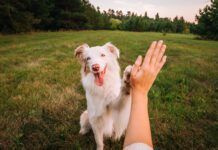
Rewards are what make dog training work, and they’re also the source of the question trainers hear most: won’t I always need treats? Certified dog trainer Jae Thomas has a clear answer, and a method behind it.
Whole Dog Journal executive editor Kate O’Connor sat down with Jae Thomas, a WDJ contributor, to talk through how to use training rewards well.
Why rewards matter
At the simplest level, Jae says, a reward increases the chance a behavior happens again, and pairing it with a marker gives the dog immediate feedback about what they did right. Rewards aren’t only food, either: toy play, praise, and environmental rewards all count, and the right one depends on the dog and the skill.
Picking the right reward
Finding what motivates your dog is more art than science. Some dogs are food motivated, some will spit out food for a toy, and a treat can even be too high value, so exciting that a dog can’t think about the task. Jae suggests mapping your dog’s low-, medium-, and high-value rewards, and saving the best stuff for harder, more distracting situations.
Markers, and why “yes” comes first
A marker, a clicker or a word like “yes,” tells the dog the exact moment they got it right, and it has to be conditioned so the dog knows the marker means a reward is coming. A common mistake, Jae says, is rewarding without marking, which leaves the dog guessing what they’re being paid for.
Reward timing
Timing is the other art. Reward too early and you capture a half-finished behavior; reward too late and the dog has already broken position or offered something else. Jae explains high rate of reinforcement for distractible dogs and variable reinforcement, varying how many treats come per rep, which she calls the scientifically strongest way to build a behavior.
Will you always need treats?
Her honest answer: if you haven’t faded food properly or proofed the skill, yes. Even highly trained dogs need skills maintained and rewarded sometimes. But once a behavior is reliable across different places and distractions, you can start to wean off.
How to fade food the right way
Jae fades food with variable reinforcement, gradually adding reps with no cookie as the dog keeps succeeding, and backing up if the dog starts to fail (which she treats as the handler’s fault, not the dog’s). The same approach works for toys, though in sports like agility you never fully stop reinforcing; you just ask for longer behavior chains before the payoff.
The takeaway
Used well, treats aren’t a crutch; they’re how dogs learn, and a plan for fading them is part of the training. Watch the full interview above for Jae’s full breakdown.