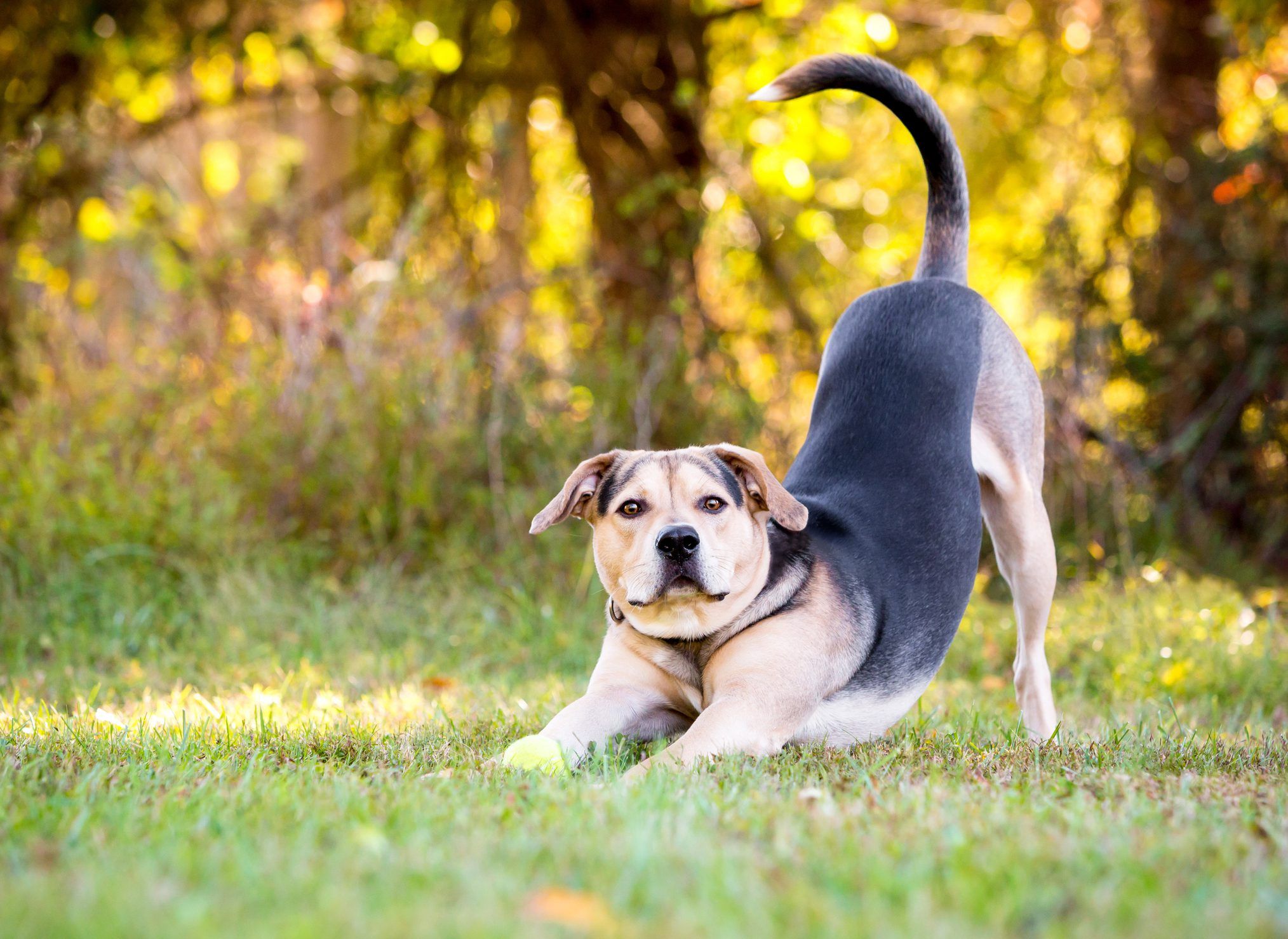
Like you, your dog probably stretches—and keeps stretching—throughout the day. She might stretch first thing in the morning, or bow low, paws wide with a wagging tail and wide eyes when she’s ready to play.
In general, dogs stretch for a variety of reasons, which usually fall into four main categories:
- Post-rest wake-up: Boosting blood flow after a nap or long sleep.
- Pre-exercise warmup: Lengthening muscles before a walk, hike, or run.
- Social interaction: The classic play bow, which expresses an invitation to interact.
- Discomfort or pain: Signaling physical stiffness, abdominal distress, or joint issues.
While not all stretches serve the same purpose, most of the time, stretching is a normal part of your dog’s life, says Ali Smith, a Maryland-based dog trainer and behavioral consultant. “Dogs have just spent time resting, so stretching helps wake up the muscles and get everything moving again. It’s no different than us stretching when we get out of bed in the morning. You’ll often see a big stretch and a good yawn after a nap, or just before heading out for a walk when excitement levels start to rise.”
Stretch vs. Play Bow: What’s the Difference?
A dog’s play bow is a variation of a stretch. While a play bow also features a dog lowering her front end while keeping her rear end elevated, it is typically accompanied by a wagging tail, loose body language, and direct eye contact. It acts as a clear signal to other dogs—and humans—that whatever happens next is intended to be fun.
How do you tell the difference?
“This is one of my favorite questions because they look remarkably similar. The important part is context,” says Smith. She says that a functional stretch is generally about the dog’s own body. Once finished, the dog simply moves on with her day. “A play bow is communication.”
Emotional and Behavioral Resets
Beyond loosening muscles or signaling playtime, stretching can also serve as an emotional release. Rather than addressing a physical need, a stretch can act as a displacement behavior when a dog is processing excitement, mild frustration, or environmental changes.
“Dogs have lots of little reset behaviors that we humans tend to be ignorant of,” says Smith. “They shake off after something exciting, yawn when they’re conflicted, sniff the ground when they’re unsure, and stretching can fit into that same category.”
“I often see dogs stretch during training if they’re feeling overwhelmed coupled with a yawn, or after working through something challenging. It doesn’t necessarily mean they’re distressed. It can simply be their way of releasing a bit of tension before carrying on.”
When to Worry About Dog Stretching
Beyond behavioral resets, stretching can be sign of pain. Distinguishing between an aging dog warming up stiff joints and a dog in acute pain, for example, can be tricky, but veterinary science uses body language as a critical diagnostic tool.
To help veterinarians and dog owners evaluate discomfort, institutions like Colorado State University and the University of Glasgow developed objective canine pain scales. These frameworks analyze specific postural shifts—such as rigid stretching, arched backs, and abdominal guarding—as primary indicators of moderate to severe pain.
The key is to know the difference between a normal play bow and what veterinarians call the prayer position. In medical terms, it’s referred to as a visceral pain stance. In the prayer position, a dog lowers her chest and front legs to the ground while keeping her rear elevated. It’s like a play bow but is rigid and without any playful body language.
How to Spot Stretching From Pain
While most stretches are innocuous, a stretch can sometimes signal acute stiffness or severe internal distress. As your dog’s primary caregiver, it’s up to you to distinguish between an aging dog warming up stiff joints and a dog in medical trouble.
According to the Merck Veterinary Manual, clinical signs that may suggest the presence of abdominal pain or discomfort include the prayer position where a dog lowers his chest and forelegs close to the floor while keeping his hindquarters elevated. Dogs instinctively assume this posture because extending the abdomen helps relieve pressure on inflamed internal organs, such as the stomach or pancreas.
Common medical causes for the prayer position include:
- Abdominal pain: Conditions such as acute pancreatitis, bloat, gastroenteritis, or a swallowed object cause severe abdominal discomfort that a dog tries to ease by holding this pose.
- Gastrointestinal issues: Inflammatory bowel disease, stomach ulcers, or intestinal blockages.
- Musculoskeletal problems: Spinal issues, neck pain, or joint pain in the front limbs can lead to a similar rigid stance.
- Systemic or neurological conditions: Severe internal inflammation or organ distress.
When Is It Time for a Vet Visit?
As normal as a stretch usually is, a sudden shift in frequency or posture can be red flags. You should seek veterinary assessment if you notice:
- Stretching is sudden, frequent, or repetitive.
- A held prayer position where your dog seems unable to settle.
- Accompanying symptoms such as vomiting, lethargy, panting, an arched back, a guarded/painful belly, or a sudden loss of appetite.
“If the stretching is new, excessive, or accompanied by changes in appetite, energy levels, movement, vomiting, diarrhea, or signs that the dog seems uncomfortable, that’s where I’d stop thinking behavior and encourage a veterinary assessment,” Smith says. “Pain can look like a behavior problem before it looks like a medical one.”
While it’s important to know your dog’s habits and routines, so you can note changes, stretching, on its own, is usually just stretching. As Smith says, dogs aren’t always secretly communicating complex messages every time they do something normal.