

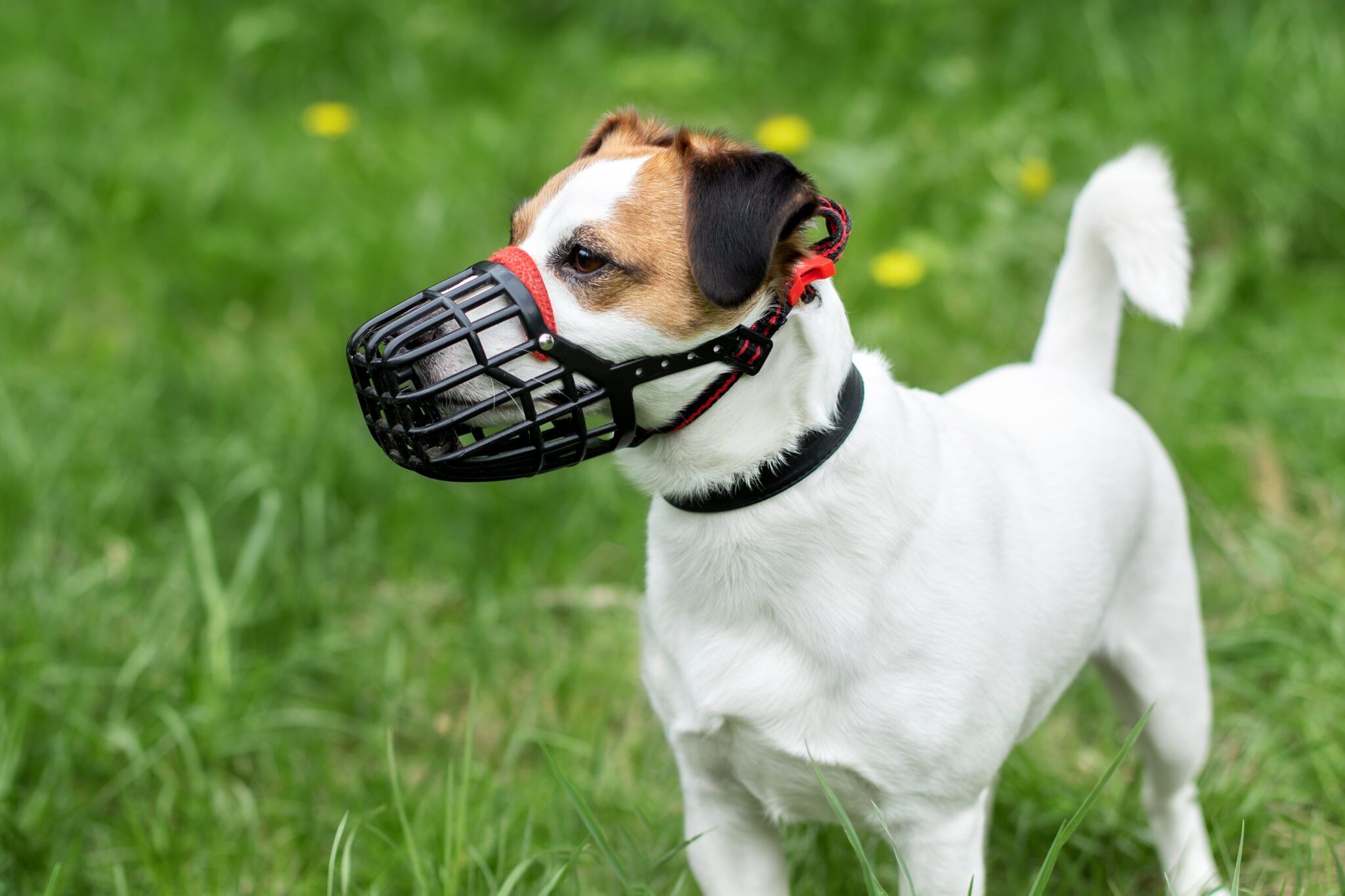
Dog muzzle training is something every dog should learn. Most of our dogs will never need to wear a muzzle, but it is a skill that every dog should have just in case, such as in an emergency. Even the sweetest dog can bite when stressed or in extreme pain.
By the same token, every dog owner should also own a muzzle that fits their dog(s). This is one of the easiest aspects of being a responsible dog owner and can also be one of the cheapest. You can get a quality muzzle for under $15 and keep it in your dog first aid kit.
Not sure where to start? Let’s discuss muzzle types, muzzle training, and some of my favorite muzzles.
Does My Dog Need a Muzzle?
Yes. Every dog should have a muzzle and be comfortable wearing it.
Situations where you might need to use a muzzle:
- Dog in pain after an injury such as a dog fight or being hit by car
- Taking your dog on public transit in some cities
- Dog tends to eat things she shouldn’t, such as rocks, socks, or poop
- Uncomfortable or painful veterinary and grooming procedures
- Reactive dog who can behave unpredictably
- Fearful dog
- Dog who gets grabby when running with other dogs
- New dog with a bite history
- During behavioral modification training for a dog with a bite history
- Introducing dogs with unpredictable behavior
- Aggressive dog
Many of these situations are stressful. We want wearing a muzzle to be familiar to your dog so that putting a muzzle on is not an additional layer of stress in an already unpleasant situation.
There are two primary types of muzzles for dogs: basket muzzles and sleeve muzzles. Which one you need depends on how you will be using a muzzle with your dog.
Basket Muzzles for Dogs
Basket muzzles consist of a structured “cage” that fits around your dog’s snout and straps that secure it on her head. The basket part can be made of metal, plastic, or leather. I prefer plastic because it is easier to clean than leather and doesn’t hurt as much as metal if your dog whacks you with it. The basket should be big enough for your dog to pant and drink while wearing it and can be structured to allow your dog to eat food and treats.
Basket muzzles are most appropriate for prolonged wear. If you expect your dog to wear a muzzle for more than a few minutes at a time either during a training session or an outing, a basket muzzle is the way to go. You get peace of mind that your dog can’t accidentally hurt anyone, and your dog can still pant, eat, and drink. Basket muzzles with a tighter lattice structure are good to prevent your dog from eating things she shouldn’t either inside the home or outside.
Sleeve Muzzles for Dogs
Sleeve muzzles consist of a tube that fits snugly over your dog’s snout and a strap that buckles behind the ears to hold it in place. They can be made of fabric, mesh, or leather. They do not cover the end of your dog’s snout, so she may still be able to nip while wearing one. You may still be able to give small treats, but eating, drinking, and panting are all difficult while wearing a sleeve muzzle.
Sleeve muzzles are most appropriate for short-term or emergency use. Veterinary facilities and groomers use them frequently for dogs who are stressed by quick procedures such as blood draws, vaccinations, or nail trimming. Sleeve muzzles take up little space, so they are perfect to store in a first aid kit, glove compartment, or hiking backpack. Your dog might still be able to nip while wearing a well-fitted sleeve muzzle, but she won’t be able to do serious damage.
Fitting a Muzzle to Your Dog
Sleeve muzzles are easy to fit to most dogs. Measure the circumference of your dog’s muzzle near her eyes and choose a muzzle that will fit snugly but not squeezing. The head strap tightens to hold it in place. A basic sleeve muzzle will only be adjustable along the head strap, but some are also adjustable around the snout. Some dogs with extreme smoosh faces, such as a Bulldog, French Bulldog, or Boston Terrier, may not be able to wear a sleeve muzzle.
Basket muzzles can be a little trickier to fit because dogs have so many different head shapes. Certain brands are better suited for dogs with long, narrow heads like a Greyhound, blocky heads like a Bullmastiff, or a more average head like a Golden Retriever. Try muzzles on your dog in person if possible or look for one that has photos showing a dog similar in head shape to yours.
Basket muzzles should be large enough to allow the dog to open her mouth and pant but also rest comfortably on the snout. The length should be just a touch longer than the tip of the nose. Some basket muzzles just have straps that go under the chin and behind the ears, but others also come with a forehead strap that runs from the top of the basket between the dog’s eyes and then attaches to the head strap. This forehead strap can used to adjust how the basket sits on your dog’s snout and is extra security to prevent your dog from pawing the muzzle off.
Ideally, the basket should be wide enough that it isn’t squashing the cheeks and lips but narrow enough that your dog can’t wedge a paw inside.
Most basket muzzles come with a size chart that will list multiple measurements: length of the snout, circumference near the eyes, and possibly neck circumference as well. If your dog is between sizes based on measurements, it is usually best to size up.
Training Dog with Muzzle
Whether you are muzzle training a reactive dog or simply preparing in case of an emergency, the process of dog muzzle training is the same. Some dogs will take to a muzzle quickly, while others may progress more slowly. Take your time with each step, only proceeding when your dog is relaxed. It can help to think of muzzle training as a trick, like teaching your dog to wear a hat or carry a small bucket.
- Let your dog investigate the muzzle, sniffing it and eating treats while you snap and unsnap the buckle to let her get used to the sound.
- Hold the muzzle in one hand and reach through it with your other hand to offer your dog a treat. Repeat several times until your dog is readily taking the treat.
- Hold the muzzle in one hand and reach your other hand partway through so that your dog must place her nose partway into the muzzle to get the treat. Repeat several times until your dog is readily grabbing the treat from inside the muzzle.
- Hold the muzzle and treat so that your dog must place her snout completely inside the muzzle to get the treat. Repeat several times until she is readily placing her snout inside the muzzle to get the treat. At this point you can introduce a verbal cue, such as “muzzle,” before each rep.
- Ask your dog to put her snout in the muzzle, then buckle or snap the strap behind her ears. Immediately undo the buckle and take the muzzle off. You can reward with treats both while the muzzle is on and after you take it off. Repeat several times until she is no longer startled by the sound of the strap being fastened.
- Gradually increase the amount of time that the muzzle is left in place before you take it off again. Start with just a few seconds and build to several minutes.
- If your dog will wear a muzzle in public, start incorporating walks into your training sessions. Place the muzzle on for a few minutes, then take it off to give your dog a break.
Tip: When building duration, talk to your dog in a low, calm voice to praise her. You can also pet her with long, slow strokes to promote calm and relaxation.
Dog Training Muzzles We Love
I have tried several muzzles with my dogs, and these are my favorites.
Best Muzzle Overall: Full Grip Supply Basket Muzzle
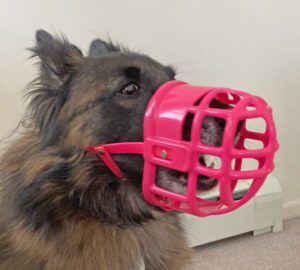
This is my favorite muzzle overall. It is extremely versatile and can be used for pretty much any situation in which my dog might need a muzzle and is secure while still having a sleek profile. And the color options appealed to my maximalism.
Pros:
- Sturdy, firm plastic basket that doesn’t bend
- Ample room to pant, eat treats, or drink
- Can be fitted with a lick or stool guard
- Padding on top of snout
- Easy to clean
- Sturdy straps
- Variety of colors
- Fits well on dogs with long and narrow or average head shapes
- Made in USA
- Affordable at about $22
Cons:
- Limited size options – not appropriate for small dogs
- Likely won’t fit dogs with short snouts or wide, bulky heads
Where to buy:
Best Sleeve Muzzle: CollarDirect Nylon Dog Muzzle
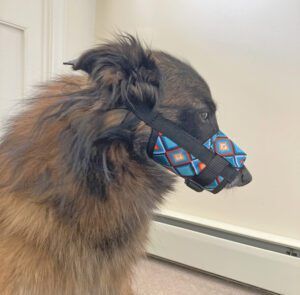
This is my favorite sleeve muzzle. It has the compact size and quick-fit that I love about sleeve muzzles and has adjustability features that I didn’t know I wanted until I pulled it out of the box.
Pros:
- Sturdy nylon material
- Adjustable snout circumference, so one muzzle could be used for multiple dogs
- Secure Velcro and nylon strap around snout
- Lockable plastic buckle on head strap
- Variety of colors
- Appropriate for almost any size dog or head shape
- Compact storage
- Affordable at about $15
Cons:
- Does not allow dog to pant or drink
- Only allows dog to take small treats
- Dog can still nip
- Likely won’t fit dogs with smoosh faces
Where to buy:
Best Muzzle to Prevent Licking/Chewing: JAFCO Clear Vinyl Muzzle
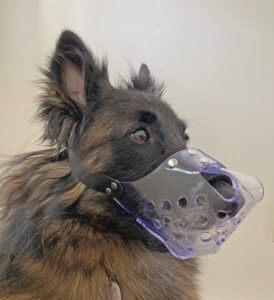
This muzzle was the priciest that I tried out, but it is worth it. It feels nice in hand and fits comfortably on the dog. It is not the most versatile muzzle but is perfect for a dog who eats things she shouldn’t. The clear vinyl is a nice touch to be able to see your dog’s expression and tongue.
Pros:
- Thick but comfortable vinyl construction
- Can also be ordered in hard plastic
- Ample room to pant and allows some drinking
- Prevents dog from eating poop/food/rocks/clothing
- Prevents dog from licking wounds or surgery sites
- Can be ordered with treat hole if you want to use it like a standard basket muzzle
- Padding on top of snout
- Easy to clean
- Head strap feels lightweight but is quite strong
- Many size options
- Made in USA
Cons:
- Difficult to give treats when training
- Priced at $45 to $60, depending on size
Where to buy:
Best Budget Muzzle: PetSafe Dog Muzzle
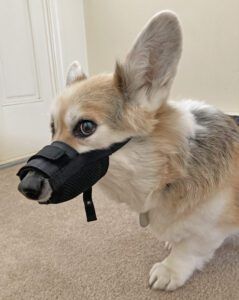
For the average dog owner, this is the perfect muzzle to keep in your first-aid kit or next to your nail clippers. It’s made of quality materials with no frills and will get the job done without breaking the bank.
Pros:
- Sturdy nylon and breathable mesh material
- Adjustable snout circumference, so one muzzle could be used for multiple dogs
- Secure Velcro around the snout
- Appropriate for almost any size dog or head shape
- Compact storage
- Affordable at $10 to $13
Cons:
- Does not allow dog to pant or drink
- Only allows dog to take small treats
- Dog can still nip
- Likely won’t fit dogs with smoosh faces
Where to buy:
Best Comfort Basket Muzzle: Coastal Soft Basket Muzzle
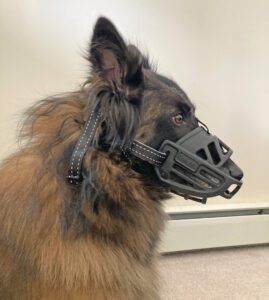
This basket muzzle is soft and pliable while still preventing bites.
Pros:
- Flexible silicone basket
- Room to pant, eat, and drink
- Neoprene padding on straps
- Easier to fit to long-nosed dogs than many basket muzzles
- Affordable at $20 to $34 depending on size
Cons:
- A determined dog might still be able to nip
- Cheek straps are not adjustable
- Not a ton of room to pant depending on size and fit
- Might not fit dogs with extreme head shapes
Where to buy:
Best “Big Head” Basket Muzzle: Baskerville Ultra Dog Muzzle
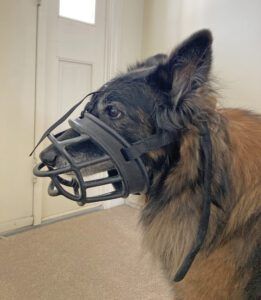
I have had my Baskerville Ultra for many years. This is a well-known brand that has been around for a while. It is not an ideal fit for my dogs with their long, pointy noses, but that doesn’t change the fact that it is a quality muzzle.
Pros:
- Slightly flexible rubber plastic basket
- Ample room to pant, eat, and drink
- Basket can be softened in hot water and reshaped
- Removable head strap
- Fits well on dogs with average and boxier head shapes
Cons:
- A determined dog might still be able to nip
- No padding on top of snout
- Likely won’t fit dogs with long narrow heads
- May not fit dogs with smoosh faces
- Moderately priced at $20 to $40 depending on size
Where to buy:
Specialty Dog Muzzles
If your dog spends a lot of time in her muzzle, you may be looking to spend more on a custom or specialty muzzle. The options are seemingly endless.
The Muzzle Movement is a UK-based company that makes gorgeous custom muzzles for any size dog starting at $65 USD.
Biothane basket muzzles are also becoming popular for their beauty and customizability. You can find many sellers online, with prices generally being in the $60 to $90 range.
For a true aggressive dog or extreme chewer, you may opt for a metal basket muzzle. Metal basket muzzles can take a lot of abuse and are the strongest option.
And if you have a dog with an extreme brachycephalic head shape such as a Bulldog, French Bulldog, or Boston Terrier, look for a muzzle specifically designed for their head shape. Traditional muzzles will not sit comfortably or securely on those cute little smooshed faces.



My daughter is a “muzzler” for a start-up company, Big Snoof Dog Gear, in the S.F. Bay Area of California. They started as a special interest vendor several years ago in response to the UK ban on XL bullies. They took off like a greyhound, and are still going strong! Their mission is to destigmatize the use of muzzles. They offer an array of custom-fit basket muzzles, powder coated in any color/s you wish (even with glitter!) and with biothane straps, again of any color. They even offer muzzle straps with personal labels– “In Training,” “Big Feelings,” “I Eat Poop”– whatever customer asks for. They are making muzzles fun for everyone; muzzles don’t have to look scary!