

Megaesophagus is a common disorder in dogs that describes slow motility with resultant dilation of the esophagus. The esophagus is a muscular, distensible organ that carries food from the mouth to the stomach. As a result of hypomotility, food will “pool” in the esophagus and stretch it. The stretching leads to damage to the nerves. This worsens hypomotility — a vicious cycle.
Megaesophagus can be either primary or secondary. In the primary case, an underlying cause is never discovered. It predominantly occurs in puppies, and rarely in an adult-onset form. Secondary occurs when some other predisposing condition such as myasthenia gravis, an autoimmune disease that causes muscle weakness, develops, leading to the megaesophagus.
Primary Causes of Megaesophagus in Dogs
Congenital Megaesophagus in Dogs
Unfortunately, some puppies are just born with a flaccid, slow-moving esophagus. Breeds that are genetically predisposed include the wire-haired fox terrier and miniature Schnauzer, but any breed can be affected. Initial symptoms may not be seen until a puppy is transitioned from maternal milk to dog food. Then symptoms of regurgitation—throwing up undigested food—and secondary pneumonia are noted. Regurgitation is different from vomiting. It occurs almost directly after a meal. Often the food comes back up with no effort, almost like a burp, and no digestion has occurred.
A frequent secondary consequence of regurgitation is aspiration pneumonia. As a puppy regurgitates while inhaling, food and stomach acid can be pulled into the lungs. In these cases, puppies must be treated for aspiration. This can include oxygen therapy, nebulization and coupage, and sometimes antibiotics. Hospitalization may be needed if the pneumonia is severe.
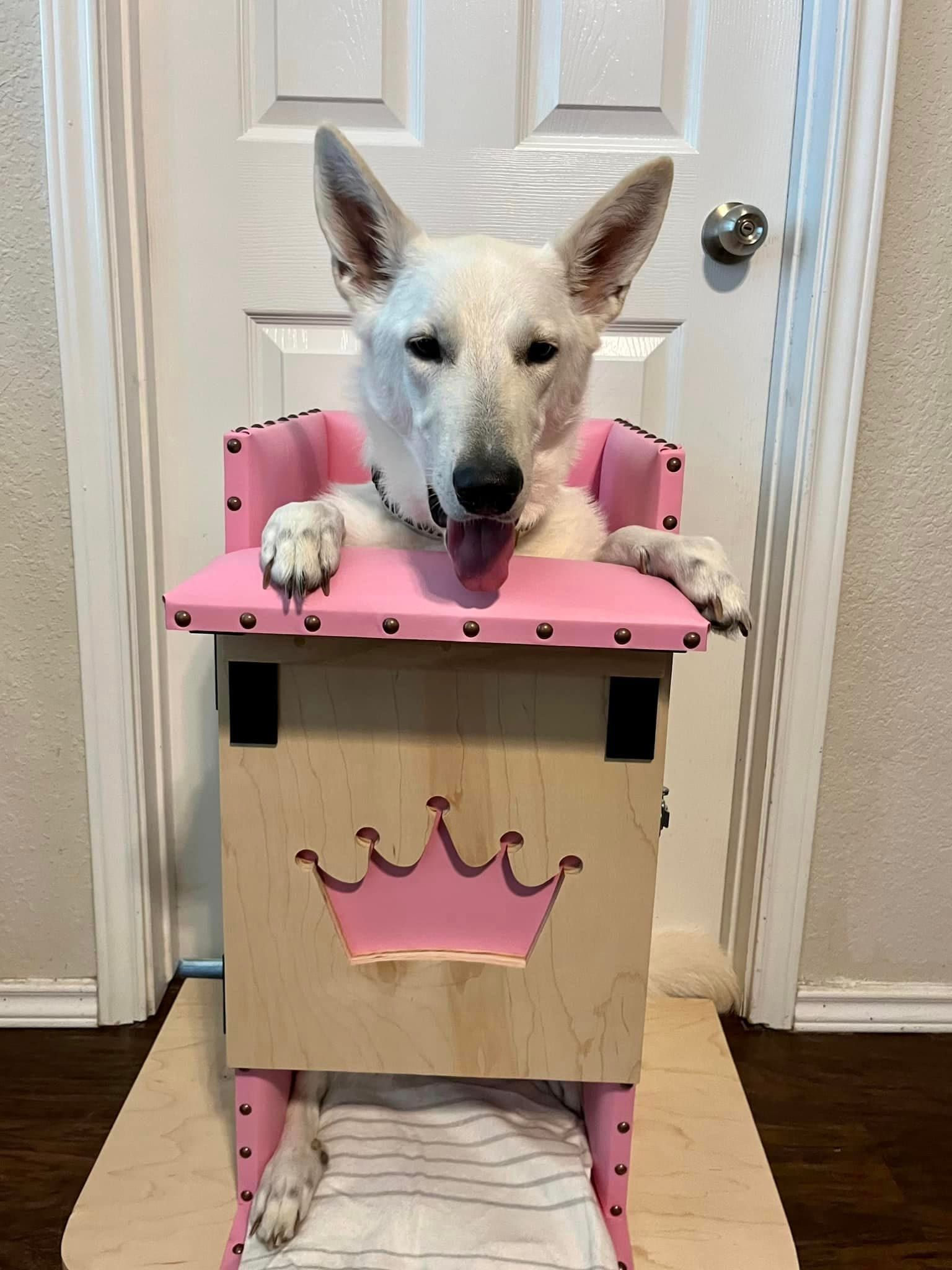
There is no surgical treatment for this type of megaesophagus; it can be managed with a variety of lifestyle changes. These include feeding and watering in an upright position using a Bailey chair (click here for a link to a company that manufactures custom Bailey chairs) with small, frequent, calorically dense meals. Some dogs do better with gruel while others prefer meatballs. It will depend on each dog’s ability to swallow.
A 2017 study showed some improvement in dogs with idiopathic/congenital megaesophagus when treated with sildenafil (Viagra). More studies need to be conducted to determine if this is a viable treatment option.
Megaesophagus is a lifetime condition, and any dog born with it must be closely watched for signs of aspiration pneumonia throughout their life.
Megaesophagus Can Be Caused by Vascular Ring Anomalies in Dogs
An important type of megaesophagus to mention that is both congenital and secondary is due to a vascular ring anomaly. In some breeds of dogs, particularly German Shepherds, an abnormal blood vessel can persist instead of regressing during development. The most common type is a persistent right aortic arch (PRAA). When a dog is born, that extra blood vessel causes constriction as the esophagus passes through the chest. In front of the vessel, the esophagus is dilated. As a puppy starts to eat dog food, it becomes trapped in the area, dilating the esophagus.
This is a fixable condition with surgery. However, after surgical repair, hypomotility may persist due to esophageal damage. Rapid diagnosis and treatment are essential to a good outcome. Any puppy that develops regurgitation at weaning should be immediately evaluated. Radiographs (x-rays) with and without contrast can be done to diagnose this condition. If a persistent vascular ring anomaly is diagnosed, surgery can be done to snip the extra vessel. This is generally conducted by a board-certified surgeon, but there are general practitioners who have performed this surgery as well.
Secondary Megaesophagus in Dogs
The list of underlying causes for acquired megaesophagus is extremely long and includes muscle diseases like polymyositis, infectious disease such as tetanus, Addison’s disease, cancer, myasthenia gravis, toxins including lead and thallium, and trauma.
As with primary, there is no surgical correction for this. The underlying disease must be identified and treated. In some cases, this will significantly improve the megaesophagus, but due to the stretching, it does not always return to normal size and motility. As a result, megaesophagus may persist, leading to episodes of aspiration pneumonia.
One of the most common causes in older dogs is myasthenia gravis. This is a systemic, autoimmune illness in which the body’s immune system destroys important receptors in nerve endings. It results in generalized weakness, particularly worse after exercise. There is a medication to treat MG, and it can improve the motility of the esophagus.
Ruling out other causes can take an exhaustive list of diagnostics, so be patient while your veterinarian examines possible underlying causes. By keeping close tabs on your dog’s health and providing your veterinarian with a thorough history, the etiology of megaesophagus in dogs can often be discovered.

As an FYI — and I assume treatment has advanced since I had a dog with mega, starting around 1998 — they basically handed him back to me and said good luck, and that he’d eventually die, sooner rather than later, from aspirating his food/pneumonia. I literally walked across the hall to a vet I had done some acupuncture with and asked whether they could help, and they said they had a number of mega clients who were doing quite well. The dog eventually died at 13 years, living with mega for almost 10 years, with the occasional acupuncture tune-up and paying attention to his eating. We had an MRI done (I think that’s what it was) after the first few acupuncture treatments and the primary vet was astonished to see it had essentially cleared up.
My 10 yr. old Cairn uses a Bailey Chair, a raised water dish and an inflatable collar like some use instead of the horrible Elizabethan collar used on a dog after surgery so it won’t tear out stitches.
Including the collar was the last of these changes and it has made a world of difference. Just that little tilt of the head seems to be enough that she can go weeks without an incident. I found she didn’t need the collar all day and never at night. Usually, five or six hours a day was enough.
P.S. It only took her two feedings to figure out the Bailey Chair by herself. Checkout Bailey Chairs 4 Dogs.com. Super customer service.