

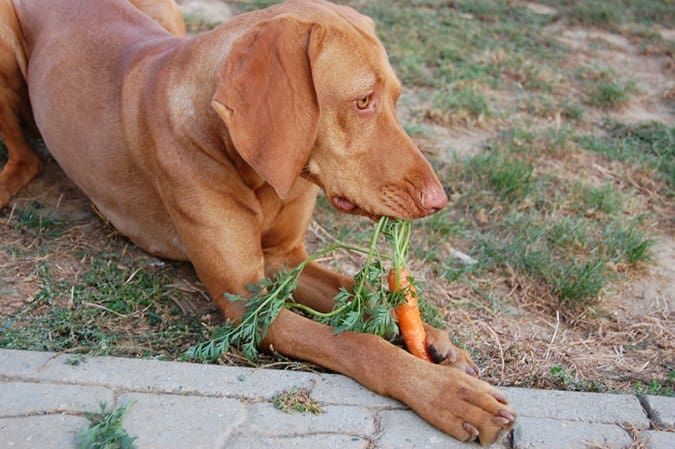
As omnivores, dogs can eat vegetables without ill effect—at least they can eat most vegetables. Many nutritionists believe a mixture of both meat and vegetables is important for a healthy dog. My darling baby boy is a 12-year-old German Shorthair Pointer mix. When he was around 6 years old, he started to put on some weight. Based on a suggestion from a friend, I did some research on what vegetables dogs can eat, cut back on his commercial dog food, and added a handful of frozen green beans to his dinner. The vegetable slowed down the gobbling up of his food, added volume without many calories to help him feel full, and easily fit into my budget. The trick worked! My pup slimmed down.
What Vegetables Can Dogs Eat?
Dogs Can Eat Cabbage, Lettuce, and Many Other Leafy Greens
A good rule for finding leafy greens that your dog can eat is to stick to those that you would consume. Lettuce, spinach, chard, cabbage and kale are all okay for dogs. Besides being rich in vitamins A, C, and K, calcium, iron and potassium, leafy greens are also a good source of fiber. Much like humans, dogs get the most nutrients when the veggies are uncooked. Of course, if you want you can steam your dog’s vegetables for something a little different, or bake them for a crunchier treat. The high fiber in leafy greens can cause some dogs to have an upset stomach after initially added to their diet. Introduce any new food slowly to keep your dog’s tummy safe.
Can Dogs Eat Carrots, Beets, and Other Root Vegetables?
In general root vegetables like carrots, beets, sweet potatoes and parsnips are safe to feed your dog. These vegetables are starchy and high in sugar, which means you do want to limit the amount you give to your dog (especially if his commercial or raw dog food already contains root vegetables – many do).
Get the recipe for homemade sweet potato dog chews.
Can Dogs Eat Stalk Vegetables?
This includes vegetables like celery and asparagus. It may be a little harder to get your dog to enjoy these types of vegetables, but they are safe for dogs to eat. Some don’t like the taste, and some find them hard to grind up in their teeth. To help, cut stalky vegetables into small pieces and/or steam them.
Can Dogs Eat Broccoli, Brussels Sprouts, Cauliflower, Corn, and Cucumber?
All of these veggies are safe for your dog to munch on but, like other vegetables, keep it to small quantities – especially if your dog isn’t used to eating these types of foods. Remember to take the corn off the cob before handing it over to your dog. Although the cob itself isn’t bad for a dog to consume, it is easy to swallow in chunks or whole, which can cause choking or intestinal obstruction. Whenever changing your dog’s diet make sure to check with your vet, go slow, and pay attention to your dog. If you follow these guidelines, adding vegetables to your pup’s food can help him receive a more varied, nutritionally complete profile in his diet.
Dogs Can Eat Squash
Squash of all varieties are safe for dogs to eat. Pumpkin and butternut squash can help dogs with bouts of diarrhea, and most dogs don’t mind the taste of squash. Use up all your excess summer squash from the garden by steaming it up for your dog, or cut up and bake this year’s jack-o-lantern after Halloween for your dog to eat. It’s best to limit your pup’s consumption to the meat of the squash, keeping the seeds and skin away.
Can Dogs Eat Peas and Other Legumes?
This vegetable group includes bean and alfalfa sprouts, mature beans such as kidney, pinto, and lentil, and peas. The topic of legumes in dog food has been in the news lately. The reason is due to a recent FDA update which states there are reports of canine dilated cardiopulmonary (DCM) in dogs eating pet foods containing legumes or potatoes high up on the ingredients list. If the protein of your dog’s diet relies heavily on legumes or potatoes, you should not only avoid giving more of this plant group to your dog, but also consider reducing the levels of legumes in his main dog food, i.e. changing dog foods. A note on green beans: Green beans may be the most widely-fed vegetable to dogs because of their taste and easy digestion. Please be aware that, despite their name, green beans are not actually classified as beans, and therefore don’t warrant the limitations recommended for true legumes.
Vegetables Dogs Can’t Eat
Dogs Can’t Eat Onions, Garlic, and Other Alliums
Alliums are bulb vegetables like onions, garlic, leeks, chives, and shallots. Do not give your dog access to these plants, as they are toxic to dogs. Negative side effects of eating onions or garlic for dogs range from a stomach ache to developing anemia which, at it’s worse, can cause organs to shut down.
- Frozen bags of vegetables are often on sale. Stock up. Have a blend ready to grab in a Tupperware bowl in the freezer.
- If your pup is sensitive to the cold of a frozen vegetable, put a small bowl in the refrigerator for easy treat access.
- For a summer treat, add vegetables to a 1:1 mixture of chicken broth and water in an ice tray. Once frozen, pop out one or two for a delicious hot day treat.
- When cooking, set aside the unused vegetable trimmings that are safe for your dog to consume. A great no-waste alternative to throwing it in the garbage.
- If your dog doesn’t want anything to do with vegetables and you want to supplement what he is getting in his regular diet, you can chop or puree them and mix them into his meals. For treats, adding some dog-safe peanut butter (no sugar, just peanuts) can get your dog started. Eventually you should be able to back off on the addition and feed the vegetable plain.
- Vegetables are a great reward in treat puzzle games. As always make sure you watch your dog when those are in use and that all edible treats are cleaned from the puzzle before storing away.


My dogs steal vegetables and fruits out of my garden. They have stolen cucumbers, cantaloupe and peaches. (They do leave the pits). I have since dog proofed the gardens but will give them some of the harvest. They like zucchini and right now they are enjoying carrots and carrot tops. One is stealing strawberries. She can’t get them in the beds but I have some pots and I have caught her nosing the plants looking for ripe strawberries. both dogs enjoy sweet spring grass so I’ll let it go a bit before pulling it. Neither are interested in lettuce, not even from the garden.
Dogs are carnivores. Period. These two books started my study of feeding my dogs. Raw and Natural Nutrition for Dogs, Revised Edition: The Definitive Guide to Homemade Meals By: Lew Olson or
Feeding Dogs: The Science Behind The Dry Versus Raw Debate by Dr. Conor Brady that includes many, many studies. I’m dropping my subscription. This is far too much misinformation.
Based on the diversity of opinions, WDJ needs a follow up article clarifying the carnivore vs. omnivore status, as well as reviewing those veggies that my be ok with an asterisk. The opinions need to come from people recognized as experts in canine nutrition, e.g. Linda Case, Mary Strauss. Even the experts don’t agree on everything.
Ugh. A former VP of sales turned dog sitter does not a canine nutritional expert make. Dogs are not omnivores. Scroll up to find the excellent post by M. Kamma regarding their status as opportunistic carnivores.
And there is so much misinformation in so many of the comments in this thread that it is frightening. Read/search for articles by Dr. Karen Becker for better information on nutrition.