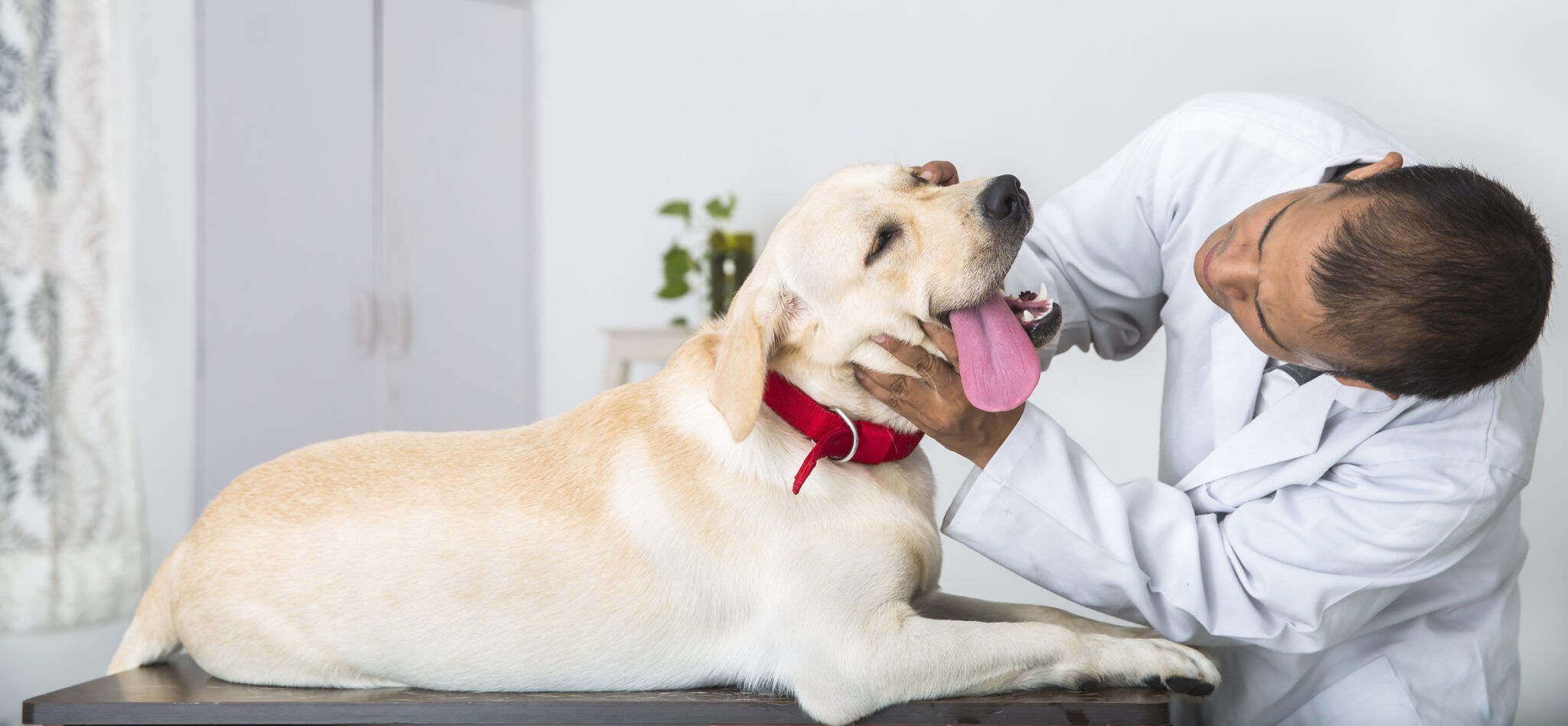
A swollen salivary gland can cause swelling and possibly discomfort in a variety of locations around your dog’s head and neck. Treatment often requires surgery to remove the damaged gland, but dogs usually do well once they have healed.
Dog Salivary Glands
Dogs have eight salivary glands arranged in pairs with four on each side of their faces. The sublingual glands are under the tongue, the parotid glands are at the base of each ear, the zygomatic glands are under the eyes, and the mandibular glands are at the back of the lower jaw.
The purpose of these glands is to produce saliva that lubricates the mouth and throat and starts the digestive process.
Causes of a Swollen Salivary Gland
Salivary glands can become swollen if they are damaged. Damage to a gland causes saliva to leak out and pool in the surrounding tissues, which irritates those tissues and can then cause more damage to the gland. This cycle will continue indefinitely, and the swelling gets worse over time.
Often, we don’t know why or how a salivary gland has been damaged, but potential causes include:
- Bite wounds
- Trauma from chewing on sticks or other sharp objects
- Choke collars
- Trauma from being jerked by the neck
- Trauma from stretching or twisting the neck abruptly
- Bacterial infection (often from a wound, but possibly blood-borne)
- Sialoliths, or stones forming within the gland
- Salivary gland tumors (benign or cancerous)
Swollen Salivary Gland Symptoms
Swelling is the most common symptom for all salivary gland ailments. The location of the swelling will vary based on which gland(s) is affected. Sublingual glands cause swelling within the mouth and throat, the zygomatic glands cause swelling on the cheek under the eye, and the parotid and mandibular glands cause swelling around the lower jaw and upper neck.
Severe swelling of the sublingual, parotid, or submandibular glands may block your dog’s throat and cause difficulty swallowing or breathing. These symptoms are an emergency and require immediate veterinary care.
Sialocele or salivary mucocele is the swelling and pooled saliva from a damaged salivary gland. Swelling is usually the only symptom, and the area is soft to the touch and not painful.
Sialadenitis is inflammation and infection of the salivary gland. A dog with sialadenitis may be painful, have trouble eating and drinking, and drool excessively.
Sialoliths are calcified stones that can form within the salivary glands and then block salivary ducts. These stones are painful and may also cause difficulty eating and drinking.
Salivary gland tumors can be benign or malignant. Sublingual gland tumors are the most likely to be cancerous, although this cancer is not common. A dog with a salivary gland tumor may be painful, drool excessively, or experience weight loss.
Your veterinarian will make a diagnosis based on:
- How your dog’s swelling feels upon palpation
- Any other symptoms of illness that are present
- Fine-needle aspirate of the swelling
- Bloodwork
- X-rays of the head and neck
Treatment
The primary treatment for a dog salivary gland infection or swollen cheek gland is surgery to remove the damaged gland. Draining the swollen area can provide temporary relief, but the swelling almost always returns. Your dog will also receive antibiotics if she has an infection.
Most vets recommend a referral to a specialist for surgery. This is because there are many nerves, blood vessels, and muscles around each of the salivary glands, and removal is a delicate procedure that requires expertise and specialized equipment.
The surgeon may place a drain in the surgical site to allow drainage of all fluids in the area for a few days after surgery. This can be messy but speeds up the healing process and decreases the risk of infection.
Most dogs have an excellent prognosis and thrive after surgery.