When you think of the fastest animals on earth, what do you think of? The cheetah? Gazelle? Peregrine falcon? Maybe a Thoroughbred racehorse? But have you ever thought about including the dog in that collection?
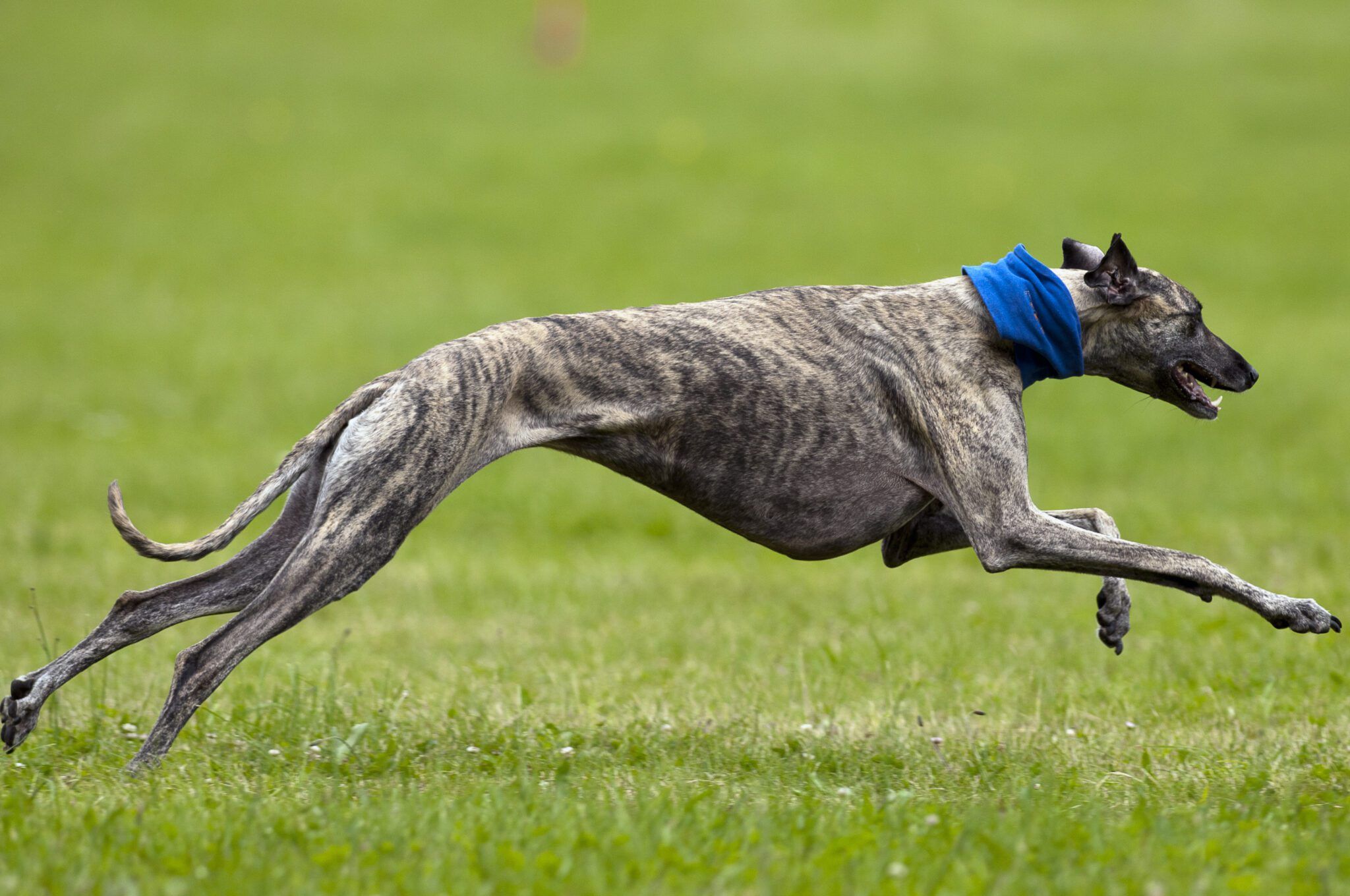
When it comes to how fast dogs can run, one particular breed stands out. Greyhounds have been known to run at an astonishing 45 miles per hour—and it’s not just top speed: many Greyhounds can hit over 43 miles per hour in just four-tenths of a mile, reaching a maximum acceleration of 9 miles per hour in approximately two seconds.
In terms of speed, while the cheetah—considered the fastest land animal—can reach a jaw-dropping top 65 miles per hour, they can only maintain that incredible velocity for very short distances, between 200 and 300 yards. The Greyhound, however, can maintain speeds in excess of 35 miles per hour for distances as great as seven miles.
Since Greyhounds have similar body mass, as well as form, shape, and structure to cheetahs, why can’t they run at similar speeds? Research provides the answer: first, the cheetah’s longer limbs and back allow it to achieve a lengthier stride than the Greyhound. Secondly, the cheetah can achieve faster top speeds because it has the ability to significantly reduce its swing times—the duration a paw spends off the ground during the running cycle—as it speeds up compared to the Greyhound.
The Role of Muscle Fibers in How Fast Dogs (and Other Animals) Run
Both dogs and cheetahs (much as with human elite runners) are equipped with an abundance of what are called fast-twitch fibers: specialized muscle fibers that support rapid, powerful muscle contractions designed for short bursts of activity such as sprinting. On average, Greyhounds have more of these fast-twitch fibers than any other dog breed.
We now know that animals (including humans) who exhibit both speed and power have greater proportion of fast-twitch fibers, while those with exceptional endurance possess a greater number of slow-twitch fibers. Greyhounds typically have fewer than 20 percent slow-twitch fibers, compared to Dachshunds, bred for endurance, who average more than double that amount.
All of us in the animal kingdom face the same issue: being a speed demon on the ground tends to make us unsuited for endurance, and having considerably more endurance is usually at odds with high-speed sprinting. A great example is dogs bred to pull sleds, a task which takes remarkable stamina over prolonged periods: dogs competing in the Iditarod can pull a sled for 6–8 hours a day at speeds of around 10 miles per hour.
How Fast Can Sighthounds Run?
As suggested above, certain dog breeds are built for speed. The fastest overall are the sighthounds, who run with their heads up and their eyes fixed ahead rather than nose to or near the ground like most other breeds. Their aerodynamic bodies make higher speeds possible: they are slightly built, lightweight, with long, well-angled hindlegs. Sighthounds typically have minimal body fat, well-defined muscles, and deep chests, which provide more room for their lungs and large hearts.
There are around 28 recognized sighthound breeds, with variations depending on kennel club recognition. Here are some of the fastest dogs in the sighthound category:
Greyhound—45 miles per hour: The Greyhound is considered the fastest dog breed, known not just for how fast it can run but for its amazingly rapid acceleration. While the Greyhound’s precise origin is uncertain, graves in Mesopotamia containing its bones date back to 5000 BCE.
Saluki—42 miles per hour: Named after the Arabian city of Salu, the Saluki is the world’s second-fastest dog breed. An ancient Egyptian breed dating back to 7000 BCE, Salukis were used by nomadic desert tribes to hunt game such as gazelles. Like the Greyhound, they are known as exceptional sprinters who can also maintain speed over long distances.
Afghan Hound—over 40 miles per hour: The Afghan Hound’s long, powerful legs and flexible spine are keys to their speed on uneven terrain. Originating in the mountainous regions of Afghanistan, the Afghan Hound was bred to hunt large prey such as deer and leopards.
Ibizan Hound—40 miles per hour: The Ibizan Hound is named for the Spanish island of Ibiza and was a hunting companion to Egyptian pharaohs before being brought to the island by Phoenician traders. Unusual for sighthounds, this breed also utilizes hearing, sight, and scent in the hunt. The Ibizan Hound has the peculiar ability to jump six feet into the air from a standstill.
Irish Wolfhound—40 miles per hour: With a size that is rare among sighthounds, the Irish Wolfhound is one of the largest of all breeds of dog, often topping the scale between 120 and 180 pounds. This breed was bred for its ability to kill big game; and while the Wolfhound has a very fast top speed, it can only maintain it in sprints, not long distances.
Borzoi—36 miles per hour: Also known as a Russian Wolfhound (its name translates to “fast”), this tall, graceful sighthound tends to excel as a sprinter. Originating in Russia, the Borzoi can reach high speeds very rapidly, which made the breed ideal for hunting wolves and other fast-moving prey.
Pharaoh Hound—35 miles per hour: The Pharoah Hound, the national dog of Malta, has been found in records dating back to 3000 BCE. Like the Ibizan Hound, the Pharoh Hound is distinctive because the breed often uses its keen nose and hearing in addition to its exceptional sight.
Scottish Deerhound—35 miles per hour: Believed to predate recorded history, the Scottish Deerhound came by its name for being remarkable hunters of deer. While they are not racers, many believe that in their natural habitat, the Deerhound is faster than other sighthounds.
Basenji—30 to 35 miles per hour: Known as a basal breed—one with DNA that predates modern breeds—the Basenji is probably one of the oldest domesticated breeds of dog. A sighthound from West Africa, Basenjis are known for being “barkless”—although they do vocalize with yodels and howls.
Whippet—35 miles per hour: The Whippet is among the smallest sighthounds, but it makes up for that pint-size stature with exceptional speed; in fact, Whippets have been clocked running 200 yards in less than 12 seconds. Resembling a small Greyhound, the breed traces its origins to 1700s England.
Other Fast Dogs
Sighthounds aren’t the only dog breeds that can fly like the wind. Vizslas, originally bred in Hungary for hunting and retrieving game, can reach a top speed of 40 miles per hour, surpassing some sighthounds. Widely known as guard and search-and-rescue dogs, German Shepherds may not be racers but many can run up to 39 miles per hour, with very explosive speeds.
Dalmatians can also be rapid runners, hitting speeds of 37 miles per hour. Genetically, they’re grouped among retrievers, but Dalmatians don’t fit in with any established modern breeds, so their existence is somewhat of a mystery. Originally bred as herding dogs in Scotland and England, Border Collies—deemed by some to be the world’s smartest dog breed—have been clocked at speeds up to 30 miles per hour.
Even the diminutive Jack Russell Terrier, originally developed in England during the mid-1800s to in fox hunting, can reach speeds up to 25 mph in short bursts.
So, the next time you watch your own dog do the zoomies, remember that he’s not alone: some dogs are natural-born, everyday “zoomers”!