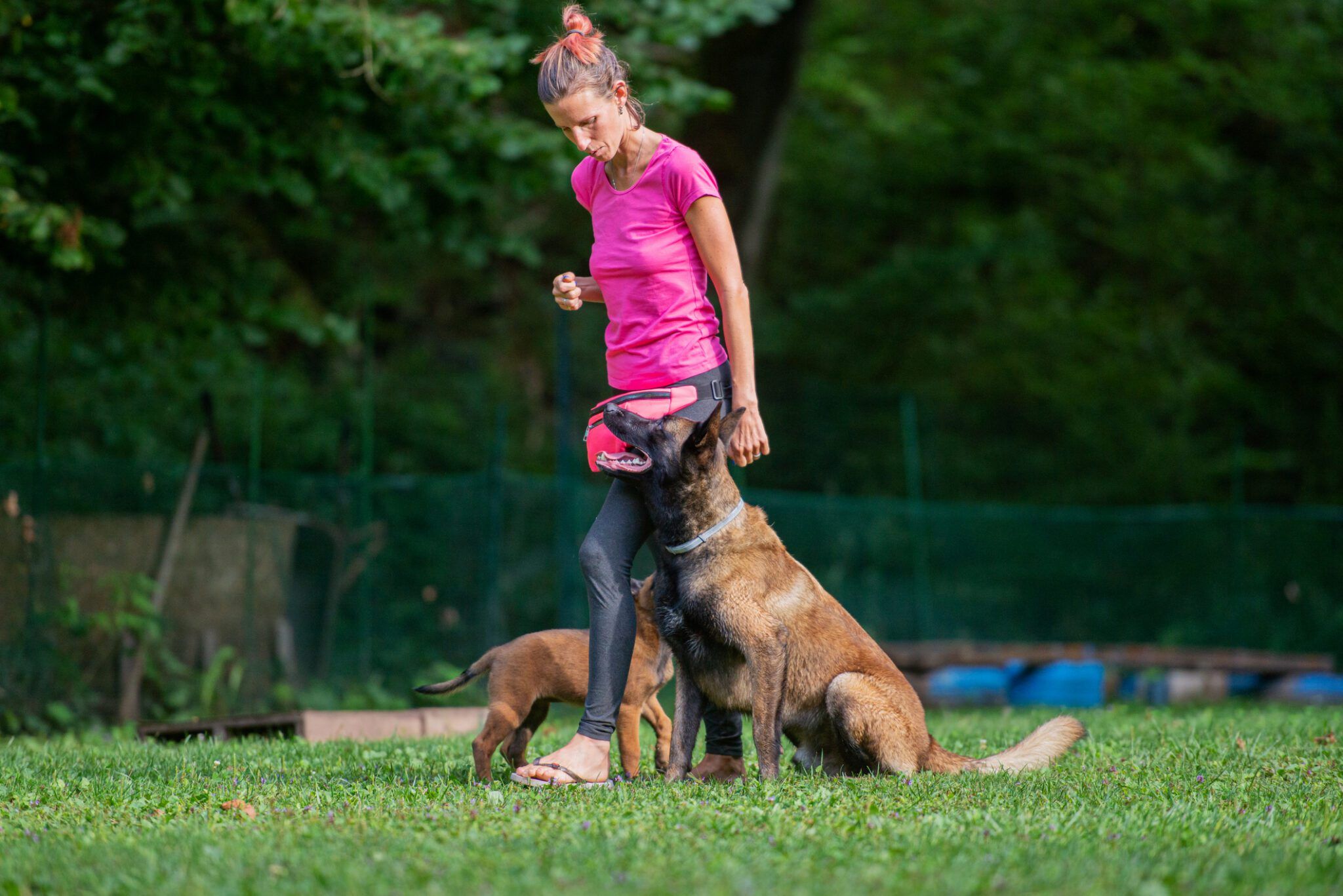
Dog training between basic and advanced is sometimes referred to as “intermediate dog training.” Intermediate dog training means you are starting to add distractions to basic cues and expanding on basic cues. Note: We use the term cue, not command. The term command creates a different mindset than rewards-based training we focus on.
Basic cues usually include sit, down, and touch as well as the beginnings of a recall. Adding cues or even behaviors that don’t need a cue can include an automatic leave it, adding distance to a recall, walking in partnership, and starting on a go to place cue. These are all considered intermediate dog training exercises that can help your dog focus better with distractions around such as happening when out and about in this thing that we call life.
Before I go further, I want to add the caveat that this article is solely discussing what is known traditionally as obedience, but what we now call manners training. If you have a dog who is reactive and/or fearful when out in public, this is not the article for you. Instead, you should consider desensitization.
Intermediate Dog Training Means Proofing
We want to first make sure that the behaviors that you want to proof for distractions are solidly known and performed. Proofing is adding the ability to perform/hold a cued behavior with excitement around the dog. I generally go from house to yard, if your yard is not wide open with a bunch of distractions of course.
You may have to increase the value of the food rewards that you use outside until your dog is more focused on the cues that you are working with. My general go-to with adding in the first intermediate dog training step is practicing the cues that your dog likes best.
For example, both my dogs know touch well, and they understand here here means come to me. My Chow Chow Meri loves to perform tent, which means that she should station herself between my legs. She also loves say hi, which is her permission to jump up on me. Both dogs love spin. These are good yard cue practices.
Once you get these basic cues solidly performed in the second to boring locale, then you can start taking it on the road. I often use a touch or tent on a walk with Meri. With Keric, my Caucasian Shepherd, he does well with touch and with me, which is basically a heeling exercise.
Intermediate Dog Training Reality
The best intermediate dog training tip that I can give you is to not go too fast and to take stock of what is happening in the environment. Be realistic about what you are asking for. Each dog is an individual and their interest levels in what they see or smell will vary. Know your dog. Intermediate dog training is a wonderful next step beyond the basics as well as a necessary component on your path to advanced dog training.