
What Dog Tremors Look Like
There is a wide range in how dog tremors appear. Your dog might have just a small twitch in one spot, or the spasms could be widespread and affect a large area of her body. These twitches can be slow or fast, and your dog might not seem to notice them or might be upset and painful or unable to move normally.
Mild tremors that don’t bother your dog are usually nothing to worry about, but tremors that persist, worsen over time, or bother your dog could be more serious. Dog tremors are an emergency if your dog is lethargic, vomiting, nonresponsive, or recently had puppies.
A muscle cramp—the severe painful tightening (contraction) of the muscle—is a severe muscle spasm. Your dog may even cry out in pain. Cramps are often due to overuse of muscle, an electrolyte imbalance, or dehydration. As above, if the cramp doesn’t subside quickly or if the dog is lethargic, vomiting, nonresponse, or recently had puppies, contact your veterinarian.
If you have any concerns, take a video of what your dog is doing. A clear video in good lighting is extremely useful for your veterinarian to observe exactly what you saw and can help in figuring out why it is happening.
Why Is My Dog Twitching or Shaking?
Twitching, tremors, and spasms are involuntary movements of your dog’s muscles. There are many different causes for them, but the result is that muscle fibers contract erratically on their own.
Reasons why your dog might have tremors or muscle spasms include:
- Shivering due to cold
- Shaking or shivering due to anxiety or stress
- Moving during a dream
- Muscle fatigue after exercise
- Pain
- Dehydration
- Overexcitement
- Toxin ingestion
- Low blood glucose (hypoglycemia)
- Low blood calcium (hypocalcemia)
- Idiopathic tremors (unknown cause)
Age Matters: Puppy vs Senior Dog Tremors
Puppies sometimes have muscle spasms while sleeping. This is because their nervous system and muscles are still developing. If your puppy is otherwise happy and healthy, there is usually nothing to worry about.
Senior dogs get fatigued more quickly than young adult dogs, partly because they tend to have less muscle as they age. Your senior dog might have mild muscle tremors after exercise that did not affect her when she was younger.
Toxins That Can Cause Dog Tremors
Many toxins can cause tremors. If your dog has or may have consumed any of these items and is showing muscle spasms, call your veterinarian or a pet poison hotline immediately:
- Alcohol
- Caffeine
- Chocolate
- Flea or tick medication overdose
- Insecticides
- Marijuana
- Certain wild mushrooms
- Pesticides and rodenticides
- Raisins or grapes
- Xylitol or birch sugar
Do not wait to see if the tremors go away. With possible toxin ingestion, things can quickly become life-threatening.
Low Bood Calcium (Hypoglycemia)
Low blood sugar is most common in toy-breed puppies and diabetic dogs. If your tiny puppy is shaking, offer her a snack or rub some honey on her gums.
If your adult dog shows any other signs of illness that could be related to diabetes, offer her a snack and have her seen by a veterinarian.
Low Blood Calcium (Hypocalcemia)
Low blood calcium is most common in female dogs who have recently whelped a litter. If your dam is showing tremors and difficulty moving after giving birth, contact your veterinarian immediately. This is an emergency.
Idiopathic Tremors
Sometimes we can’t figure out why a dog has periodic twitching.
Dobermans, Boxers, Bulldogs, and Beagles seem predisposed to a mild head tremor that will go away if you distract your dog with attention, a treat, or a toy.
“Shaker syndrome” is an odd condition where small, often white dogs periodically have mild full-body tremors. It is usually managed with medication.
How Dog Muscle Spasms Are Treated
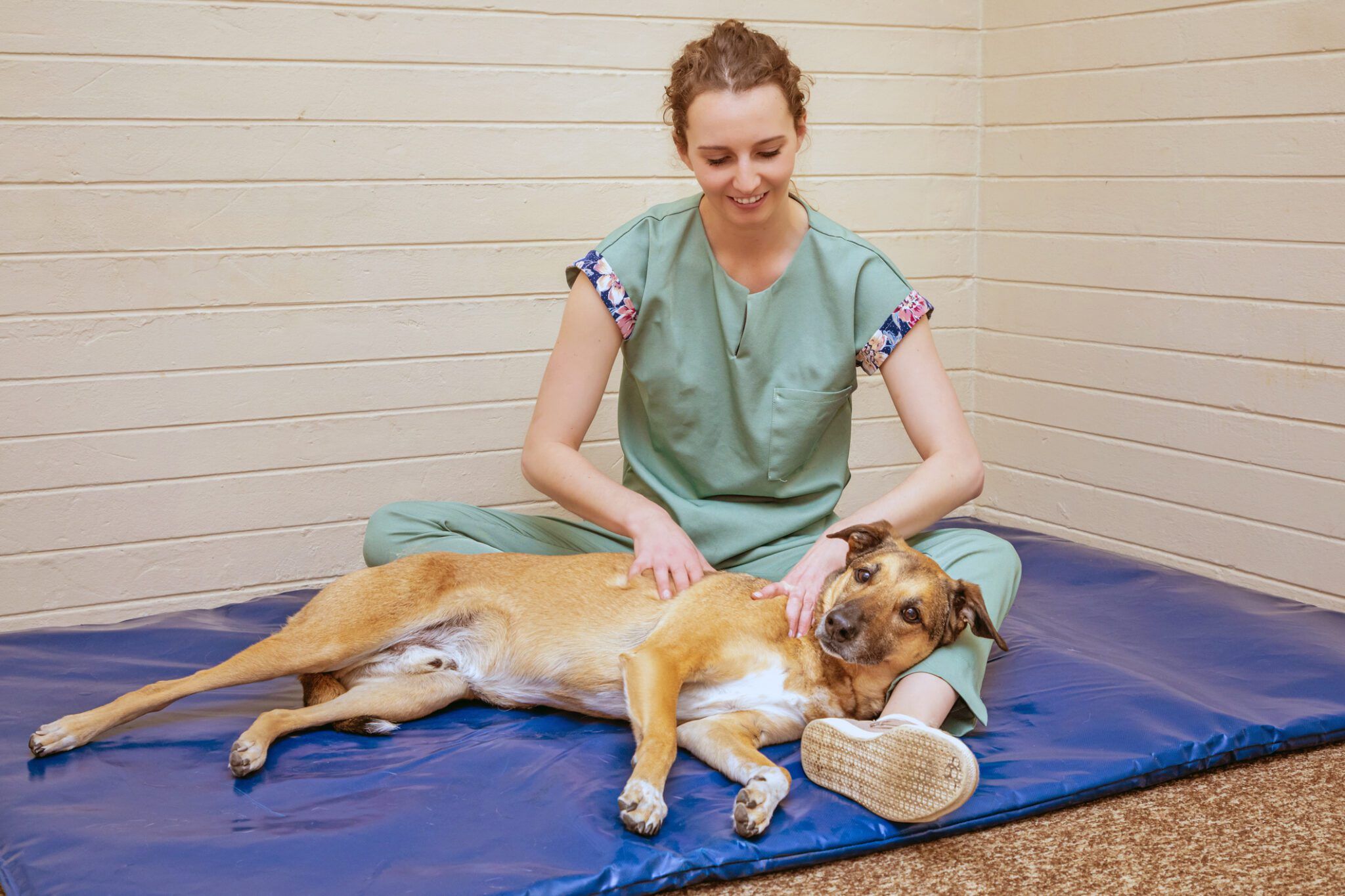
If your dog has a mild tremor but otherwise seems fine, encourage her to gently stretch the muscles in the area by luring her nose with a treat. You can also place a warm compress over the area to soothe the muscles if she has been exercising or gently massage the area if she enjoys that.
For persistent or severe tremors, schedule a vet visit. Take notes on any trends you noticed when or why your dog has spasms. Bring videos if possible.
Diagnostics can include bloodwork, urinalysis, and imaging such as X-rays or ultrasound. In more severe cases, you might go to a neurologist for an MRI or cerebral spinal fluid analysis.
Dog muscle spasm treatment will depend on why your dog is experiencing muscle spasms. Some of the options that might be appropriate for your dog include:
- Warm her if she is cold
- Cool her with ice packs if she is overheated or has an acute muscle injury, as directed by your vet
- Massage and gentle stretching
- Intravenous fluids for dehydration
- Medicated fluids or injections to correct electrolyte and vitamin imbalances
- Pain medication
- Muscle relaxants
- Anxiety medication
- Insulin therapy for diabetic dogs
Note: Never give human medications without veterinary guidance. Many are unsafe for dogs.
Is My Dog Having Seizures or Muscle Spasms?
This can be difficult to determine. Seizures are caused by abnormal electrical activity in the brain, whereas muscle spasms are caused by a misfire within the muscle fibers themselves.
Grand mal (tonic-clonic) seizures affect the entire body and cause your dog to lose consciousness. Focal seizures only impact part of your dog’s body and can be more difficult to identify.
If you’re not sure what you’re seeing, treat it as urgent. Keep your dog safe and away from stairs and contact your veterinarian with a video of the episode.