

Home Search
snuffle - search results
If you're not happy with the results, please do another search
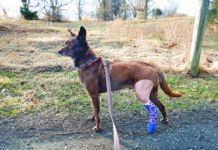
How to Engage Your Dog’s Brain When Activity is Restricted
A few days after Christmas, my husband and I found ourselves facing a challenge: Our Australian Kelpie, Kai, was romping around the yard when suddenly...
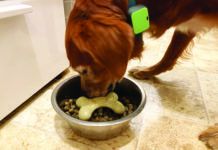
Savor The Flavor: Slow Feeder Device Test
Can your dog make an entire bowl of food disappear faster than you can say, “Bon appétit?” Has he ever inhaled a bowl of...
How To Help Your Dog Deal With Separation Anxiety
Have you been spending a lot more time with your dog, courtesy of coronavirus? As life slowly goes back to a “new normal” and...
Helping Dogs Adjust to Being Home Alone Again
Though many people who have been sheltering in place for weeks report being confused as to the day of the week, I have been...
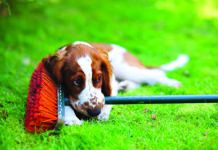
Teach Your Puppy to “Leave it Alone”
First, you have to understand: It is perfectly normal for puppies to explore the world with their mouths. Usually, it’s not a big deal...
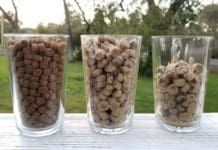
Soaking Dry Dog Food in Water
If youve ever soaked your dogs food, youre aware of how much dry dog food expands when immersed in water. Its a little horrifying, actually, to realize how much more space a certain amount of food will require in a dogs stomach and gut once the dogs digestive juices hydrate the individual kibbles. It nearly doubles in volume. The kibbles are like little sponges - some more than others. Ive noticed when soaking food for various foster puppies that some kibble is more resistant to soaking than others.
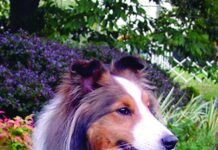
The Dog is Throwing Up!: Your Guide to Dog Vomiting
When dogs feel nauseated and are about to throw up, they often drool, lick their lips, swallow excessively, and stand head down looking worried. Many dogs look for or turn to their owners when they're about to vomit, which can signal alert caregivers to move their pets to a better location! In time you might be able to train your dog to throw up where it does the least damage.

Taking Measures to Prevent Separation Anxiety Related Behaviors
Separation anxiety (SA) stems from a dog's natural survival instinct to stay in close proximity to the pack. In the wild, a canine who is left alone is more likely to die, either from starvation, since he has no pack to hunt with, or from attack, since he has no pack mates for mutual protection. Given the vital importance of a dog's canine companions, it speaks volumes about their adaptability as a species that we can condition them to accept being left alone at all! We're lucky we don't have far more SA problems than we do, especially in today's world, where few households have someone at home regularly during the day to keep the dog company.